How a ridged picture changes with your viewpoint
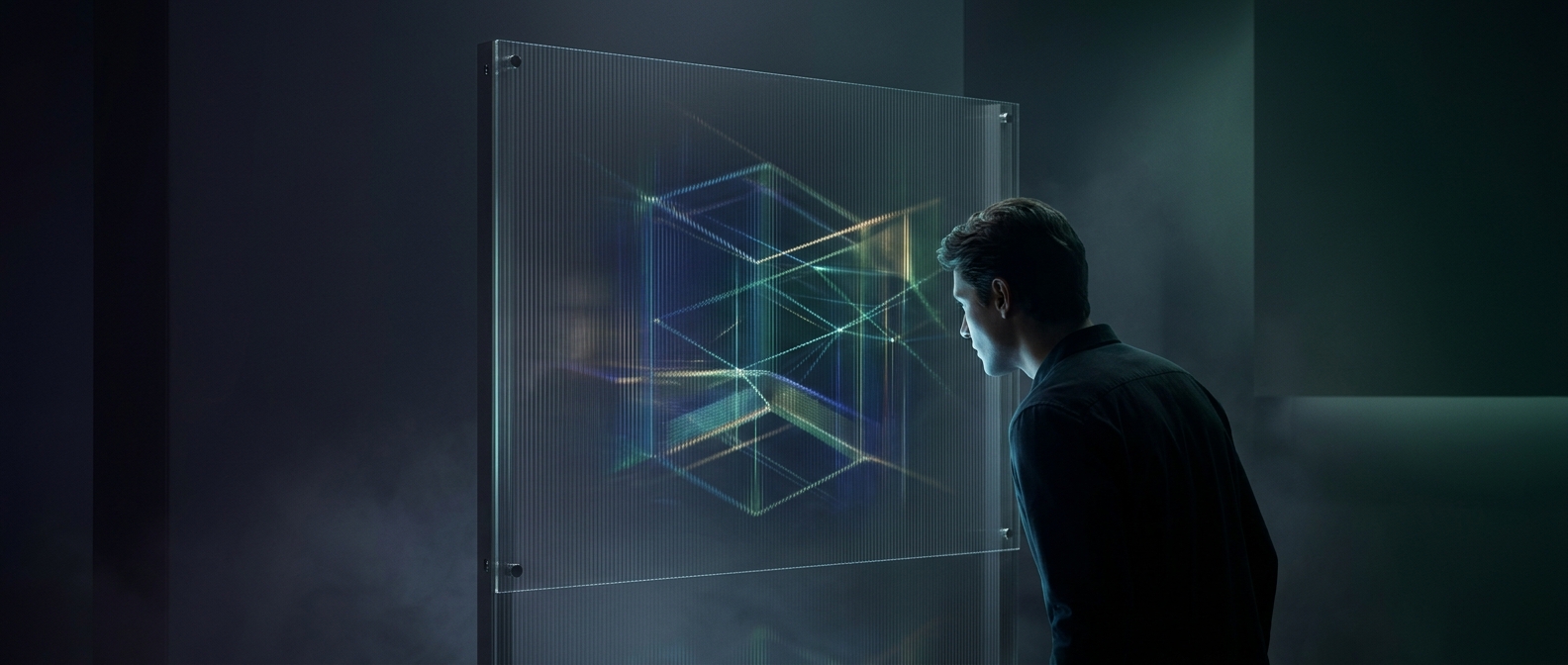
A novelty picture that appears to switch scenes is usually an integral image: several narrow versions of different pictures are combined into one print. The ridges on the surface act like rows of tiny lenses, a technique called lenticular printing.
Each lens directs light from a particular strip of the print toward your eyes. From one position, you see strips belonging to the first image; shift your viewpoint, and the lenses send you strips from another. The pictures have not moved—the angle changes which parts of the printed layers reach your eyes.
Why the image is divided into strips
To make the effect work, the source pictures are sliced into thin bands and interleaved: bands from each picture are placed side by side in a repeating pattern. The ridged lens sheet is aligned over that pattern. Each lens covers several bands and steers different bands in different directions.
That alignment is crucial. If the print and lenses are even slightly out of register, the bands can mix, making the image look blurred or ghosted instead of switching cleanly. The viewing distance and angle matter, too: move through the intended range and one picture gives way to the next.
A small change in angle, a different slice
On a novelty cup, the curved surface adds another variable: as you turn the cup, its ridges rotate relative to your eyes. The image changes because your viewpoint crosses from one set of directed light rays to another. What looks like a picture changing on its own is really a carefully arranged handoff between images, built into the print.