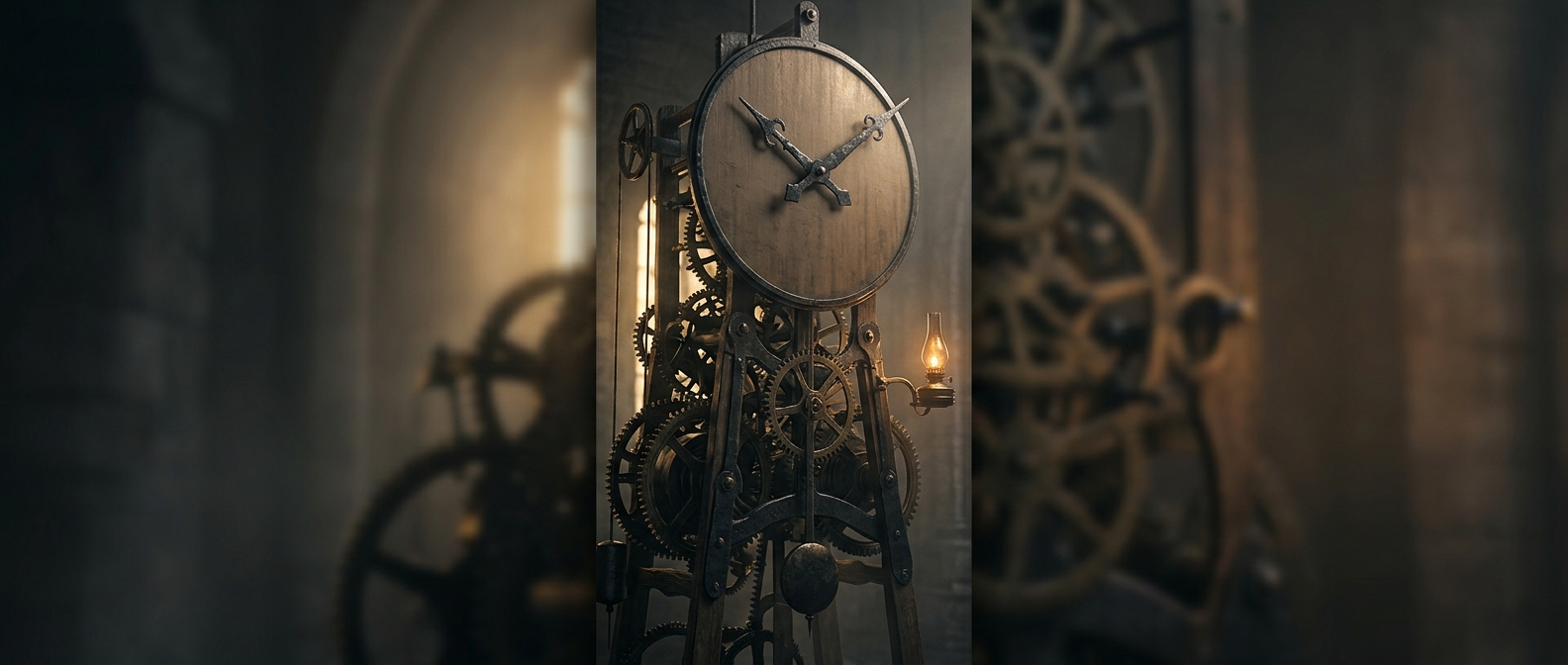
When a Bell Became a Clock Face
A clock did not need a dial to mark the hour. In early public timekeeping, its job could be simply to sound a signal at set intervals. A bell carried that signal across a town or monastery, reaching people who could not see a clock—or read one.
Bell-ringing for daily routines existed before mechanical clocks. Monasteries used bells to call people to prayer; later, mechanical clocks could automate the task. Their gears kept track of elapsed time, while a separate striking mechanism released the bell at the appointed moment. The listener supplied the display by counting: one gong for the first hour, more for later hours.
Time You Could Hear, Not Check
This system suited a world where time was often coordinated in public. A bell could announce a shared moment to workers, worshippers, and passersby without requiring each person to own a timepiece. But it offered little precision to an individual. If you missed the sound, or lost count, the clock gave you no face to consult.
The arrangement also made the clock’s purpose unmistakable: it organized activity by calling people to act. A striking clock was less like a personal instrument than a town-wide announcement system. Its “display” was the sound itself—and knowing the time depended on being within earshot and paying attention.