How a limb comes to feel like yours
The brain does not identify an arm as “mine” from sight alone. It builds that feeling by combining several streams of information: vision, touch, the arm’s position and movement, and the intention to move it. When these signals agree, they reinforce one another. Seeing your hand move as you command it, while feeling the movement and its position, makes the arm seem like a seamless part of you.
The position-and-movement sense is called proprioception. It lets you locate your hand even with your eyes closed. The brain continually compares this information with what the eyes see and with the movement it expected to produce. Ownership is not a separate label attached to the limb; it emerges from this coordinated account of where the body is and what it is doing.
When the signals tell different stories
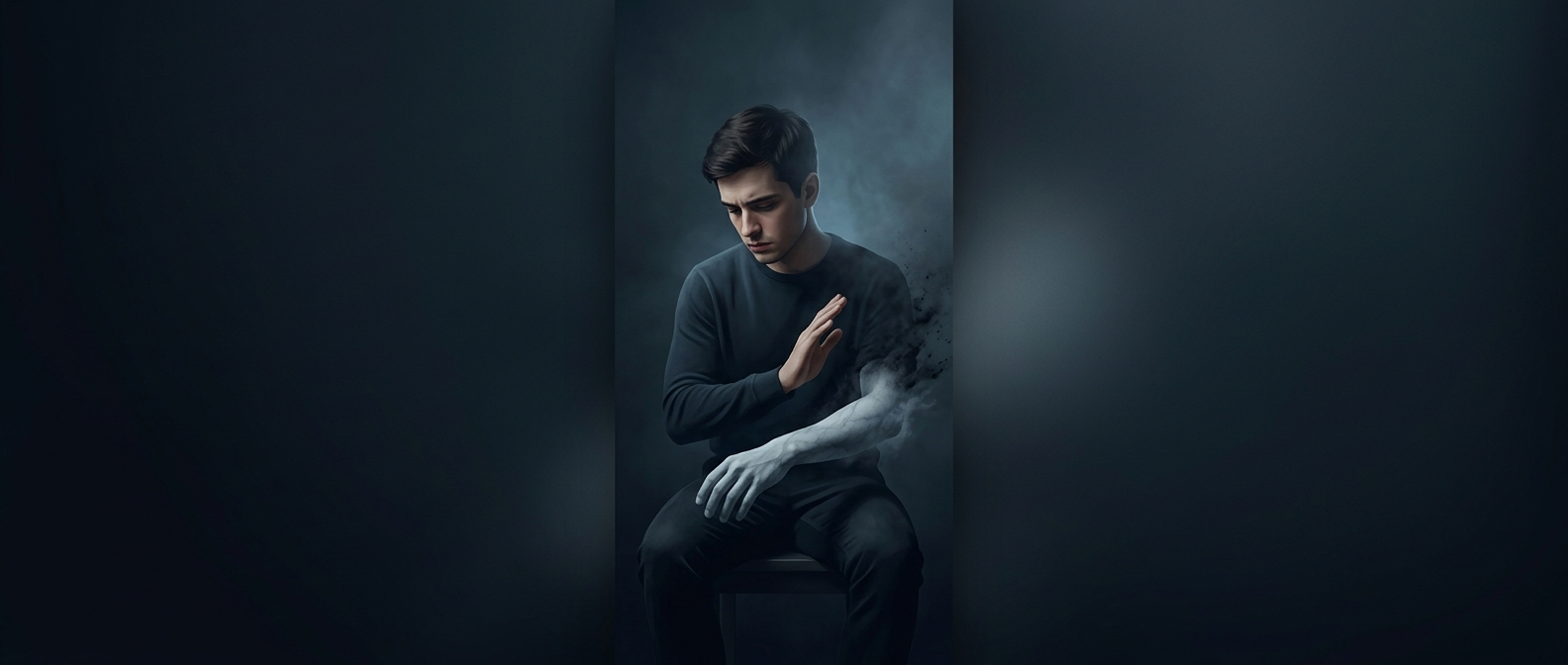
If the streams conflict, the brain has a harder time fitting them into one explanation. A limb may be visible but feel strangely distant, or its movement may not seem to match the person’s intention. The arm has not detached; what has weakened is the felt connection between the body and the experience of seeing, sensing, and controlling it.
This helps explain why the sensation can be so unsettling. The limb is still physically present, yet the ordinary evidence that makes it feel like part of the self no longer lines up. The feeling of ownership depends not just on having a body, but on the brain’s ongoing work of making its signals agree.