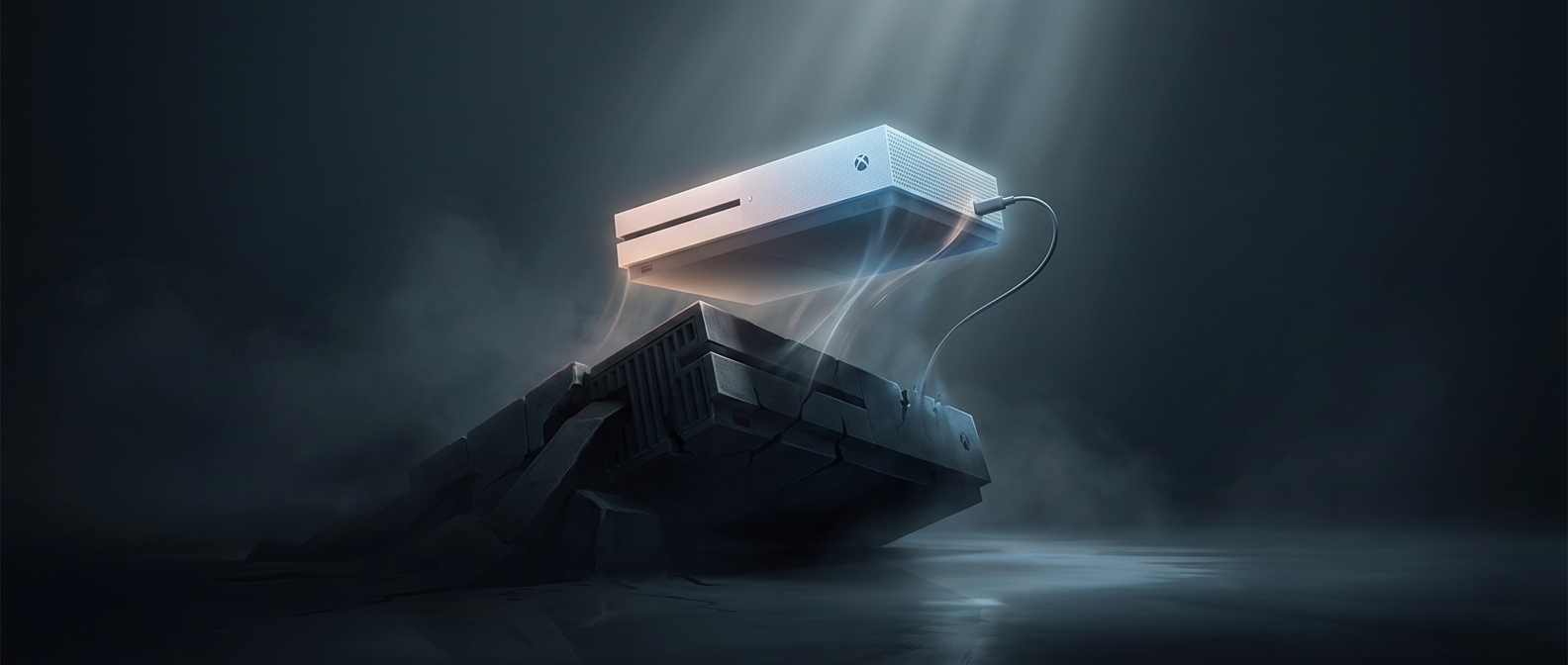
The console was designed to sit between the TV and its other devices
The Xbox One’s entertainment plan was built around a practical bottleneck: a living-room television often had several sources, each with its own remote and interface. The console included an HDMI input, so a cable or satellite receiver could feed its picture through the Xbox and on to the TV. The Xbox did not replace that receiver; it became another layer between the receiver and the screen.
That arrangement let Microsoft combine live television and games in one interface. A viewer could switch from a program to a game, or use features such as picture-in-picture-style Snap to keep TV visible beside another app. The aim was less about making the console play every format itself than about making it the central place to control what the TV was showing.
The hub depended on the room around it
Microsoft also built voice and motion control around Kinect, which was initially bundled with the console. Saying commands such as “Xbox, watch TV” was meant to make changing activities feel closer to changing channels than navigating a stack of menus. Kinect could also help the system recognize voice commands and control compatible equipment.
But a hub can only unify devices it can connect to and services available in a viewer’s area. The setup depended on an external TV receiver for live channels, and its usefulness varied with local television arrangements and compatible equipment. The Xbox One’s all-in-one ambition was therefore an interface strategy, not a claim that one box could replace every box in the living room.