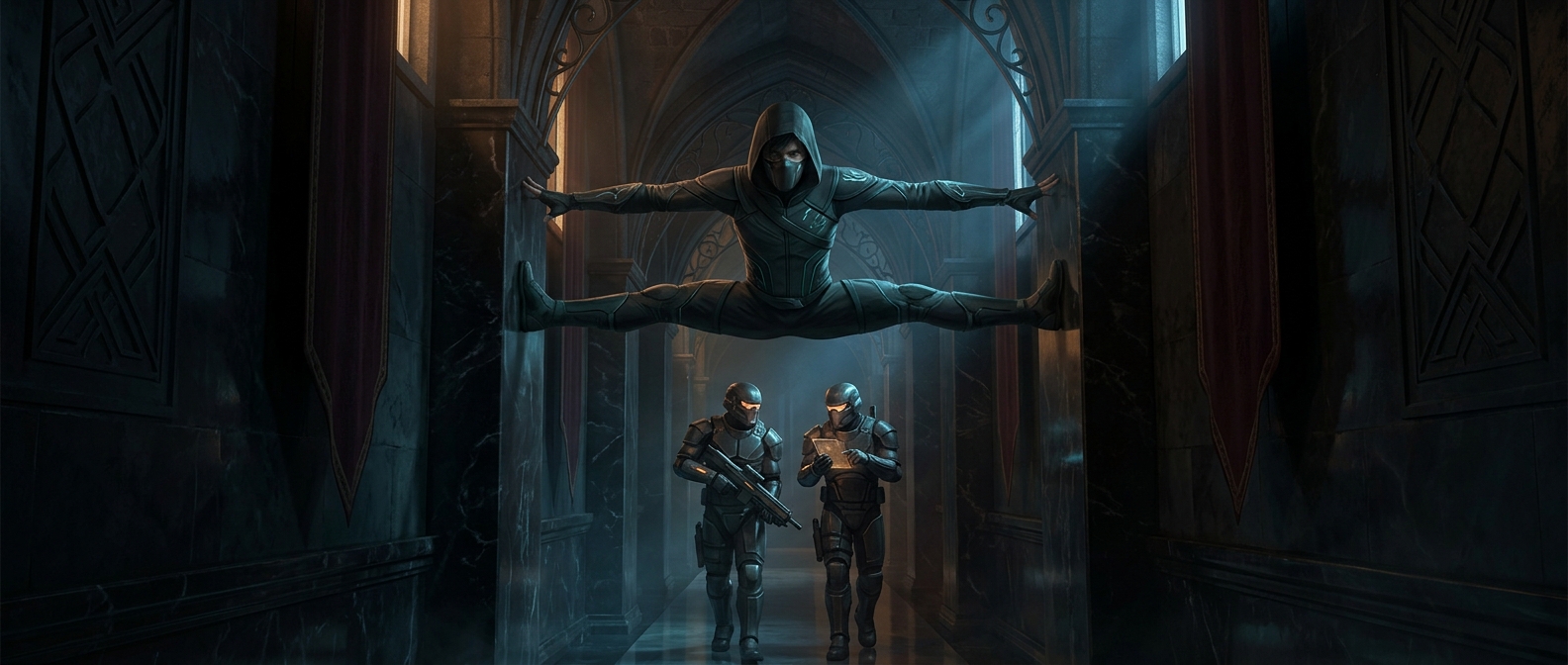
A corridor became a hiding place
In Splinter Cell, a narrow passage between two facing walls could be more than a route through a level. Sam Fisher could jump up, brace one foot against each wall, and hold himself high above the floor in a full split. A guard walking below might pass without seeing him.
The trick depended on the room’s shape: without two nearby walls, there was nowhere to brace. That made the move a spatial puzzle as well as a stealth maneuver. Players had to notice when the architecture offered a perch, then get into position before a patrol arrived.
Stealth through positioning
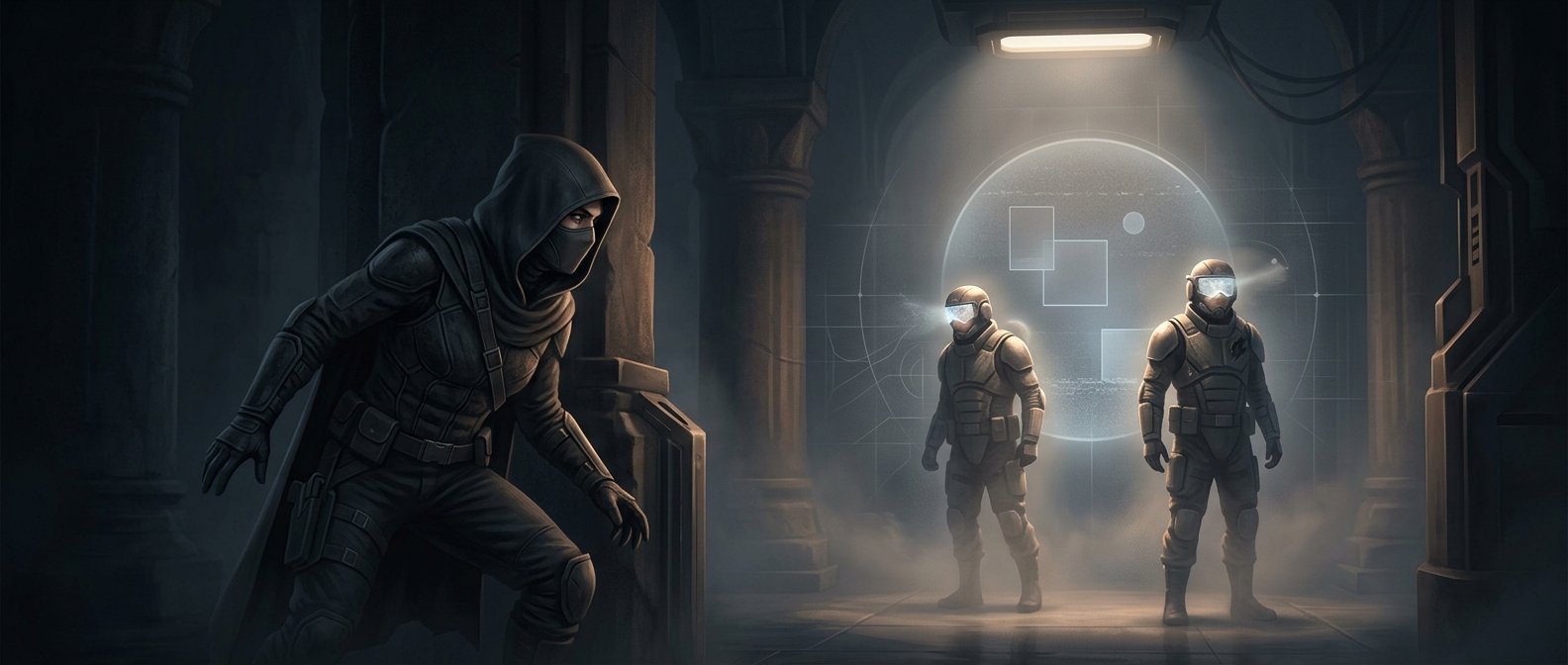
Many stealth games make hiding feel like a choice between darkness and exposure. The split jump added another variable: height. A player could be close to a guard yet remain outside the guard’s usual line of sight, turning a cramped corridor into cover.
It was not a universal cloak. The maneuver only helped in the right geometry, and the guard still had to pass beneath without looking up or otherwise detecting Fisher. Its appeal came from making the environment do the work: sometimes the safest place in a hallway was directly over the patrol’s head.