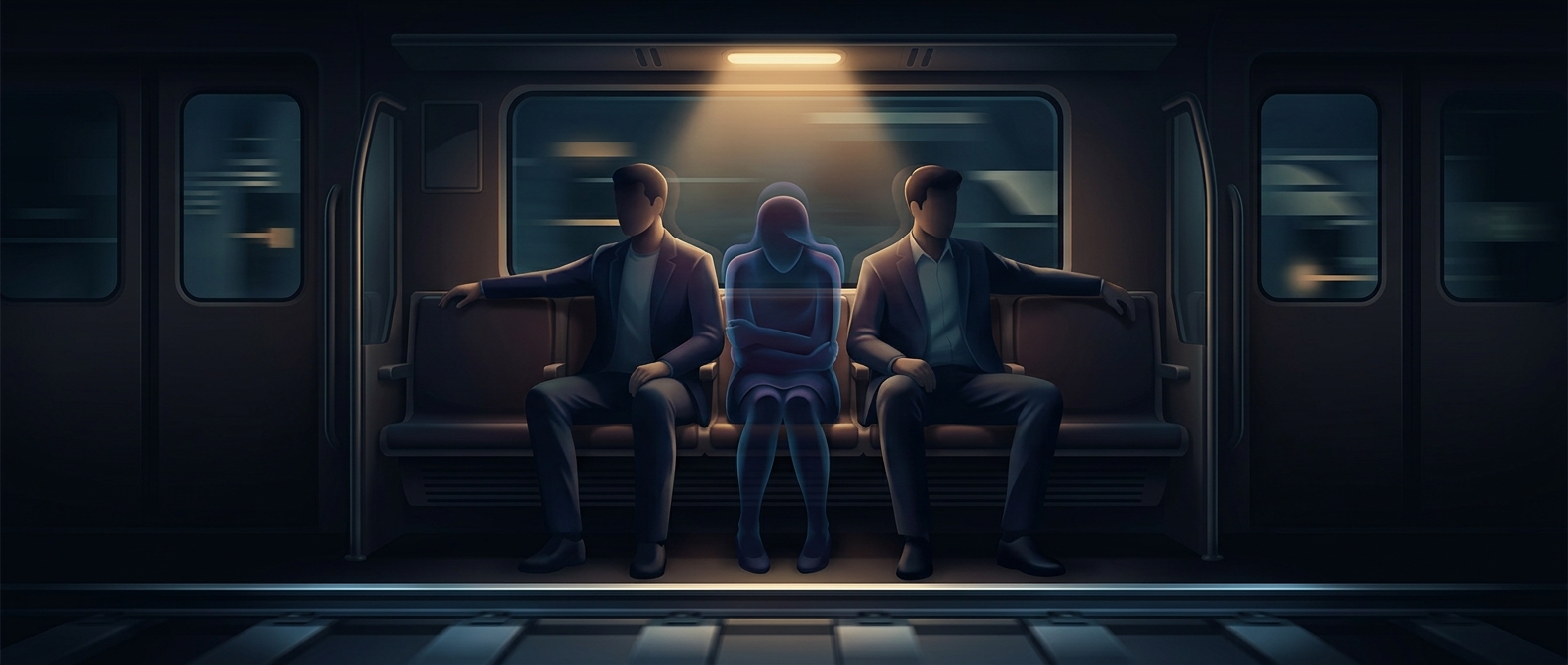
The middle seat is squeezed by the layout
In a row of three seats, the person in the middle has two neighbors but no private edge. The window passenger can lean toward the wall, and the aisle passenger has a little room to shift outward. The middle passenger has neither option: moving either way means entering someone else’s space.
That difference turns ordinary adjustments—crossing a leg, reaching for a bag, settling into a nap—into small negotiations. At the window, the cabin wall acts as a boundary; at the aisle, the open passage gives one side some breathing room. In the center, both boundaries are people.
Armrests become contested territory
Armrests are built into the seat row, but their width does not divide neatly into three personal zones. The middle passenger is bordered by two armrests, each also within reach of a neighbor. Without a clear convention, people may hesitate to claim either one, or find themselves sharing space with elbows on both sides.
The discomfort is not just about having less room. It is about having less control over how to use it. A window seat offers a view and a place to rest; an aisle seat makes it easier to stand or stretch a little. The middle seat offers no equivalent advantage to compensate for its tighter boundaries.
A small design tradeoff with a human cost
Three seats across make efficient use of cabin width, but the row’s benefits are unevenly distributed. The middle passenger absorbs the constraints created by fitting several travelers side by side, while the seats at the edges come with useful choices built into their positions.
That is why the middle seat can feel worse than its dimensions alone suggest: every shift has to account for two neighbors. Even a short trip can make the difference between having a place to lean or move and having to ask, wait, or stay put.