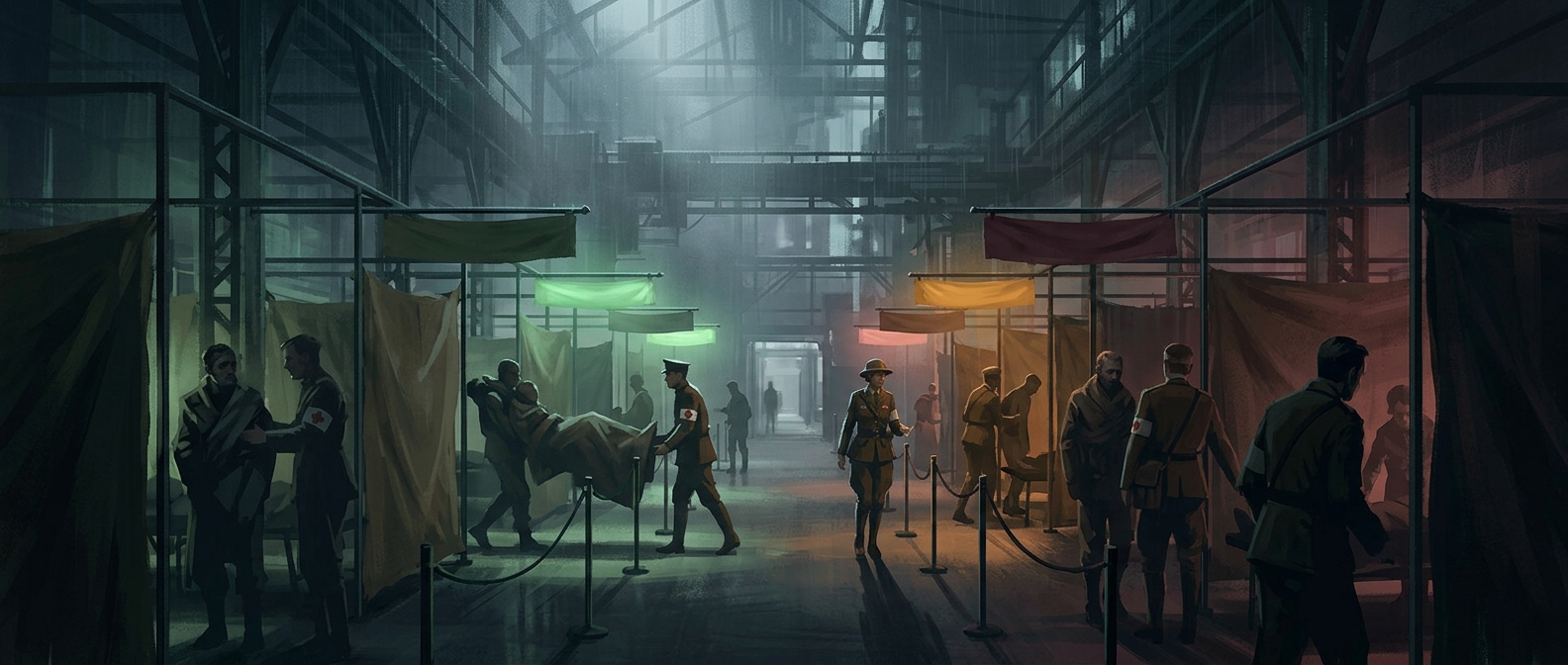
Triage turns urgency into an order of care
When many people need help at once, treating whoever arrives first can leave the most time-sensitive injuries waiting. Triage is a way to sort patients by how urgently they need attention and what care is available. The word comes from a French term meaning “to sort.”
That sorting is not simply a ranking of who is most badly hurt. A person in immediate danger may need rapid treatment, while someone with a devastating injury that cannot be helped with the resources on hand may receive less priority during a mass-casualty crisis. The aim is to use scarce staff, supplies, and time where they can do the most good.
A battlefield problem reshaped medical care
French military surgeons developed organized casualty sorting in the era of the Napoleonic Wars, when armies faced large numbers of wounded far from hospitals. Surgeon Dominique Jean Larrey is especially associated with making battlefield care more mobile and responsive. Instead of allowing rank or order of arrival to dictate who was treated first, medical workers assessed injuries and urgency.
The essential challenge was practical: a delay that might be manageable for one patient could be fatal for another. Sorting helped direct limited medical attention toward those who could not safely wait, while also distinguishing cases that could be treated later.
The same principle, different setting
In an emergency department, triage helps determine who should be assessed first; it does not necessarily decide who will receive the most care overall. A patient with a quiet but dangerous problem may be brought ahead of someone with a painful injury that is less immediately threatening. Staff reassess patients because conditions can change while they wait.
That distinction is what makes triage more than a queue. It is a continuing judgment about danger, delay, and available help—first sharpened under battlefield scarcity, and now used to keep the order of care from being determined by arrival time alone.