Why the Darvaza crater keeps burning
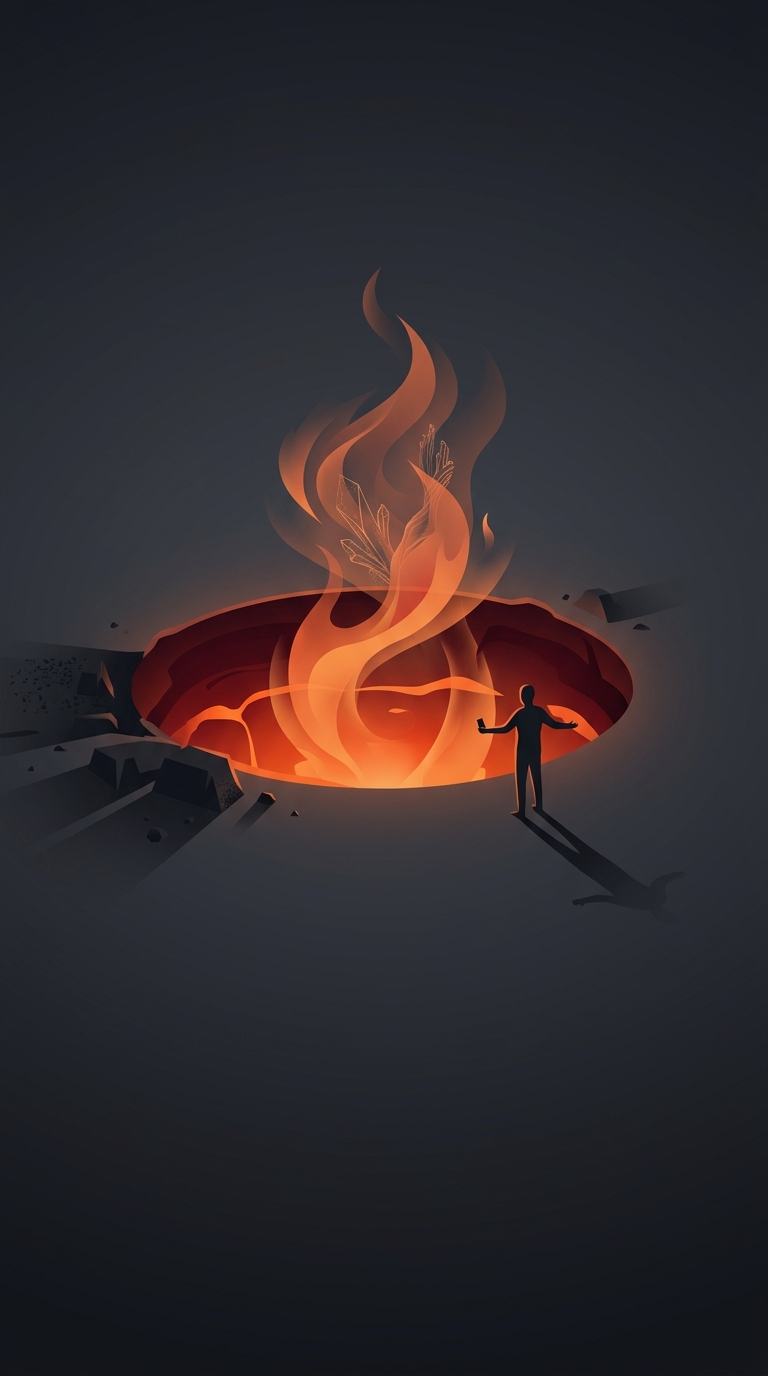
The flames are fed by natural gas escaping from underground deposits into the open air. Much of that gas is methane, which burns when it mixes with oxygen and meets an ignition source. As fresh gas continues to seep out, the fire can keep finding fuel; the visible flames are the surface sign of a leak below, not a single pocket of gas burning away all at once.
The crater’s broad, exposed opening makes the process easy to see. Gas rises through the broken ground, then burns where it meets air. Heat and wind can make the flames flicker and shift, while the dark surrounding desert makes their glow especially striking after sunset.
A fire with a landscape around it
Darvaza lies in Turkmenistan’s Karakum Desert, where open distances and sparse settlement give the site a stark, isolated character. The crater is not a neat vent: it is a collapsed patch of ground, with an uneven rim and a steep drop toward the burning interior. From a safe vantage point, visitors can see how the fire traces the shape of the exposed cavity rather than forming one uniform wall of flame.
That setting also explains the site’s uneasy appeal. The spectacle is vivid, but it marks an uncontrolled release of underground fuel. The flames are not simply consuming a fire that was once started; they persist because gas still reaches the surface.