A Room Key With a Data Pattern
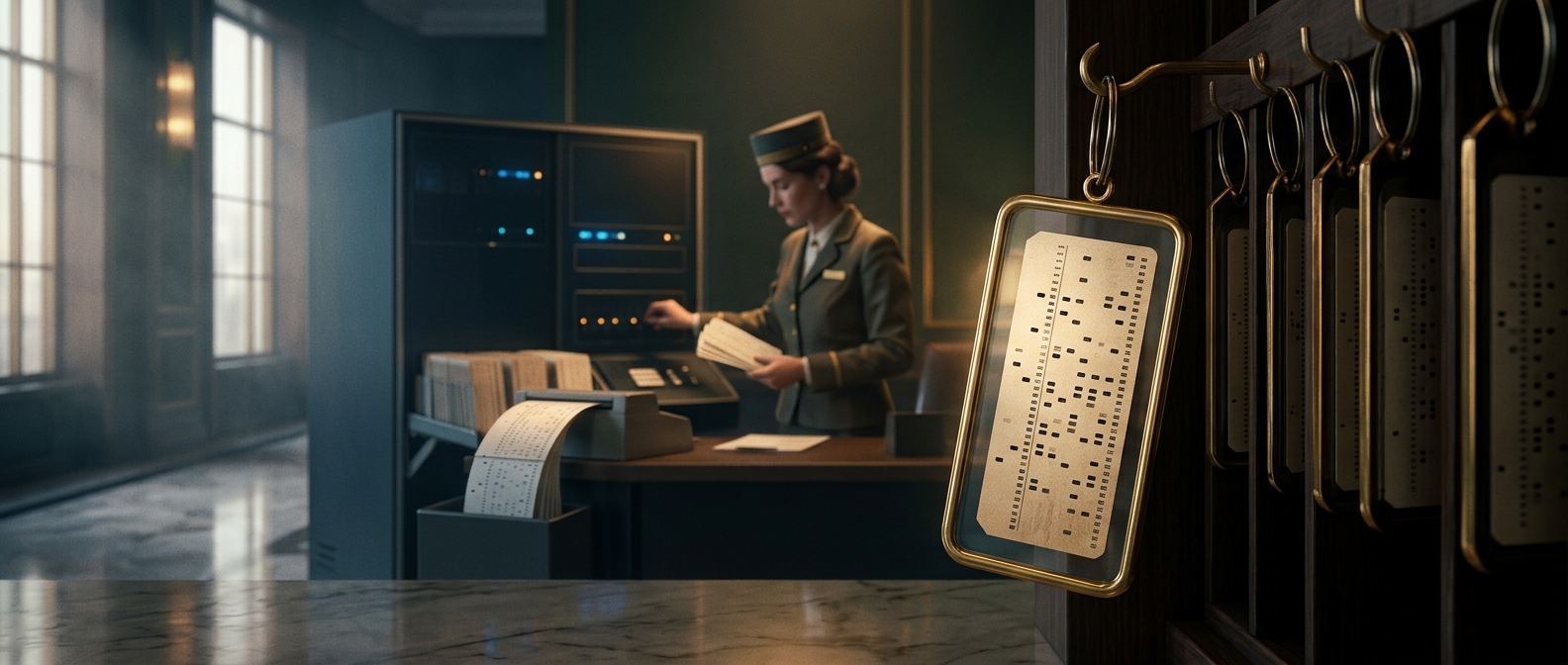
Before hotel cards commonly stored access information on a magnetic stripe, some early plastic keycards used holes to represent it. The idea echoed punched cards used in computing: instead of storing information as ink or writing, a card’s pattern of holes carried a code that a machine could check.
How the Lock Read the Card
The guest slid the card into the lock. Inside, pins or sensors checked which positions were open and which were blocked. That pattern served as a credential: if it matched the code the lock was set to accept, the door could open. The card was therefore not just a label for a room; its physical shape contained information the lock could interpret.
This was a practical bridge between familiar mechanical keys and electronic access. A card could be issued to a guest and checked by a device, without requiring the lock to recognize a person or read a name. The same basic logic made punched cards useful in data processing: arrange holes in a defined pattern, then let a machine read the arrangement.
Why the Design Is Memorable
The connection is more than a visual resemblance. Both systems turned information into a machine-readable pattern of holes. At a hotel door, a tiny arrangement of openings could stand between a guest and a room—an everyday use of the same broad idea that let machines handle data.