How a thin stripe becomes a room key
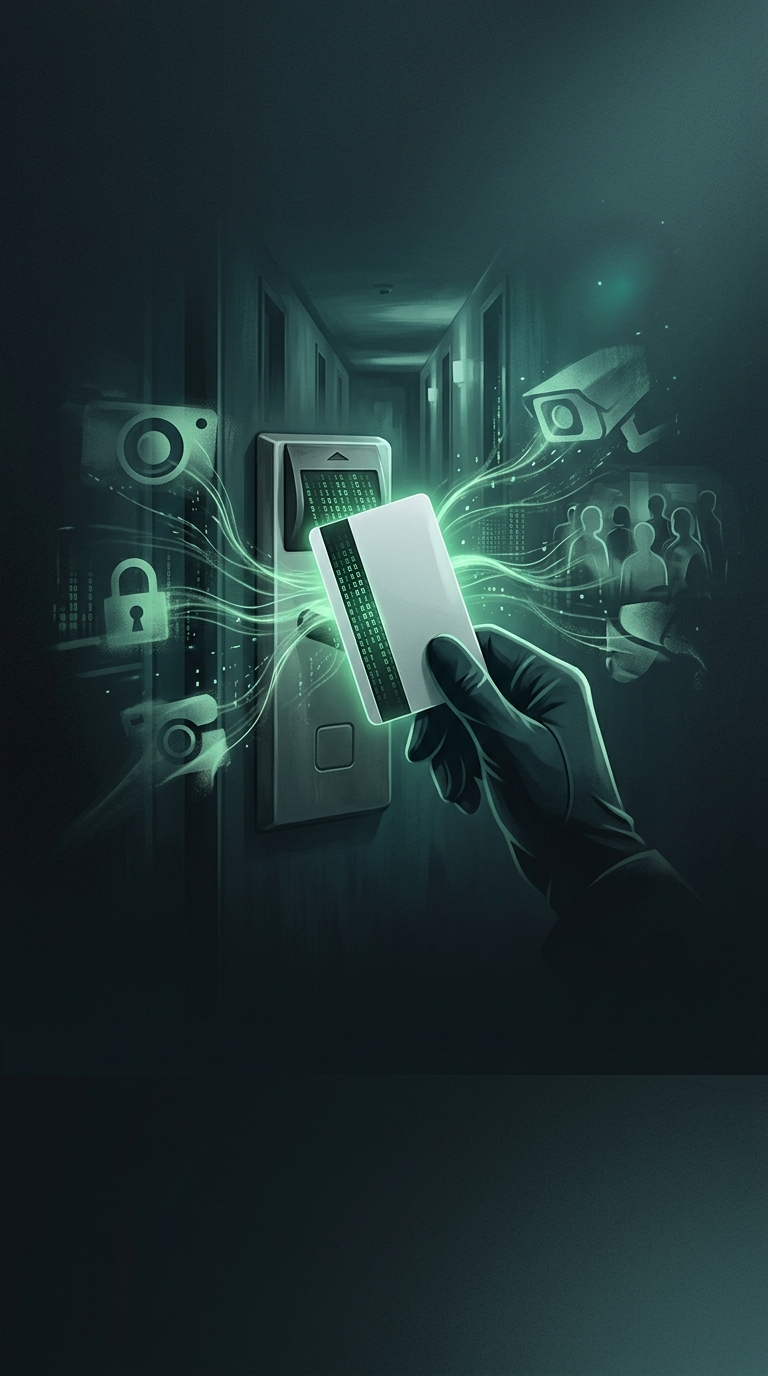
The dark band on a magnetic key card is coated with tiny magnetic particles. A card-encoding machine arranges those particles into a pattern that represents information—much like a compact, physical message. When you swipe, the lock’s reader senses changes in that pattern and turns them back into data.
That data serves as a credential, not a mechanical key. The lock uses it to decide whether the card is authorized for that door. Depending on the hotel’s system, the credential may also carry limits such as when access begins or ends.
Why the stripe can fail
The reader needs to detect a clear pattern as the card passes its sensor. A scratched, worn, or bent stripe can make parts of that pattern harder to read. So can a swipe that is too fast, too slow, or not aligned with the reader. The card may look intact while the lock receives an incomplete signal.
A rejection does not necessarily mean the room access was canceled. It may simply mean the reader could not reliably read the card on that pass. That is why a careful second swipe can work—and why a card that keeps failing is usually easier for the front desk to replace than to troubleshoot at the door.
The useful distinction is that the stripe carries information, while the lock does the deciding. A narrow strip of magnetic material stands between a readable credential and a red light.