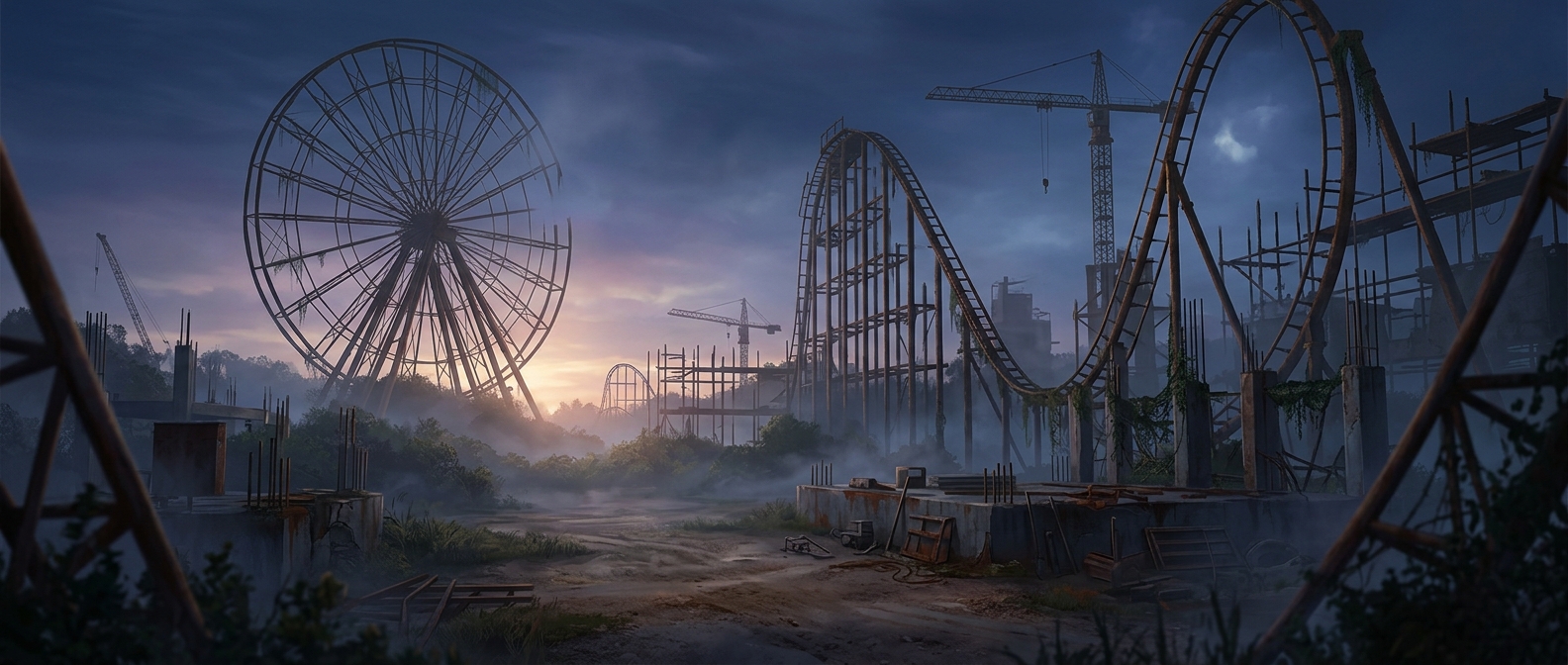
A park is a chain of expensive dependencies
A large amusement park is not simply a collection of rides. Coasters need engineered foundations, power systems, access roads, safety systems, and trained operators; guests also need paths, restrooms, food service, and reliable parking. A structure that looks nearly finished may still be far from ready to open. If essential systems are missing, the ride cannot earn revenue on its own.
That makes construction costs interdependent. A developer may plan to pay for later stages with borrowed money, investor funds, or the proceeds from an earlier phase. When estimates prove too low—or financing becomes unavailable—the shortfall can halt work across the site. Delaying the opening then removes the ticket income that might have helped cover remaining costs, turning a budget problem into a cash-flow trap.
Why unfinished parks stay unfinished
Stopping work does not erase what has already been spent. Developers must weigh the cost of completing the park against the chance that it will attract enough visitors to repay the added investment. If the business case no longer works, pouring in more money can seem riskier than walking away. Selling or restarting the project may also be difficult: a new owner inherits partially built infrastructure, unfinished obligations, and a site whose condition can worsen over time.
Meanwhile, exposed steel, concrete, and landscaping continue to age without the maintenance an operating park requires. Trees and brush reclaim open ground, making the interruption look sudden even when the financial decisions unfolded over months or years. The striking contrast—a coaster poised above the woods—marks the point where a construction project ran out of a viable path from investment to opening day.