A river escaped into a below-sea-level basin
The Salton Sea began when engineers tried to bring Colorado River water to farms in California’s Imperial Valley. In 1905, floodwater overwhelmed a diversion channel and poured into the low-lying Salton Sink. The Colorado kept flowing into the basin for nearly two years, until workers stopped the breach. With no natural outlet, the water remained as a vast inland lake.
Why the water grew saltier and more foul-smelling
Water leaves the sea mainly by evaporation, but dissolved salts stay behind. Meanwhile, runoff from irrigated farmland carries salts and nutrients into the lake. Those nutrients can fuel heavy growth of algae; when the algae and fish die and decompose, the process consumes oxygen and can produce the sulfurous odor often associated with rotting fish.
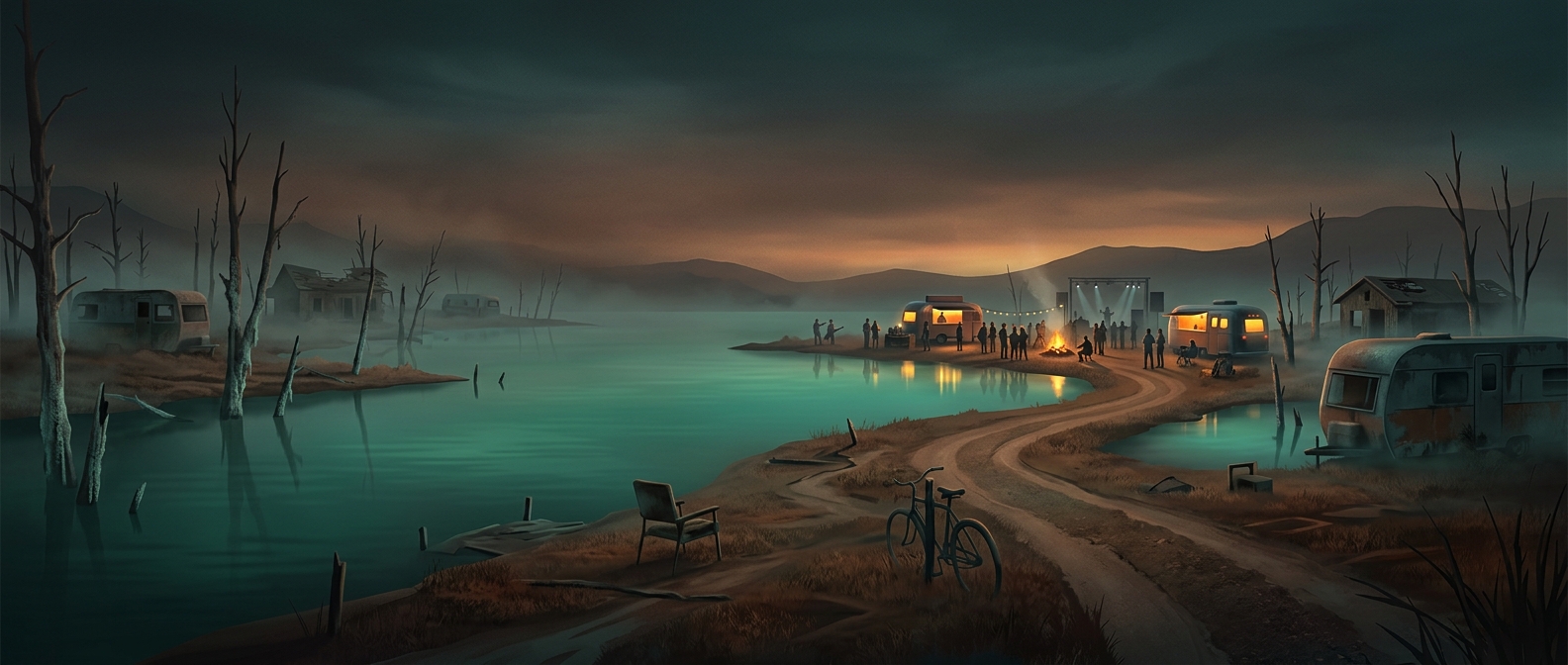
The lake’s shrinking shoreline adds another consequence. As water recedes, exposed lakebed—called playa—can become a source of airborne dust, while the remaining sea becomes more concentrated with salt. The place’s decline is therefore tied not just to an old engineering accident, but to the continuing balance between inflows, evaporation, and the water used across the surrounding agricultural region.
From resort shoreline to abandoned rooms
In the mid-20th century, developers promoted the shore as a place for boating, fishing, and desert recreation. That appeal depended on a stable, inviting lake. As fish die-offs, odor, and retreating water changed the shoreline, the resort economy faded, leaving buildings that photographers now find striking precisely because their vacation-era promise sits beside an increasingly harsh landscape.