A name made at the letter board
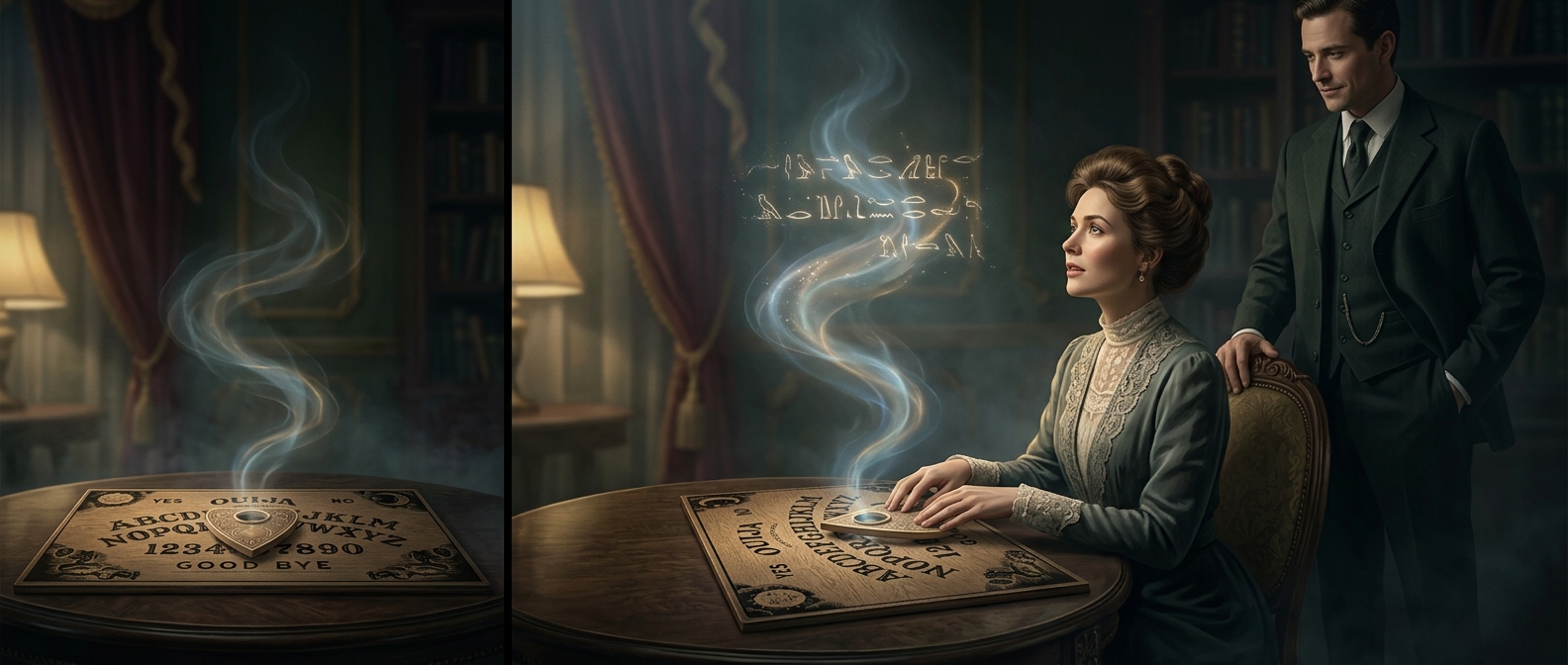
The Ouija board’s name came with a story that sounded ancient and mysterious. Its creators said the planchette—the small, pointer-shaped piece that glides over a board’s letters—spelled out “Ouija,” and that the word meant “good luck” in ancient Egyptian. It did not: the supposed translation was part of the board’s spiritualist lore, not a genuine Egyptian meaning.
From a locket to a legend
The more ordinary explanation points to a name already close at hand. The creators’ sister-in-law wore a locket bearing “Ouida,” the pen name of a novelist. That name was misread as “Ouija,” and the mistaken reading became the board’s name.
The contrast helps explain how the story took hold. A name glimpsed on jewelry could be turned into something that seemed to come from beyond the participants, especially when the planchette’s movement was treated as a message from spirits. The ancient-Egyptian claim gave the word an air of hidden authority; the locket story leaves it rooted in a small, everyday misreading.
So the board’s name did not preserve a lost Egyptian blessing. It began with “Ouida” on a piece of jewelry—and acquired a supernatural explanation afterward.