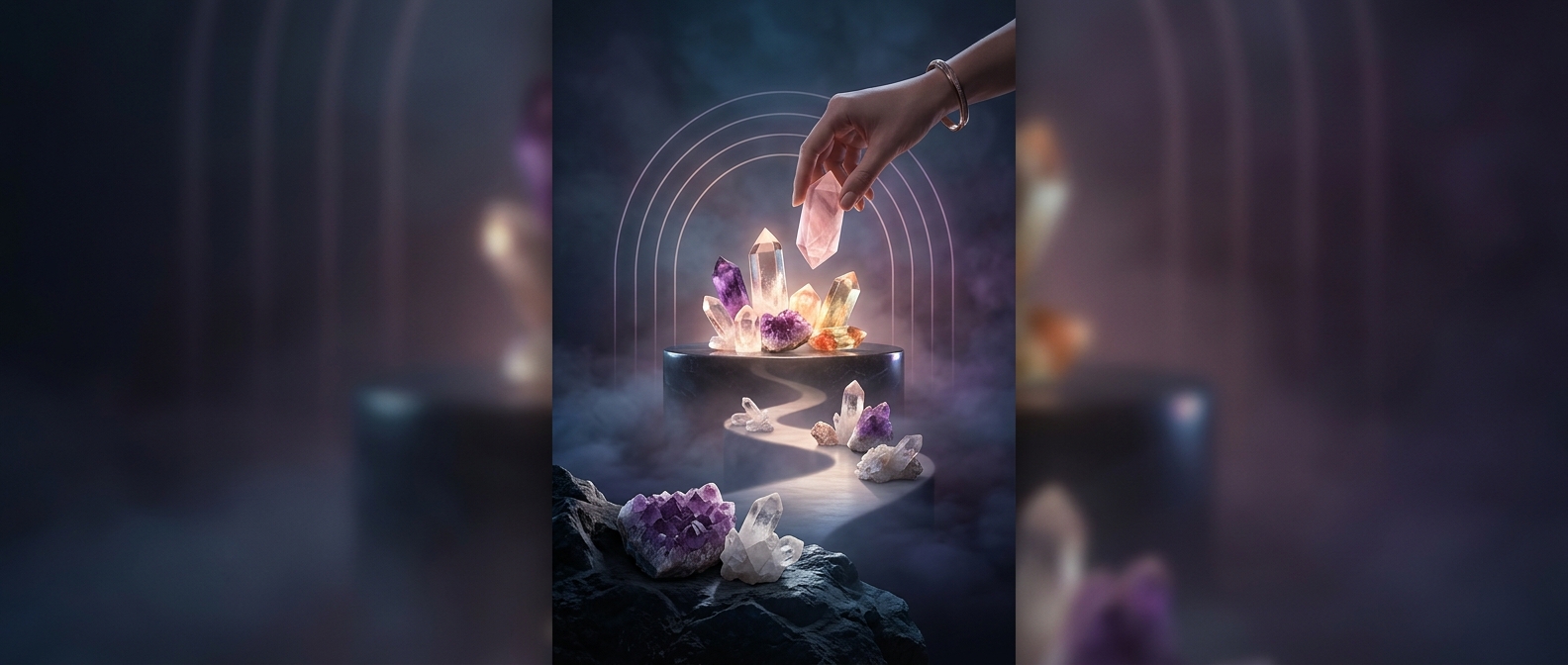
How crystals became part of the New Age marketplace
The modern crystal-healing boom was not simply a revival of one ancient, continuous practice. Crystals and other stones have held religious, protective, or symbolic meaning in many societies, but their uses differed. In the 1970s, New Age writers and sellers brought stones into a newer framework: crystals could be selected and used by individuals as tools for personal spiritual well-being.
From spiritual idea to something you could buy
Books and marketing helped make that framework easy to encounter and repeat. A reader could learn that different stones were associated with different intentions, then purchase a crystal as a tangible part of a personal ritual. The stone was no longer only an inherited cultural object or a decorative mineral; it could be presented as a practical aid for meditation, balance, or healing.
That format suited a growing market for spirituality organized around personal choice. Sellers could offer many varieties, while authors supplied interpretations that helped buyers decide what a particular stone meant. The commercial push did not create humanity’s interest in crystals. It helped turn varied older associations into a recognizable modern practice.
What the word “healing” means here
In crystal healing, practitioners attribute spiritual or emotional effects to stones, often through ideas such as energy or resonance. Those explanations are part of the belief system, not established medical mechanisms. The practice’s popularity is therefore best understood as a story about meaning and presentation: marketing helped make crystals accessible as personal spiritual tools, even as the traditions surrounding stones remained much older and more varied.