A parlor game built around a moving pointer
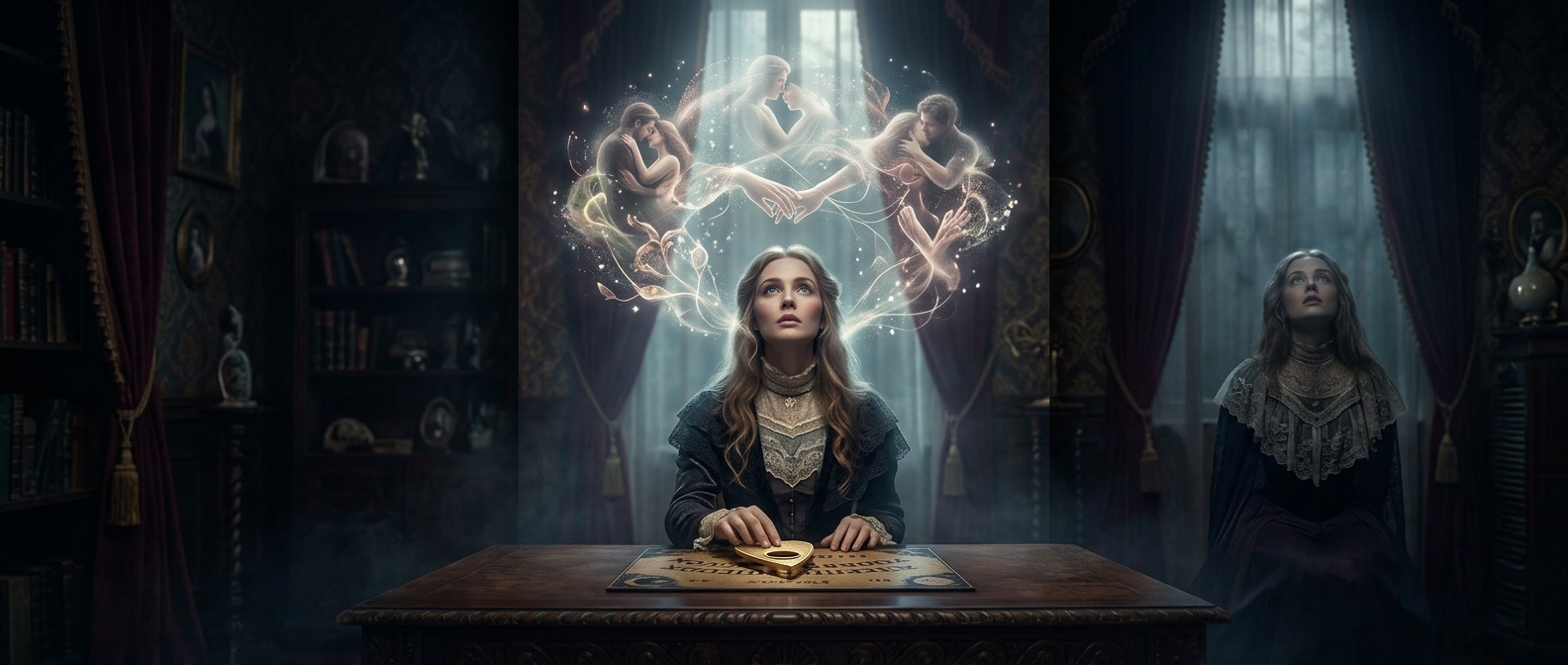
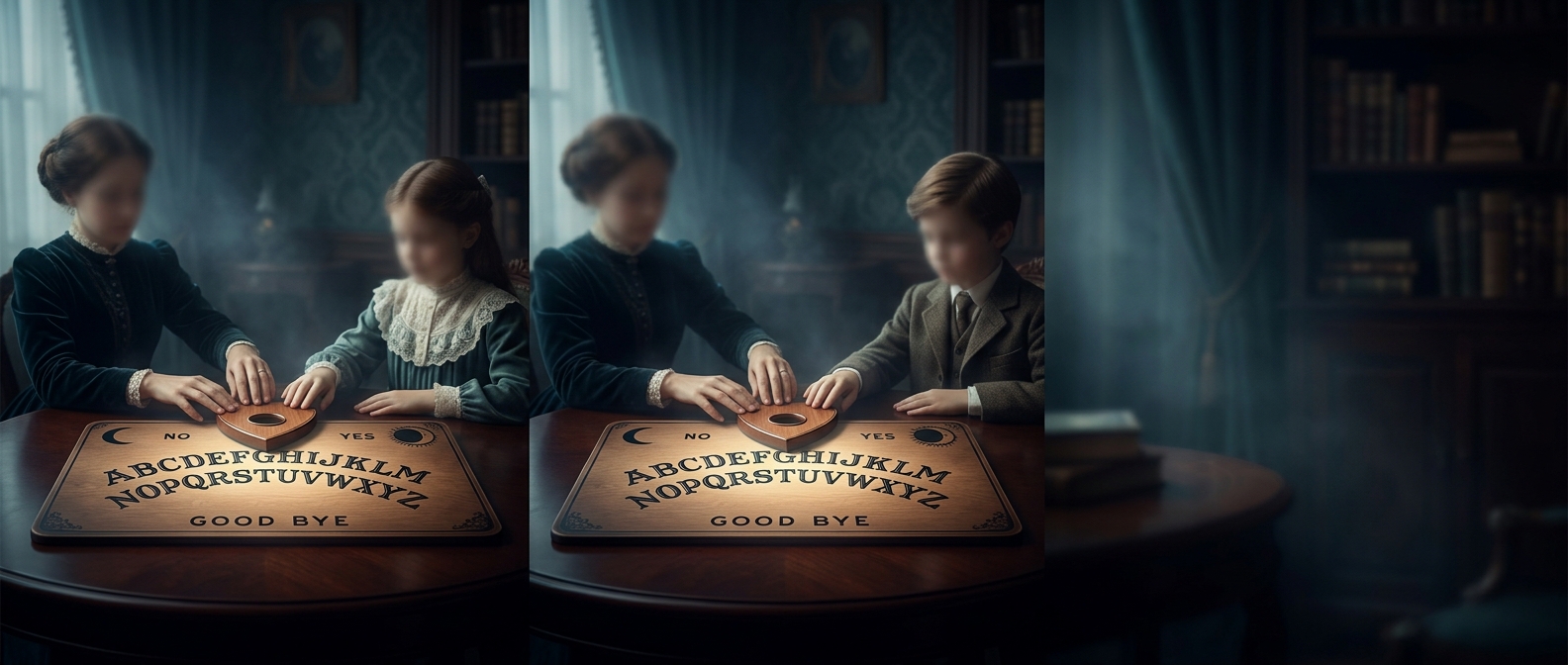
The early Ouija board turned a simple parlor activity into a spectacle. Players rested their fingertips on a small pointer, or planchette, and watched it glide across a board marked with letters and answers. Together, they could spell out messages without any one person appearing to steer the pointer. That made the game easy to learn, social to play, and intriguing to watch.
The board was patented in 1891 as a game, and its sellers presented it as affordable entertainment for home use. Its appeal drew on the era’s fascination with spiritualism—the belief that the living could communicate with the dead—without requiring every buyer to treat a session as a solemn religious practice. The commercial advantage was that the board could be both a novelty game and an invitation to wonder what, exactly, was making it move.
The mystery was part of the appeal
The pointer’s motion has a familiar physical explanation: when people make small movements without consciously intending to, those movements can guide an object while feeling as if it is moving on its own. In a group, the effect can be especially persuasive because each player feels the motion but may not recognize their own contribution.
That ambiguity helped the board occupy two roles at once. It could entertain a family or a group of friends as a guessing game, while its alphabet and message-making invited spiritual interpretations. Later horror films made the demonic reading much more prominent, but the original sales pitch did not need to choose between amusement and mystery. A board could promise an evening’s entertainment precisely because nobody had to agree on how the pointer moved.