How a light touch can move a planchette
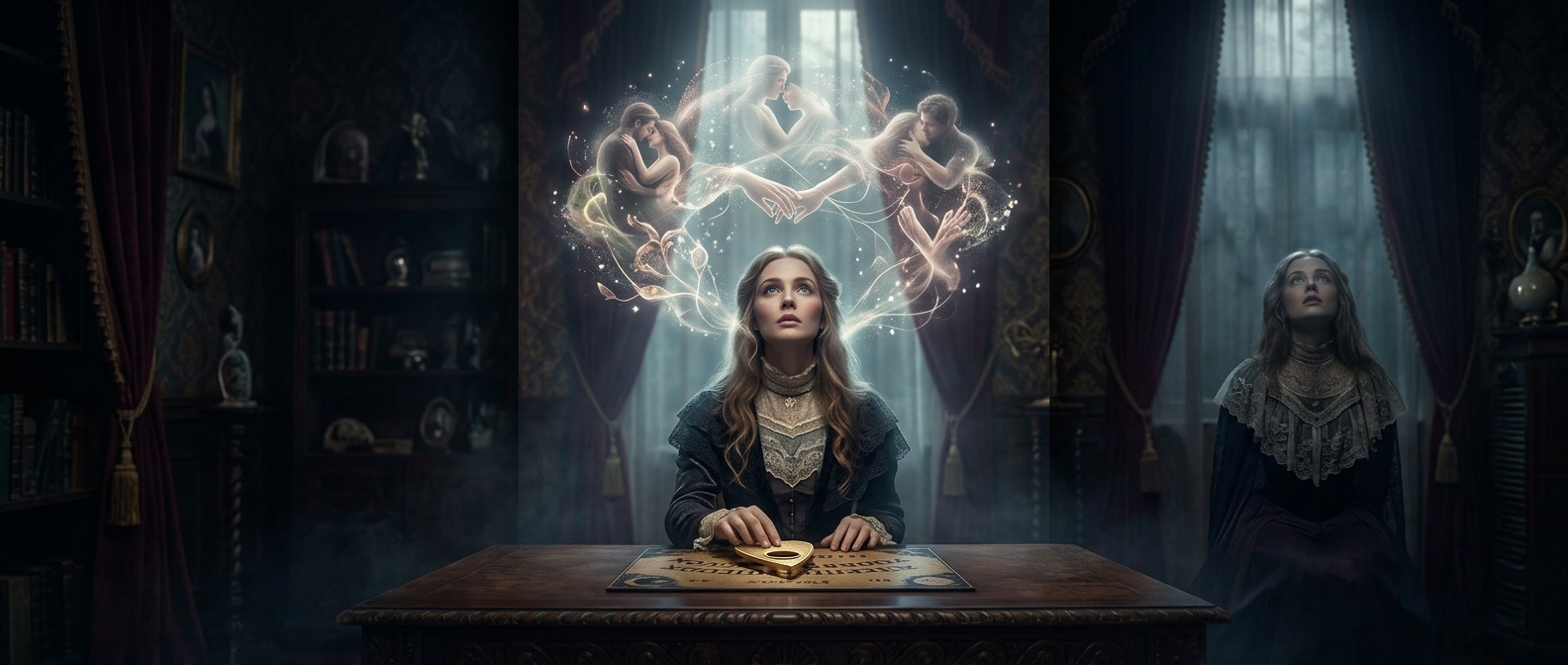
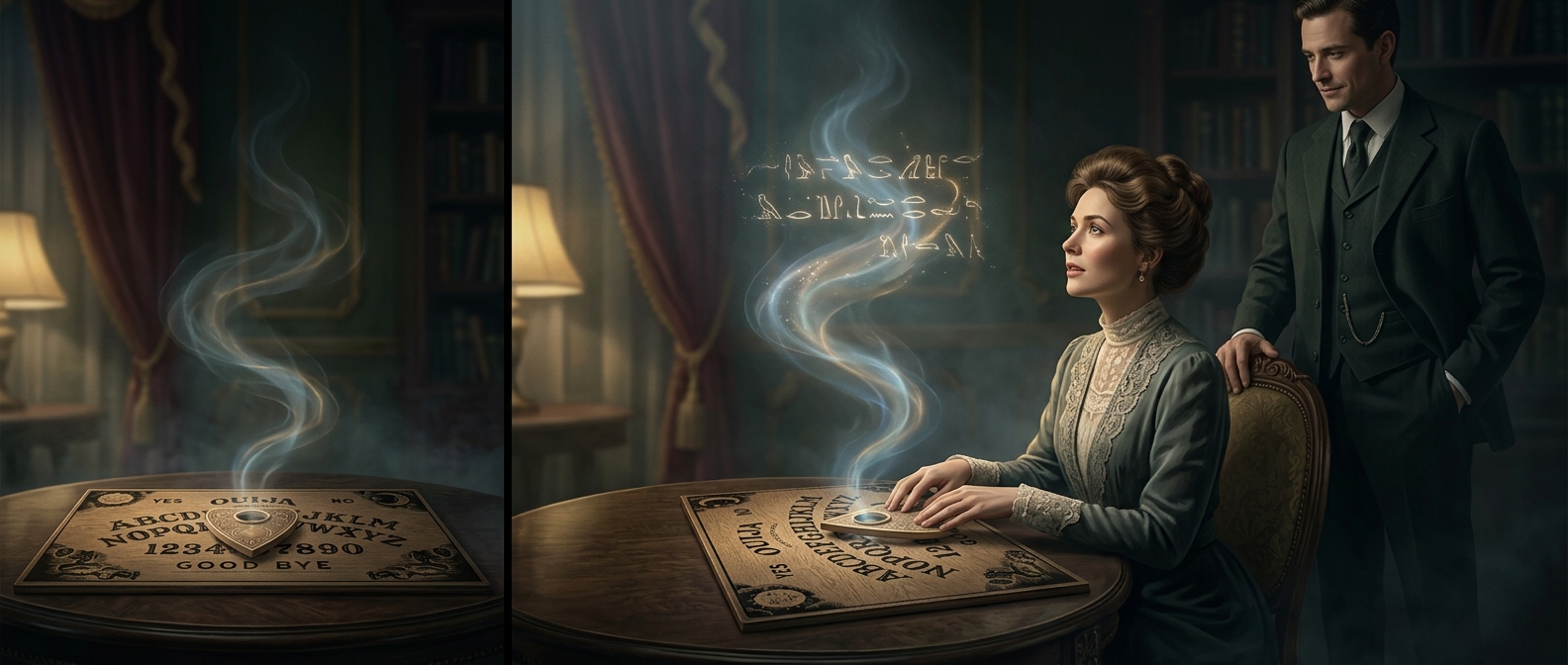
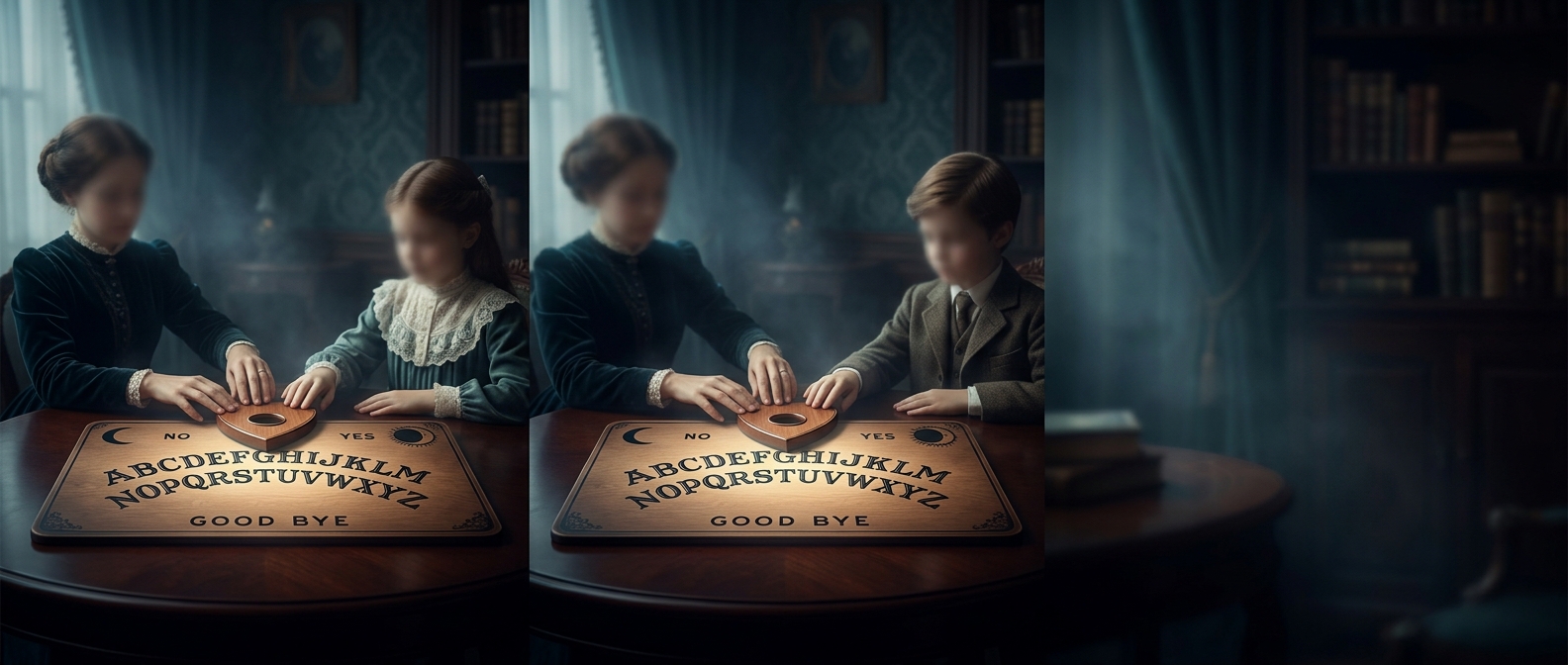
A planchette—the small pointer used on a spirit board—does not need a deliberate push to travel. When players rest their fingertips lightly on it, tiny movements from each person can add together. The pointer’s smooth base turns those subtle forces into visible motion across the board.
This is an example of the ideomotor effect: an action produced by unconscious muscle movements, often in response to an expectation or idea. Players may sincerely feel that they are holding still while their hands make small adjustments they do not notice.
Why the movement feels like a message
The board gives the moving pointer a ready-made path and a set of meaningful destinations: letters, numbers, and answers such as “yes” or “no.” Once the pointer shifts, players watch closely for where it is going. That attention can shape their next small movements, helping it continue toward a letter or word.
Because several people touch the same object, no one person may feel responsible for its direction. Each can experience the movement as coming from outside their own control—even while their combined, unconscious motions guide it. The group then interprets the pointer’s route as a message.
A game object with a larger meaning
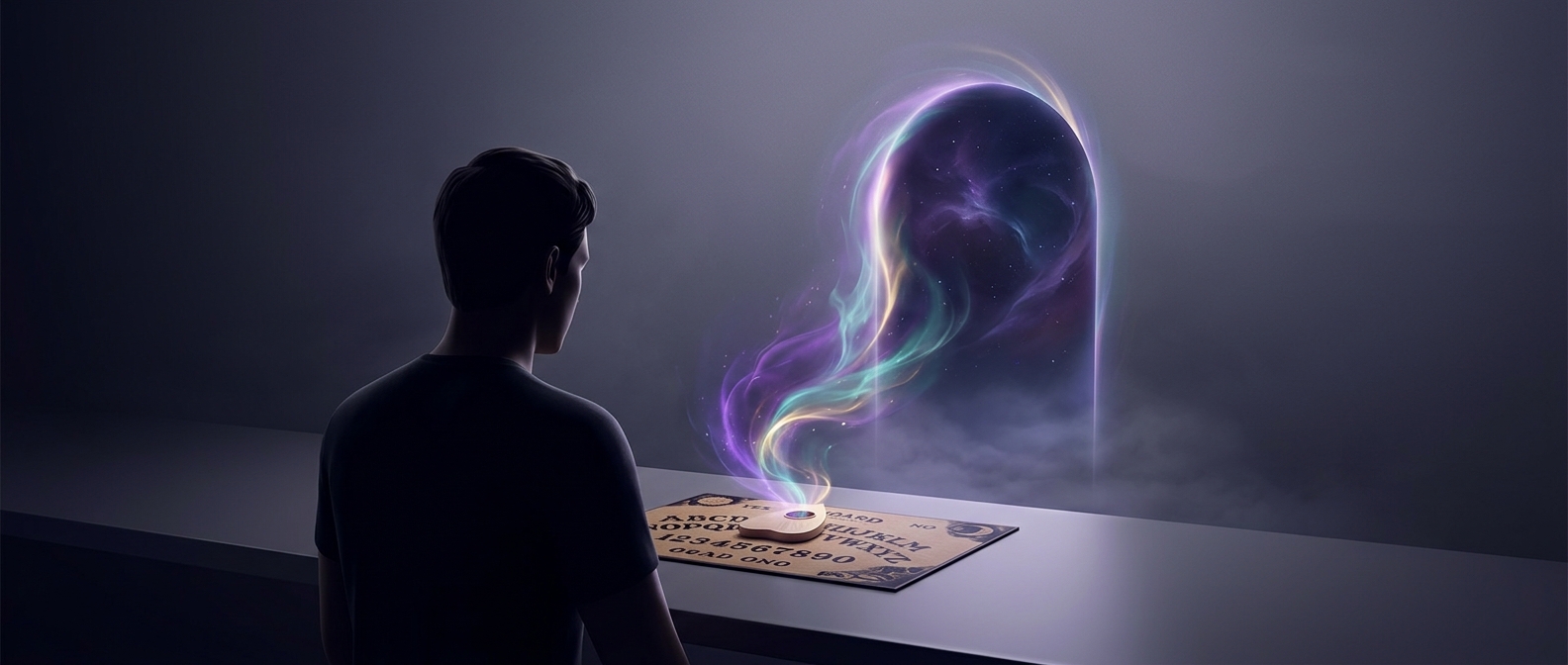
Mass-produced cardboard versions made the experience easy to bring to a table and repeat. The physical mechanism is modest, but the setup invites participants to treat the pointer as a bridge between the ordinary world and an unseen one. The sense of an external presence can arise from real movement without requiring a supernatural cause. That gap between what the hands do and what the players feel they did is part of what makes the game so compelling.