A small personal item on a tightly planned mission
Apollo 16’s astronauts could not pack casually. Every object sent to the Moon had to fit within the spacecraft’s weight and storage limits, and equipment had to be secured so it would not float or shift in flight. A family photograph was tiny beside the life-support systems and tools, but bringing it meant making room for a personal reminder of home amid a mission governed by checklists and engineering constraints.
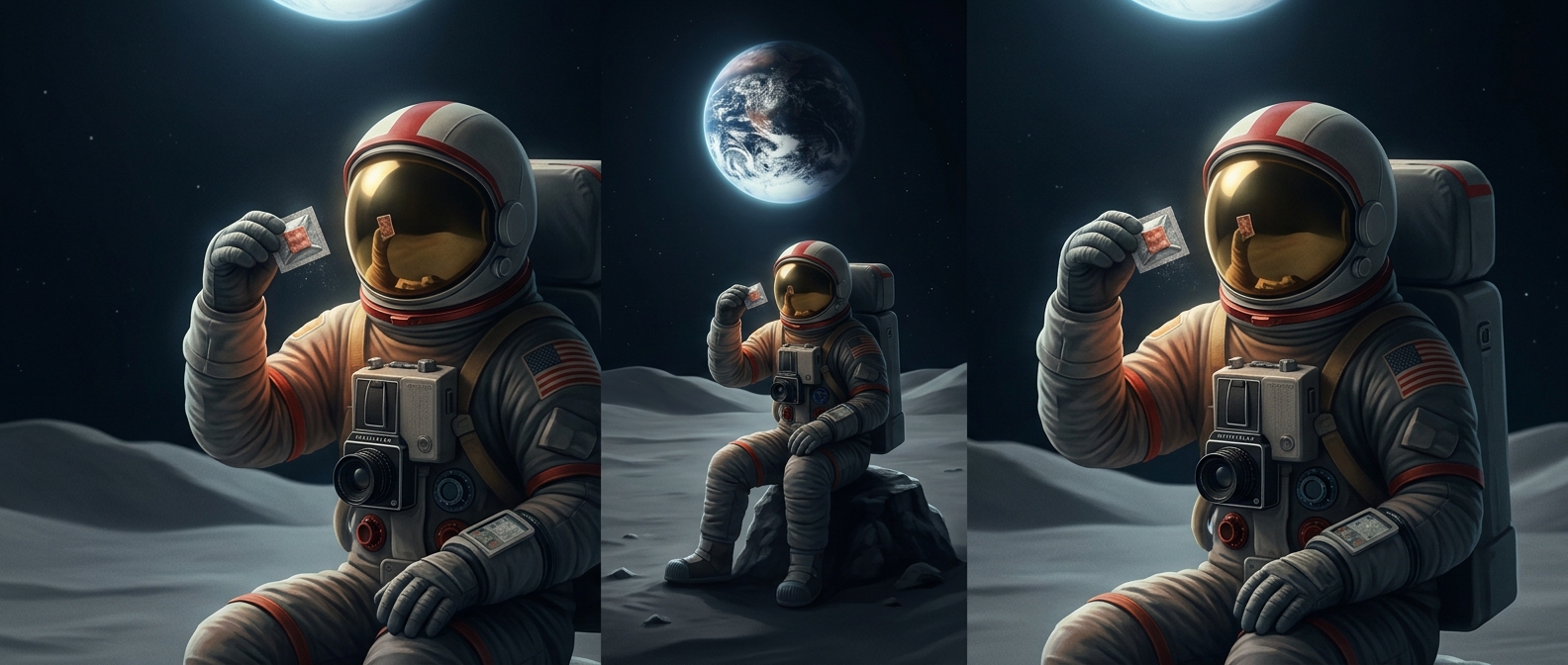
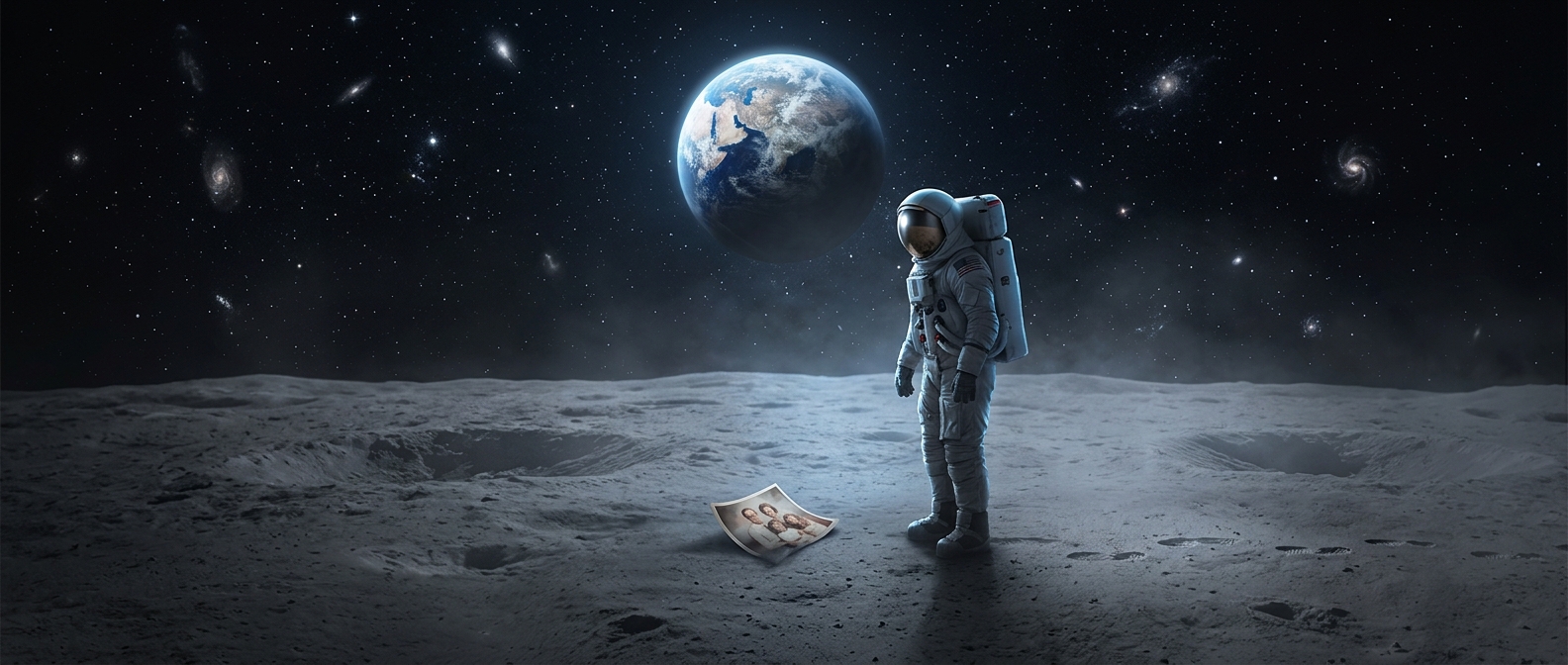
Charles Duke carried the portrait during the 1972 mission and left it on the lunar surface. The plastic covering helped shield the print from handling and lunar dust; it was not a durable vault. The Moon has no rain or wind to scatter an object, but its surface is exposed to intense sunlight and radiation, which can damage photographic materials over time.
A portrait made for two very different worlds
On Earth, a family photo is usually kept close, passed around, or stored indoors. On the Moon, Duke’s image became a one-of-a-kind trace of the people connected to an astronaut who had traveled there. Its placement also made the distance concrete: a familiar household portrait was now resting in a landscape no family could visit together.
The photograph’s significance lies partly in that contrast. Apollo missions carried instruments to collect data and equipment to keep astronauts alive; this small keepsake served no technical purpose. It turned a vast achievement into something intimate—and left a reminder whose setting was far more extraordinary than the image itself.