Why a VHS Movie Didn’t End When the Credits Did
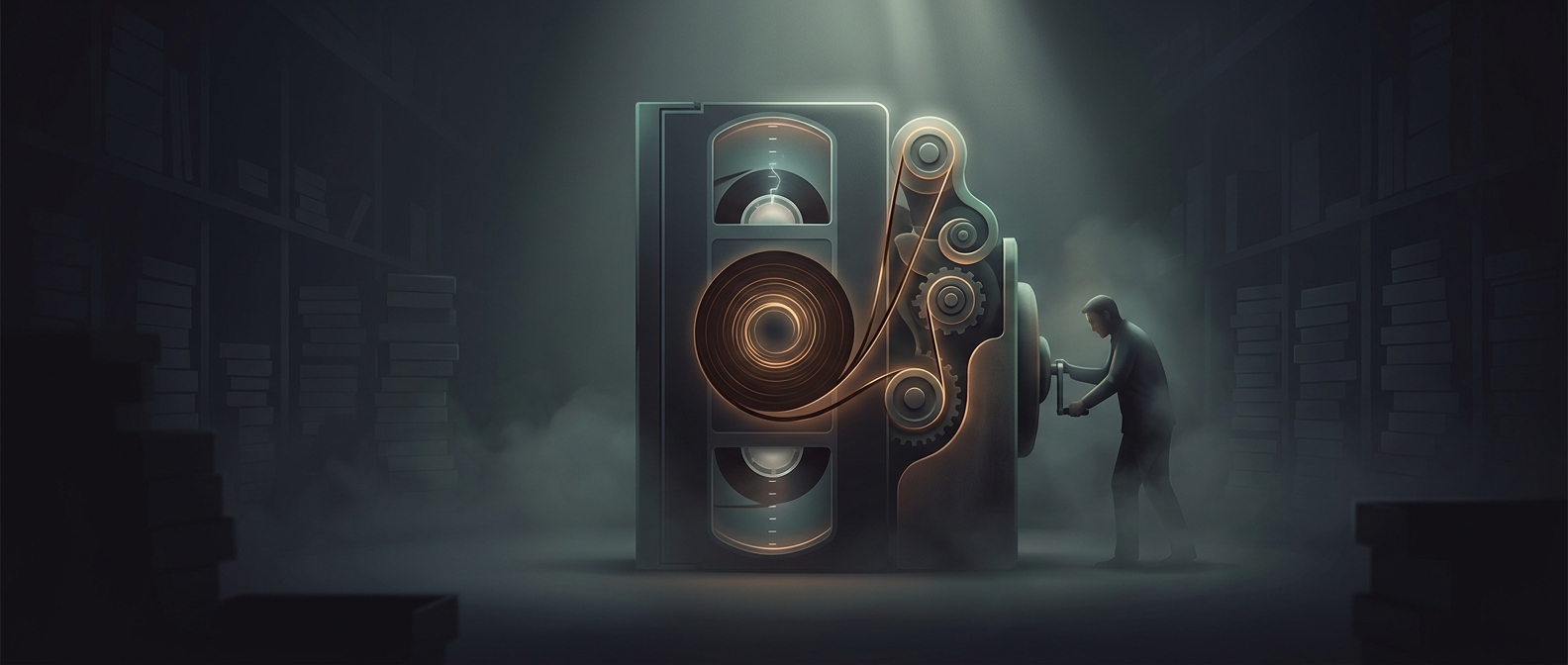
Inside a VHS cassette, a long strip of magnetic tape sits wound around two spools. During playback, the VCR pulls it from one spool to the other, reading the changing magnetic pattern that encodes the picture and sound. By the time the movie ends, most of the tape is gathered on the take-up spool, not back at the beginning.
Rewinding reverses that movement. The VCR’s motor spins the spools in the opposite direction, hauling the tape back through the cassette so the next viewing can start at the opening. It is a mechanical reset, not simply a matter of pressing “stop.”
A Small Chore in a Shared Rental System
Rental stores needed each cassette ready for the next customer. A tape returned at the end of the movie could otherwise leave someone else waiting while it rewound. Stores therefore asked renters to rewind before bringing movies back, and some charged a fee when tapes were returned unrewound. The policy shifted a little preparation work from the store to the person who had just watched the film.
The chore could take several minutes, especially for a long recording. Some VCRs had a rewind button that handled it automatically; separate rewinders could do the job without tying up the machine. Either way, the tape had to travel physically across the cassette before it was ready again.
That made the end of a VHS rental unusually tangible: finishing a movie meant one more whirring task before the story was truly put away.