Why tape drives need a steady stream
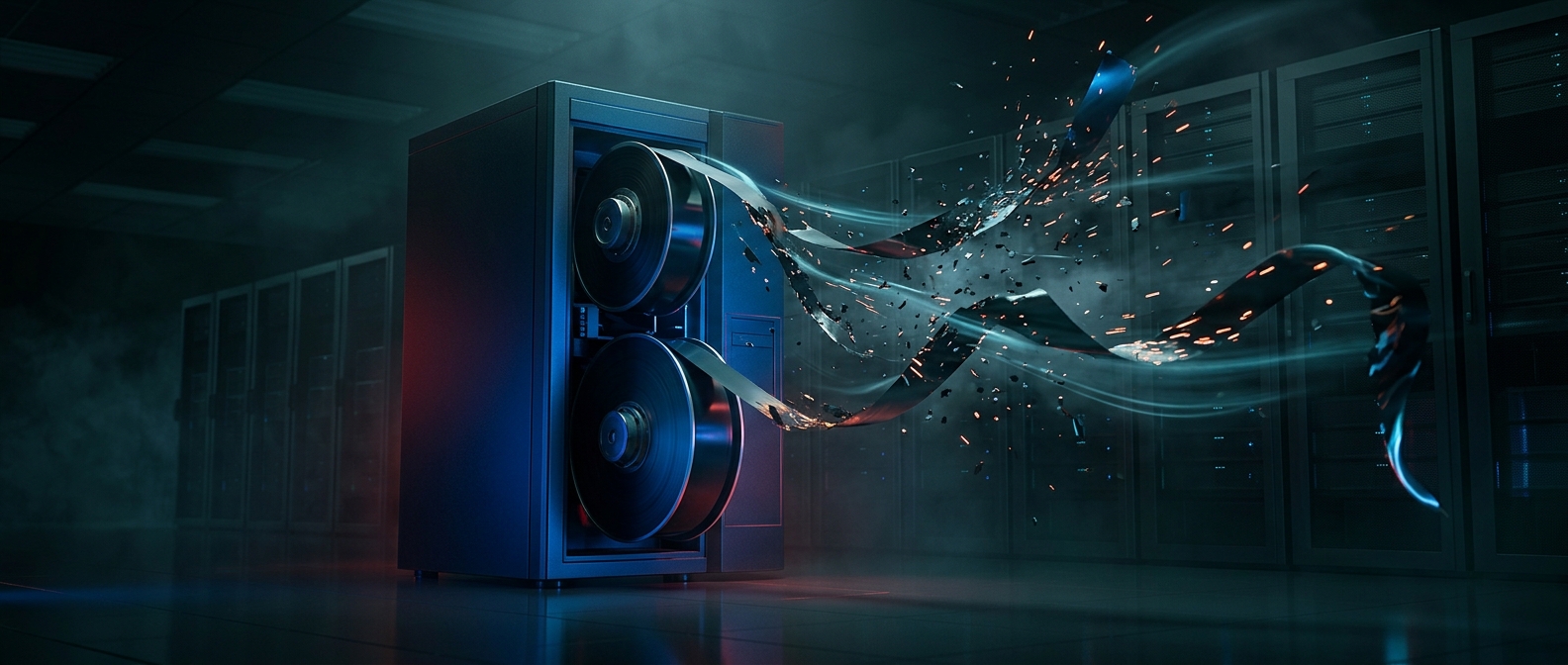
A tape drive is built to move tape past its read-and-write heads at a steady speed. Unlike a disk, which can jump directly to a chosen spot, tape is a long ribbon: reaching data means physically moving it. The drive can hold some incoming data in a buffer, a temporary storage area, but that buffer cannot cover an extended pause from the computer sending data.
The stop-and-restart cycle
If the buffer empties, the drive may halt the tape and move it backward a short distance. When more data arrives, it accelerates forward again and resumes writing. This repeated back-and-forth motion is often called “shoe-shining,” after the sliding motion of a shoe being polished.
Each restart takes time and adds mechanical stress. The tape repeatedly passes over the heads, which must stay in close contact with its surface to read or write information. Enough cycles can wear the tape and heads, and the drive spends more time recovering its position than transferring data.
Keeping the tape moving
The computer and drive therefore have to work together: the system must deliver data fast enough, and in large enough bursts, to keep the drive’s buffer supplied. A tape drive’s speed is useful only when the data stream can sustain it. If the stream falters, the drive’s protective stop-and-reposition routine can become a source of both wasted time and wear.