Why Sam’s body becomes part of the arsenal
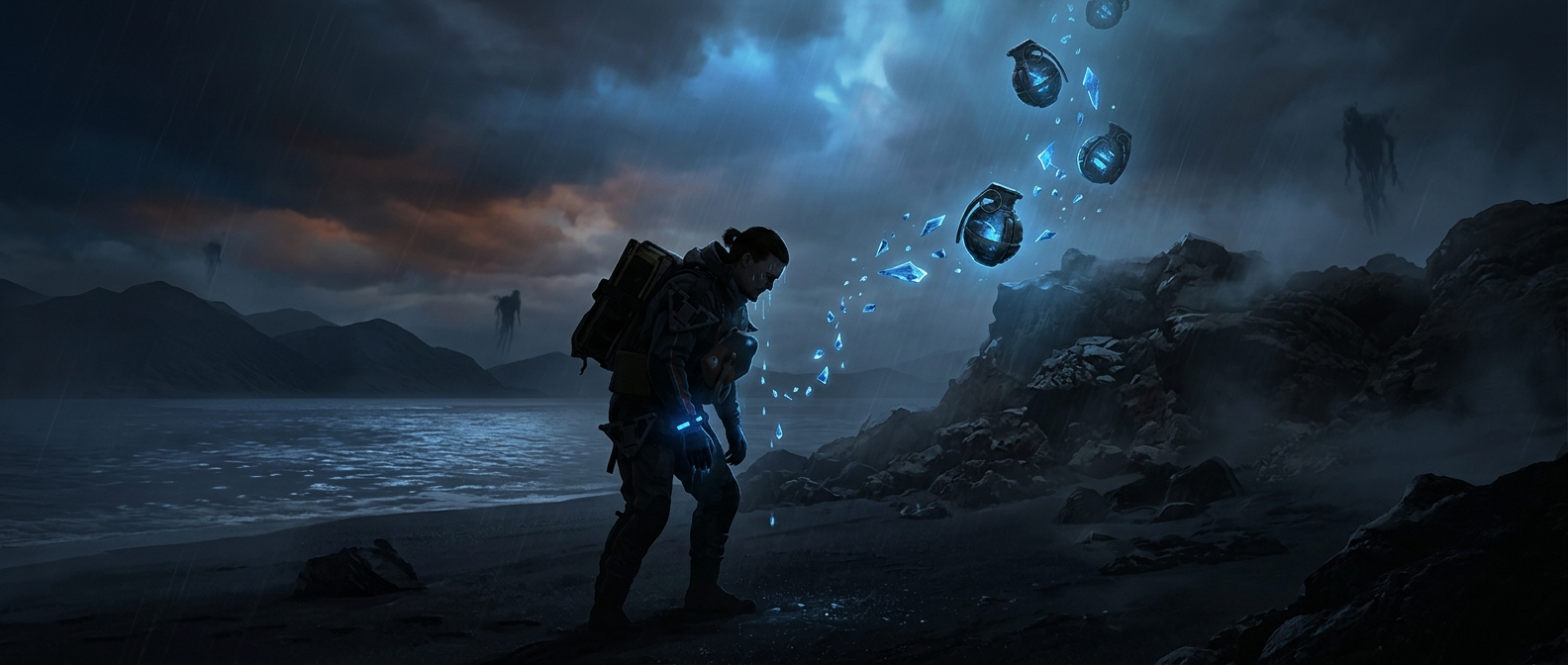
In Death Stranding, ordinary weapons are not the only way to deal with BTs—hostile, invisible beings that threaten people on the road. Sam’s bodily fluids can also be turned into throwable weapons. The idea makes his body’s unusual connection to the game’s supernatural world a practical part of play, rather than just a story detail.
Blood becomes the most direct tool: hematic grenades use it to damage BTs. Other grenades are made from sweat, urine, and feces. These bodily-fluid weapons have different effects on BTs, so choosing what to carry is a tactical decision, not simply a joke about their ingredients.
From private-room routine to field equipment
Sam replenishes his supplies in private rooms—safe spaces where he can rest and recover between deliveries. The game connects familiar bodily routines there to the equipment he can take back into dangerous territory. That creates a small resource loop: time spent recovering can also help prepare him for encounters ahead.
The design fits Death Stranding’s larger emphasis on making the body and its limits tangible. Sam is a courier who must manage cargo, stamina, and danger; now even the substances his body produces can affect what happens on the road. The result is an arsenal that is deliberately strange but mechanically legible: when conventional force is not the only answer, a bodily function can become a piece of survival gear.