Why a Small Slope Can Become a Big Decision
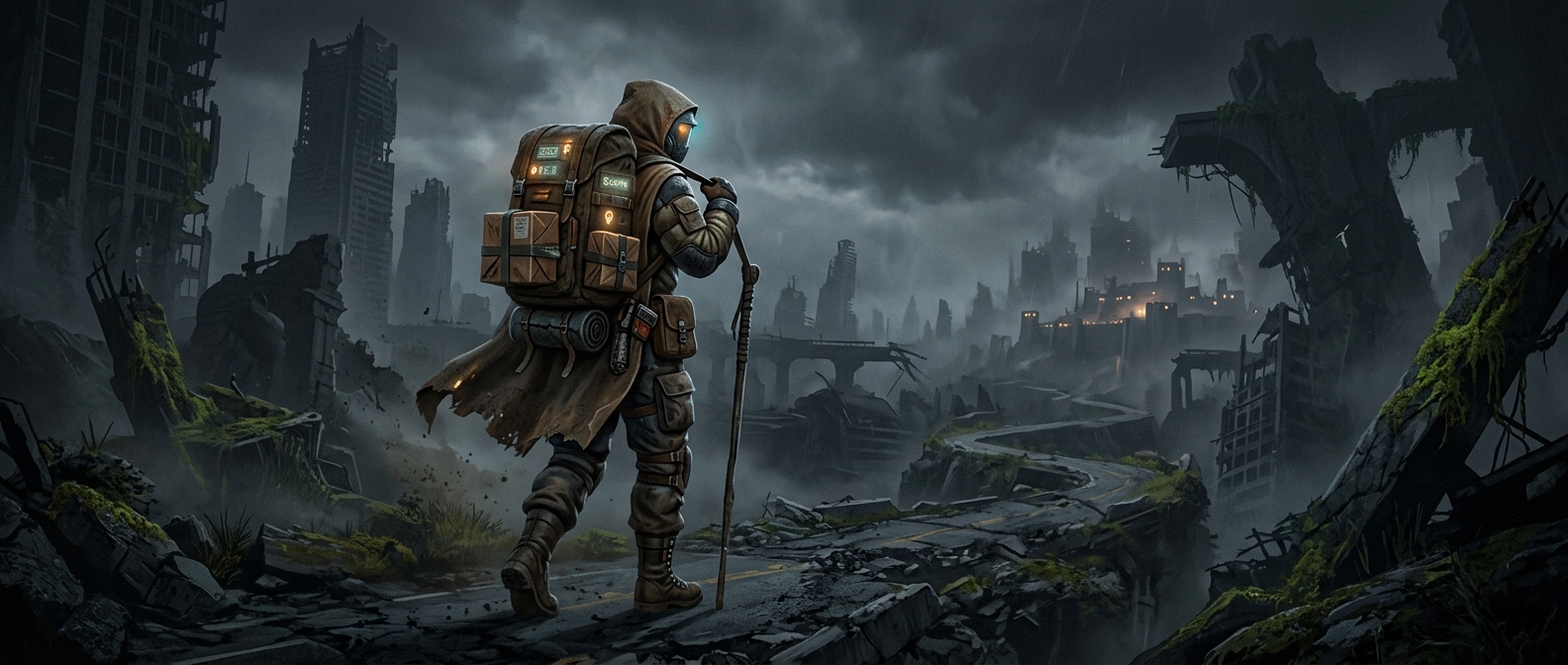
In Death Stranding, walking is not just the pause between one objective and the next. The game tracks how a courier’s cargo is stacked and how uneven ground affects balance. A loaded character can lean or stumble when crossing a slope, loose stones, or a stream; a fall can damage packages and leave the courier scrambling to recover them. The challenge is less about calculating a literal center of gravity than about reading the terrain and managing the risk of losing control.
The Route Is Part of the Puzzle
Before setting out, players can study a topographical map—a map that shows changes in elevation—and choose a path. A direct line to the destination may cross steep ground, while a longer route may offer a safer crossing or a place to rest. Once moving, players can adjust their posture and cargo balance, but those controls demand attention. Footwear also wears down, so a route that was manageable earlier can become more hazardous as the journey continues.
These systems make preparation matter. Taking fewer deliveries, rearranging the load, or bringing equipment can reduce the chance of a costly stumble, but each choice uses up space or resources. The player is constantly weighing convenience against security rather than simply following a marker at full speed.
Why the Slow Pace Works
That friction changes what counts as progress. In many open-world games, traversal is mainly a way to get to the next fight or story scene. Here, reaching a destination with the cargo intact is itself an accomplishment. The terrain becomes an obstacle without needing an enemy to attack, and a careful detour can feel more satisfying than a fast trip.
The result is a journey where a modest hill can demand real attention: not because walking is difficult in every moment, but because each step is made consequential by the weight on the courier’s back.