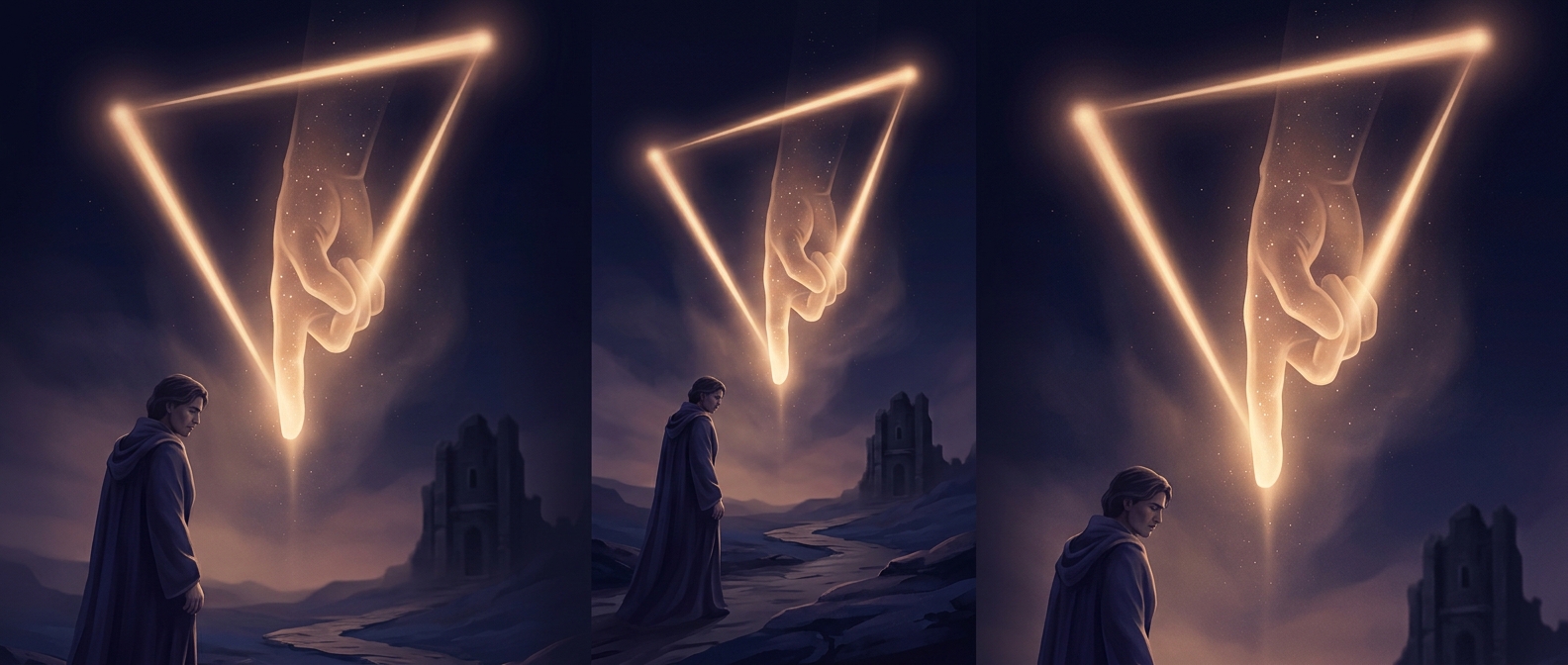
How a Yod Gets Its Point
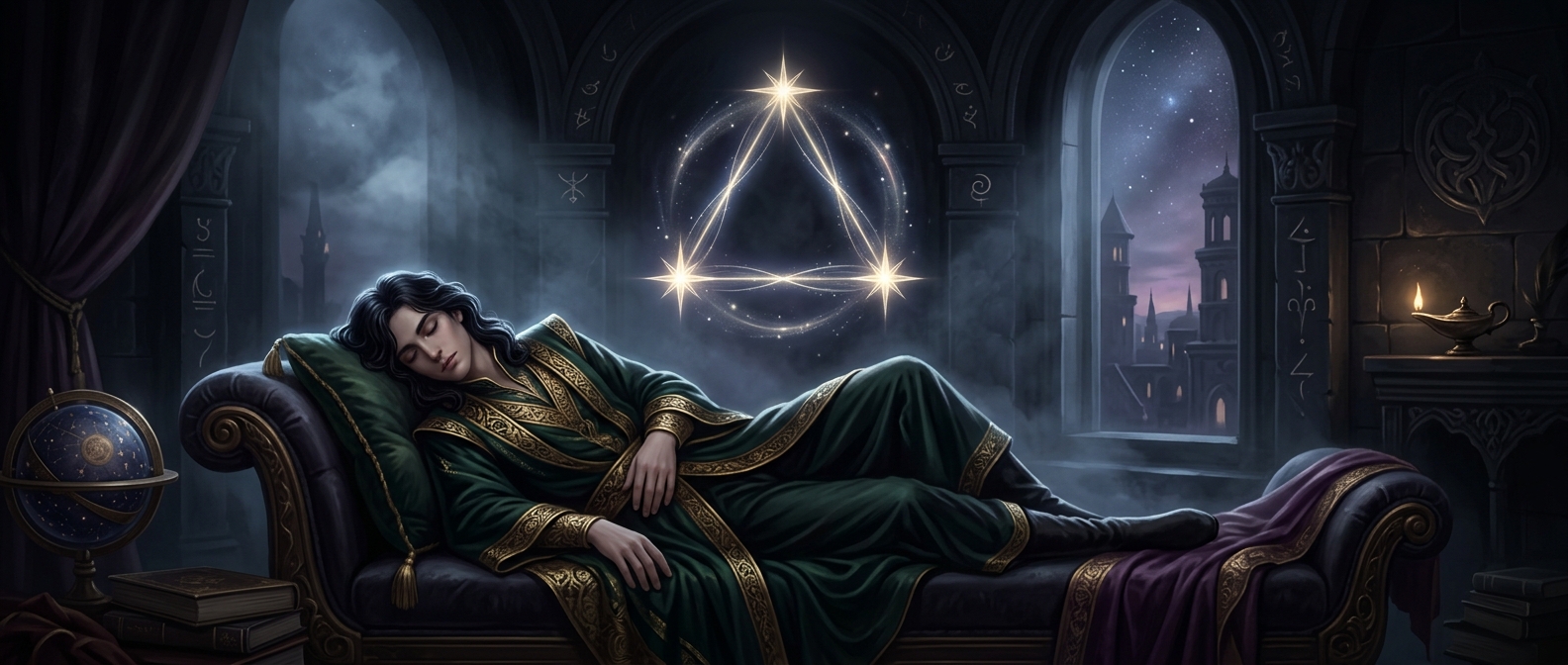
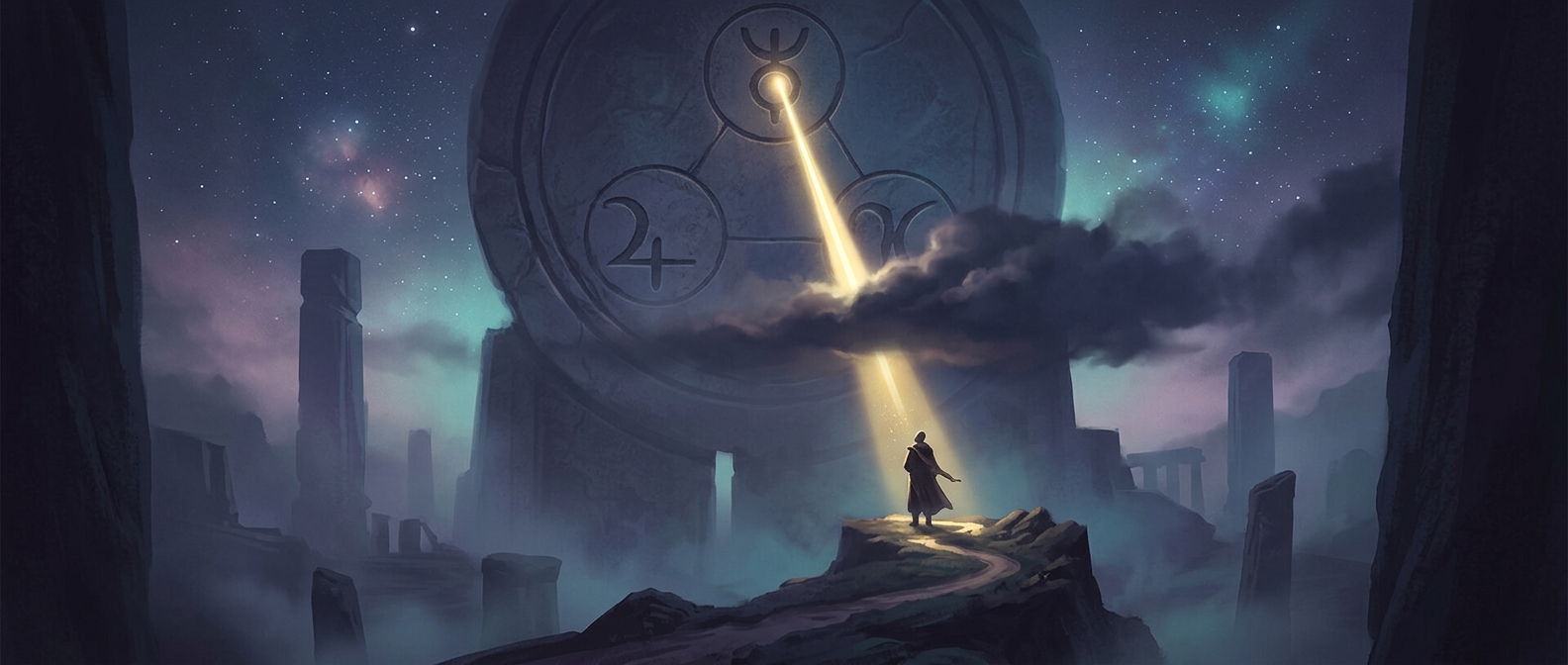
In astrology, a Yod is a pattern involving three planets. Two form a sextile, an angle astrologers generally interpret as cooperative or constructive. Each of those planets also forms a quincunx with the third: an angle of about 150 degrees, traditionally associated with mismatch and the need to adjust. On a chart, the two long connections meet at the third planet, creating the shape that gives the pattern its nickname, the “Finger of God.”
Why Astrologers Read It as a Challenge
The interpretation comes from the contrast between the aspects. The two planets at the broad end are thought to offer resources that can work together, while the planet at the point is linked to both through awkward, hard-to-reconcile angles. Astrologers therefore treat the pointed planet—and the life themes associated with its sign and house—as a focus for repeated adjustment.
That tension is what gives the Yod its reputation as a fated challenge. “Fated” is astrological language for a pattern seen as unusually significant, not proof that a particular hardship is unavoidable. Different astrologers may also weigh the planets and chart context differently.
The Finger Points to a Theme, Not a Verdict
In practice, an astrologer might use a Yod to frame questions about where a person feels pulled between competing demands, or where familiar strengths do not immediately resolve a recurring problem. The chart supplies a symbolic interpretation: the pointed planet identifies the area to examine, while the two planets at the base suggest parts of the chart that may contribute to the tension.
So the image is less a literal prediction of an “inescapable life burden” than a compact astrological story about pressure to adapt. Its memorable finger shape turns a complicated set of angles into one pointed question: what keeps requiring a different approach?