A precise shape with no clear label
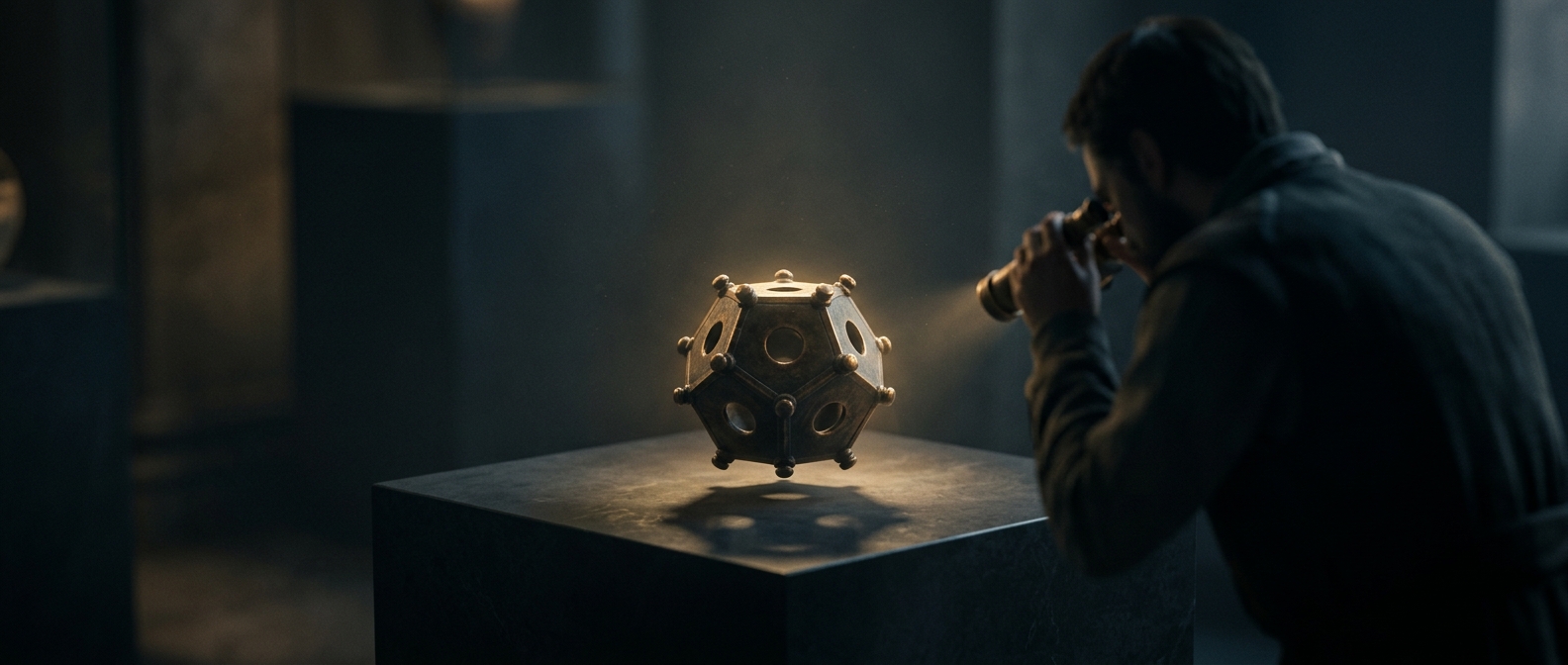
The objects are usually called Roman dodecahedra: small, hollow bronze forms with 12 flat pentagonal sides. Each side has a circular opening, and the openings are often different sizes; rounded knobs project from the corners. They turn up at Roman-period sites, especially in the empire’s northwestern provinces.
That repeated design suggests they were made for a purpose, not simply as random lumps of metal. But the shape does not point to one obvious task. A device for measuring or aligning something, for instance, might explain the varied holes—but it does not by itself explain the knobs or why objects of this kind were made in different sizes.
Why the theories stay theories
A proposed use becomes convincing when it fits more than the object’s appearance. Archaeologists would want clues such as wear from repeated handling, traces of what was placed inside, a consistent setting where the objects were used, or an ancient description that names them. For the dodecahedra, those clues have not produced a settled answer.
That leaves room for ideas ranging from practical instruments to objects used in games or ritual. A resemblance to a modern tool is suggestive, but resemblance alone cannot show how an ancient person held or used it. Nor does a clever reconstruction prove that the reconstruction matches the original purpose.
The missing piece is context
The mystery is not that the objects are featureless; their careful, repeated construction is precisely what makes their unknown role striking. It is that the shape has survived while the instructions for using it—and the everyday setting that might have made its purpose obvious—have not. Until those clues emerge, the dodecahedra remain evidence of a Roman craft tradition whose practical meaning has slipped out of view.