A decree became a key to a lost writing system
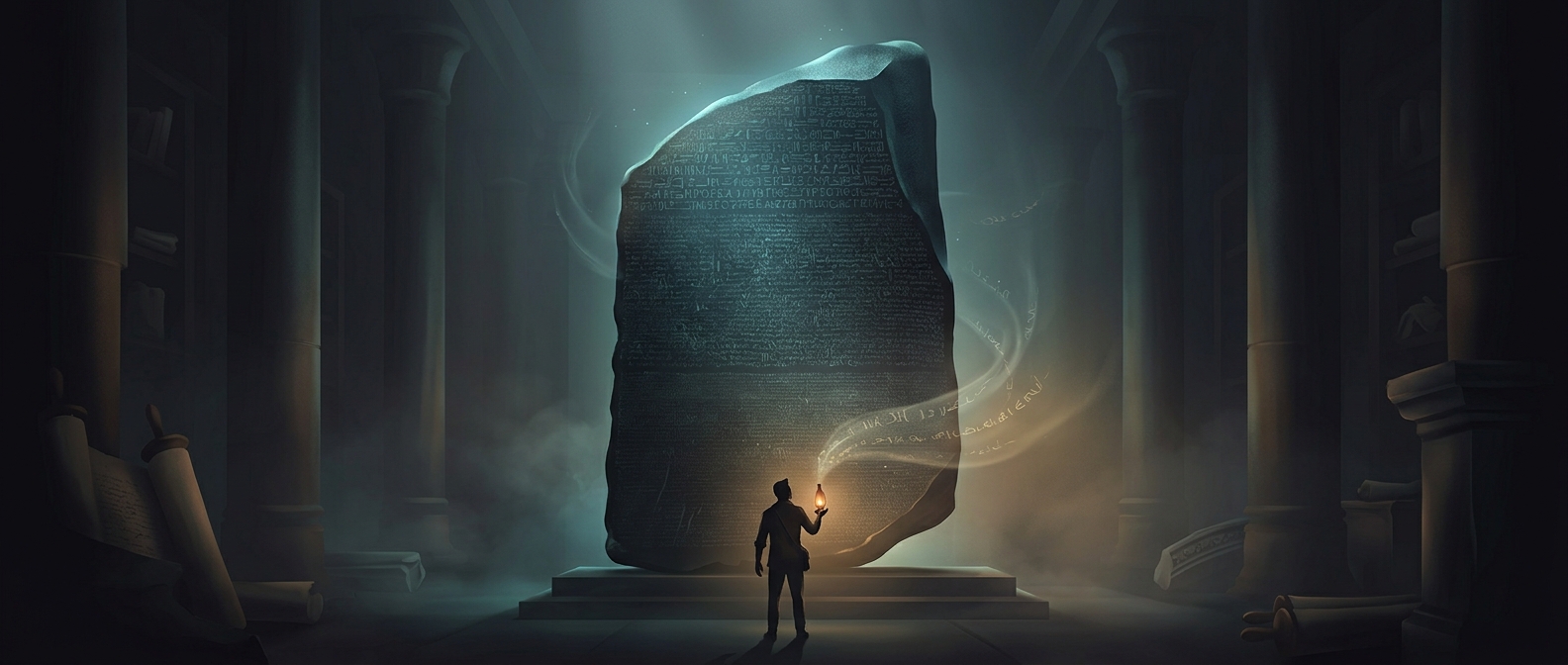
The Rosetta Stone mattered not because it was a dictionary, but because it preserved one official message in forms scholars could compare. Carved in 196 BCE, the decree honored Ptolemy V, a young ruler of Egypt. Its Greek version was readable to scholars; the Egyptian versions used hieroglyphs and Demotic, a flowing script used for everyday writing and administration.
That pairing made the stone a kind of translation test. If a name or phrase appeared in the Greek text, researchers could look for a corresponding passage in the Egyptian scripts. But the scripts did not work like simple letter-for-letter substitutes: Egyptian writing could use signs for sounds, whole words, or ideas, and the Greek and Egyptian texts did not always align neatly.
The breakthrough was recognizing how signs worked
For a long time, some scholars assumed hieroglyphs were mainly symbolic pictures. The crucial shift was to test whether signs could also represent spoken sounds. Royal names offered a useful place to start: names such as Ptolemy were foreign to Egyptian, making their sound-based spelling easier to identify across versions.
Jean-François Champollion made a decisive advance in 1822 by showing that hieroglyphic writing combined sound signs with other kinds of signs. That insight let readers move beyond matching isolated names and begin interpreting the language and grammar of longer passages. The stone did not unlock the script all at once; it supplied a comparison that helped make a broader method possible.
One object, three audiences
The decree’s multiple scripts reflected Egypt’s layered political world. Greek was associated with the ruling dynasty, while Egyptian writing carried the decree to local readers in forms with different levels of formality. The same act of royal authority could therefore be presented across linguistic communities.
Its lasting importance is practical: the readable Greek gave scholars a foothold, but understanding the Egyptian text required working out how its writing system actually encoded language.