The Three Knots in Kundalini Practice
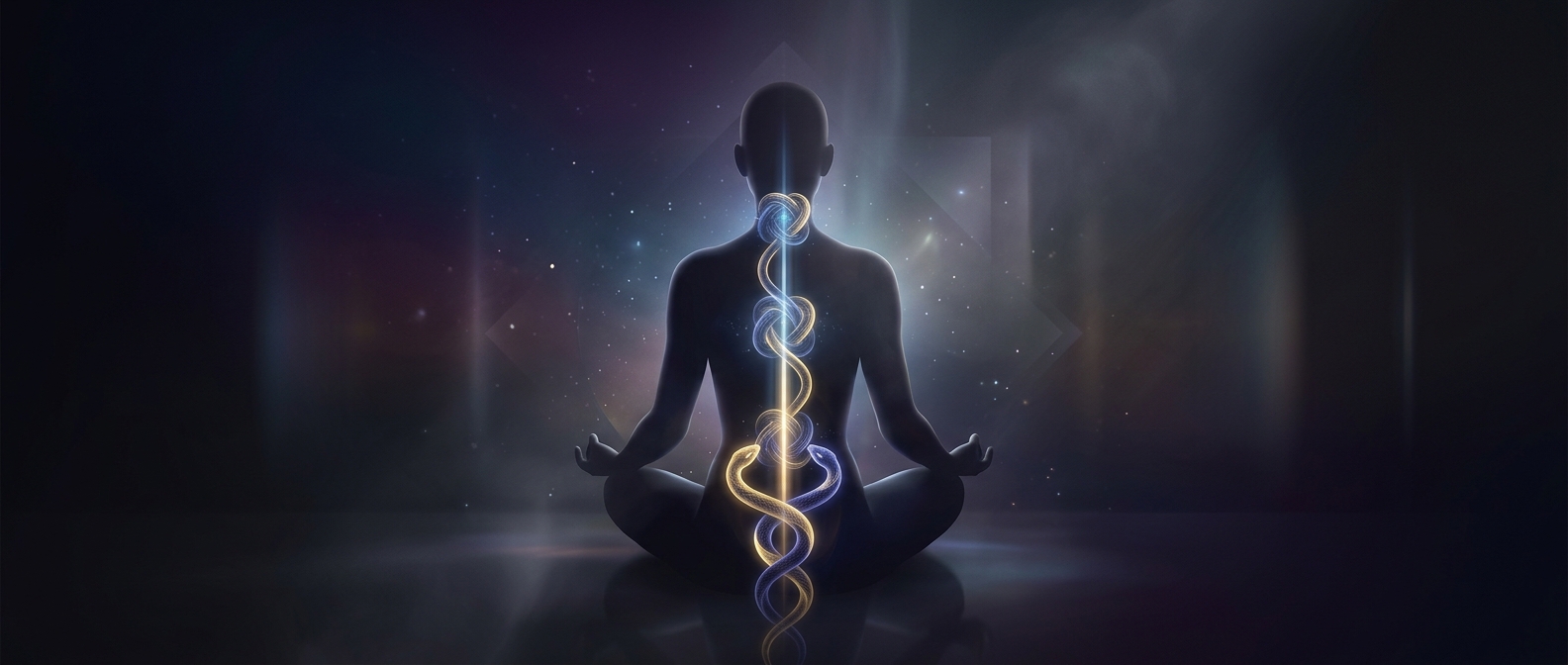
In Shakta Tantra, kundalini is described as a dormant spiritual power that rises through the body’s subtle channels toward awakening. Along that imagined ascent, it encounters three granthis, a Sanskrit word meaning “knots.” These are not physical obstructions: they are symbolic barriers in a map of spiritual practice.
What the Knots Represent
The knots are associated with Brahma, Vishnu, and Rudra, forms of the divine linked to different aspects of existence. In this tradition’s interpretation, the first knot binds awareness to bodily life and material concerns; the second to emotion and attachment; the third to ego and the sense of being a separate, self-defining person.
The names give practitioners a way to describe stages of inner work. “Piercing” a knot means loosening the attachment it represents—not forcing energy through an anatomical passage. The symbolism turns an abstract aim, such as freedom from ego, into a sequence within a spiritual map.
Why the Knots Matter
The image also explains why kundalini’s rise is not always presented as automatically liberating. If a practitioner’s attachments remain unresolved, the tradition says that intensified spiritual experience can bring distress instead of clarity. The knots therefore mark both obstacles and cautions: awakening requires transformation, not merely an unusual sensation.
The practical implication is built into the metaphor. The ascent is measured not just by how powerful an experience feels, but by whether a person becomes less bound by material fixation, emotional clinging, and ego.