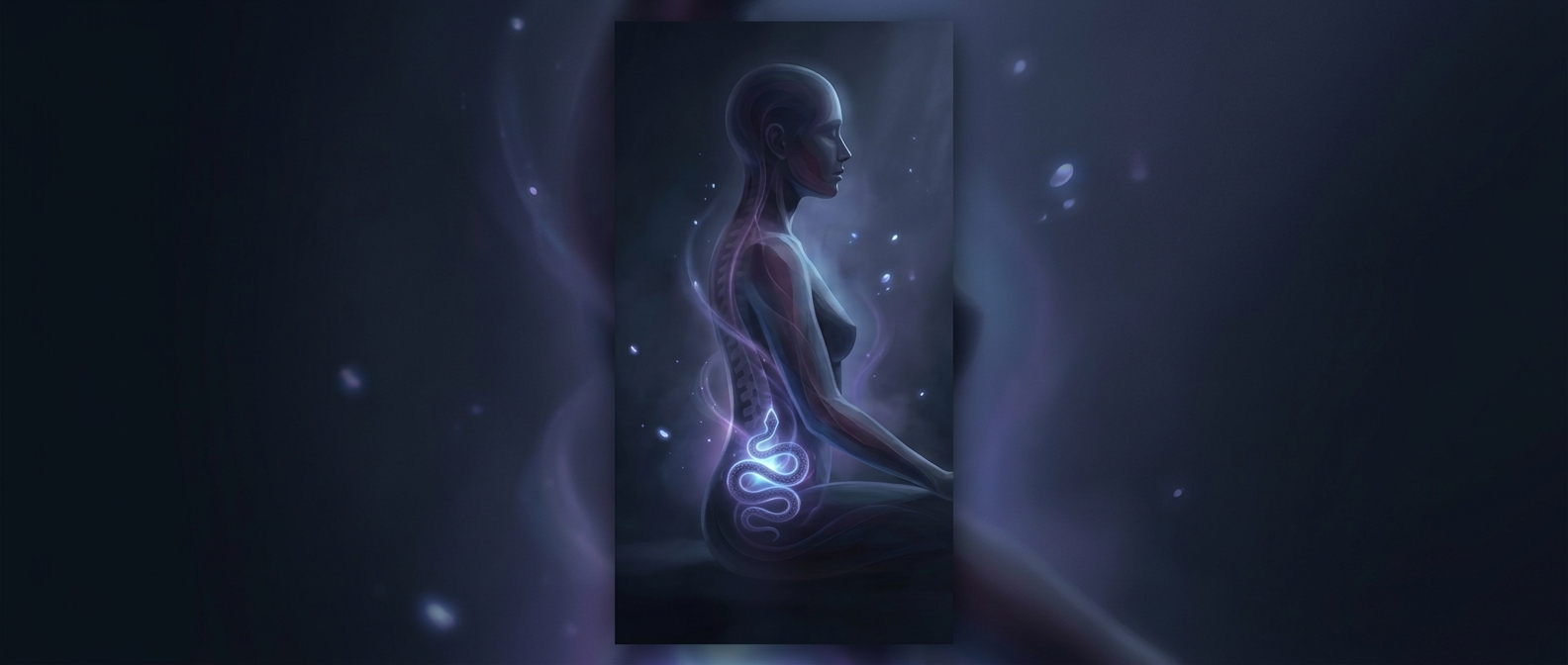
Two currents in the yogic subtle body
Ida and Pingala belong to the subtle body: a traditional map of inner experience, not a diagram of nerves, blood vessels, or other structures identified by anatomy. In this map, channels called nadis carry vital energy. Ida and Pingala are often pictured winding around a central channel, with their crossing points giving the image a sense of interdependence rather than two isolated forces.
Their feminine and masculine associations are symbolic, not a claim that every person has one channel tied to biological sex. Ida is commonly linked with lunar, receptive qualities; Pingala with solar, active ones. The pairing makes a way to describe contrasting tendencies—such as inward attention and outward action—as parts of a whole.
Balance as a practice, not a measurement
In yogic practice, this model can guide attention during breathing or meditation. A practitioner may use deliberate breathing and concentration to seek steadiness between the qualities associated with the two channels. The point is not to measure energy moving through a physical tube, but to work with a traditional language for noticing and shaping experience.
That distinction matters: the image can be meaningful within yoga’s spiritual framework without being treated as established physiology. Its enduring appeal lies in the idea that composure comes not from defeating one side, but from bringing contrasting tendencies into relationship.