The Color on the Box Is a Best-Case Scenario
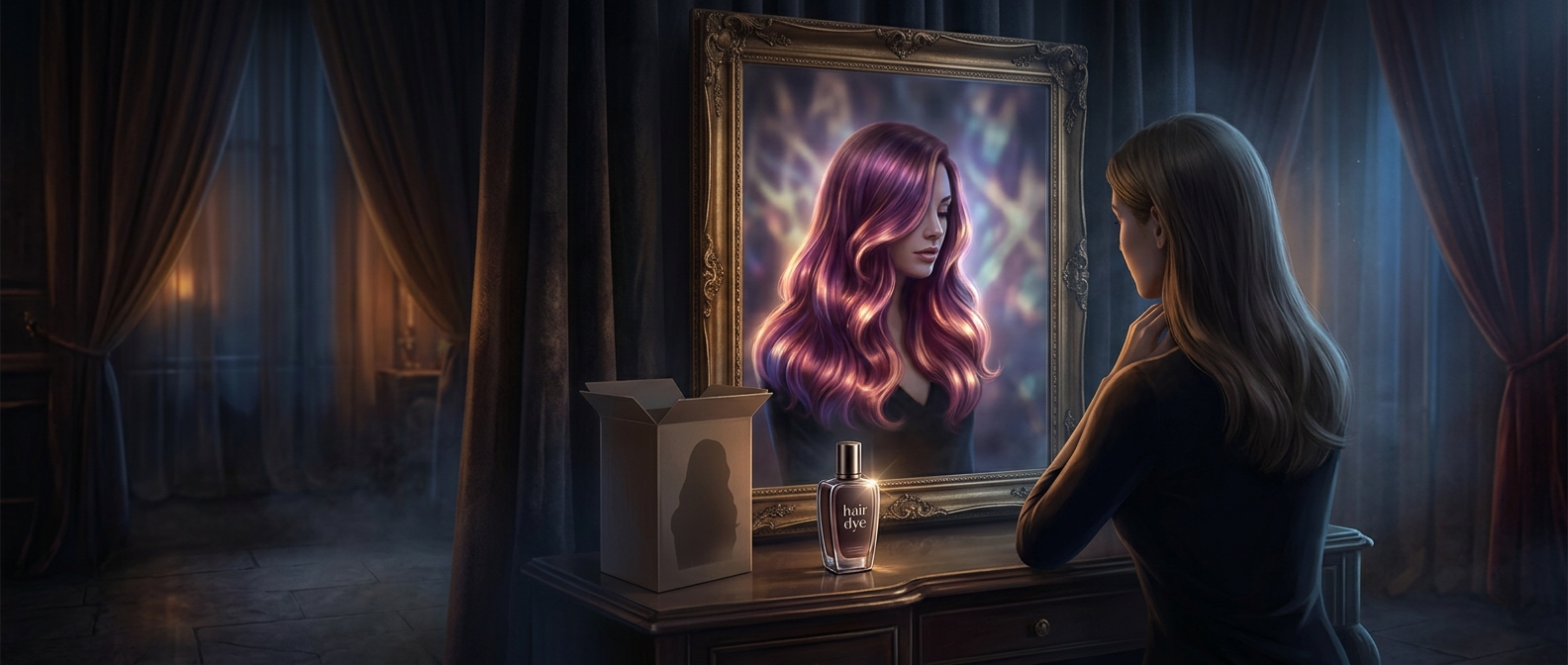
A hair-dye package has to sell one shade to people starting with many different colors. The model’s result is usually meant to show what the dye can achieve on a suitable starting color—not guarantee the same finish on every head. A light, even base makes it easier to display a vivid shade; dark or previously colored hair may produce a subtler or different-looking result.
That gap is built into the product. Permanent dye changes hair by opening the outer layer and using chemical colorants inside the strand; some formulas also lighten natural pigment. How much the color shifts depends on the hair’s starting shade and condition, as well as how evenly the dye is applied and how long it stays on. The picture cannot show all those variables.
Why the Promise Stays Bright
The box is both an instruction aid and a sales pitch. A dramatic, polished result catches attention on a crowded shelf, while a chart of possible outcomes has to compress a complicated process into a few pictures. Those images can make the product feel more predictable than it is, even when the package includes a shade guide or advises a strand test.
The incentive is clear: an appealing image helps sell the color. The cost of uncertainty, meanwhile, lands largely on the buyer, who may need another product or a salon correction if the result misses the mark. A lighter shade may require bleaching first, and dye generally cannot reliably lighten hair that has already been dyed darker.
Read the Starting Point, Not Just the Finish
The most useful part of the package may be the small chart showing results on different starting shades. It turns the model’s image into a conditional promise: this is the likely direction of the change from your current color, not a preview of your exact hair. A strand test makes that difference visible before the full application—and can save a box from becoming an expensive color correction.