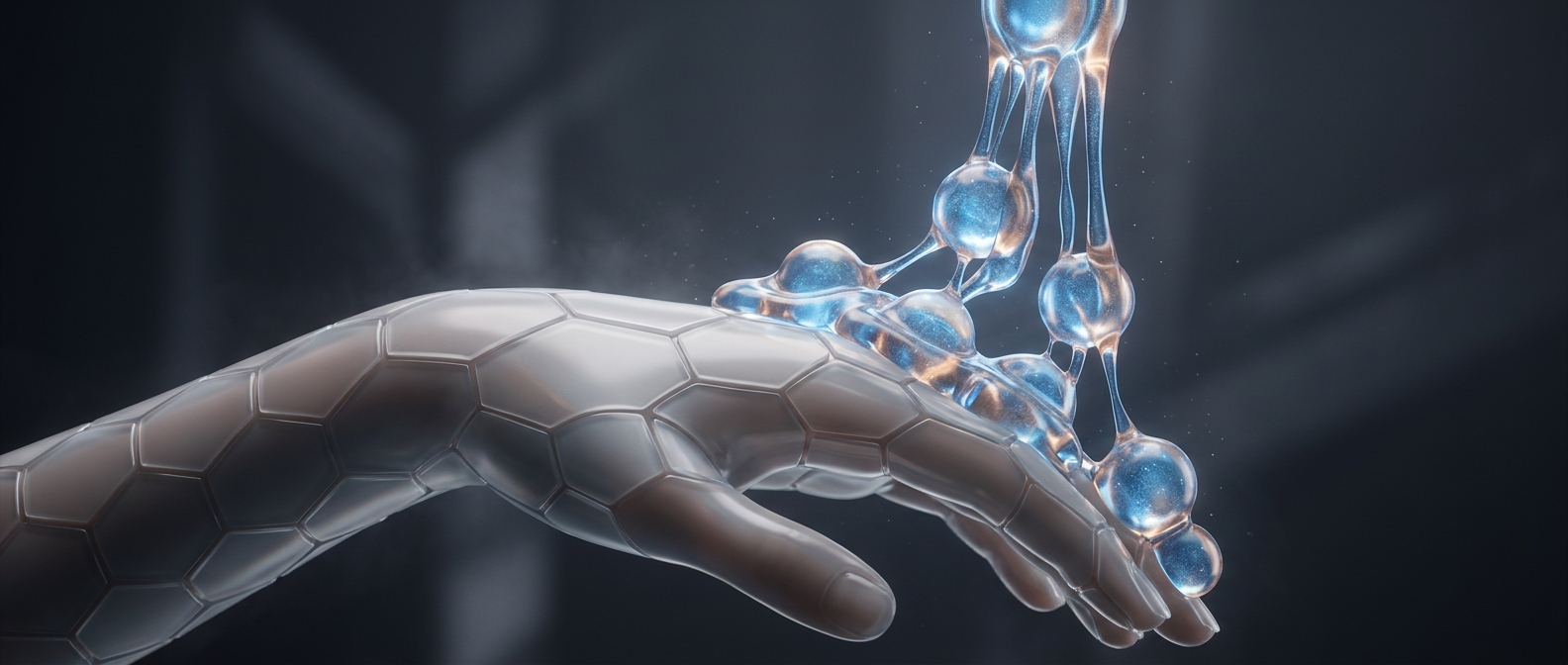
Why collagen cream may not rebuild collagen
Collagen is a structural protein that helps give skin beneath the surface its strength and support. But a cream applied from the outside has to cross the stratum corneum, the outer layer of tightly packed, dead skin cells that helps keep water and other substances from passing through. Intact collagen molecules are large, so much of the collagen in a moisturizer remains at or near the surface rather than reaching the deeper skin where the body’s collagen is made.
That does not make the cream useless: ingredients left on the surface can help moisturize or soften skin. But that effect is different from delivering intact collagen into the skin and replacing what has been lost.
The skin can make its own collagen
Vitamin C has a different role. It supports the processes skin cells use to produce collagen; it is not itself a supply of collagen. Getting vitamin C to the skin does not guarantee a visible change, since the result depends on factors such as the product and how the skin responds. The key distinction is that vitamin C supports the skin’s own production rather than simply adding collagen from a jar.
Prevention matters because damage accumulates
Ultraviolet light from the sun can damage collagen and encourage processes that break it down. Sunscreen helps limit that exposure, reducing one ongoing source of collagen damage. In practical terms, a collagen-labeled cream may mostly act at the surface, while supporting the skin’s production and protecting existing collagen address different parts of the problem.