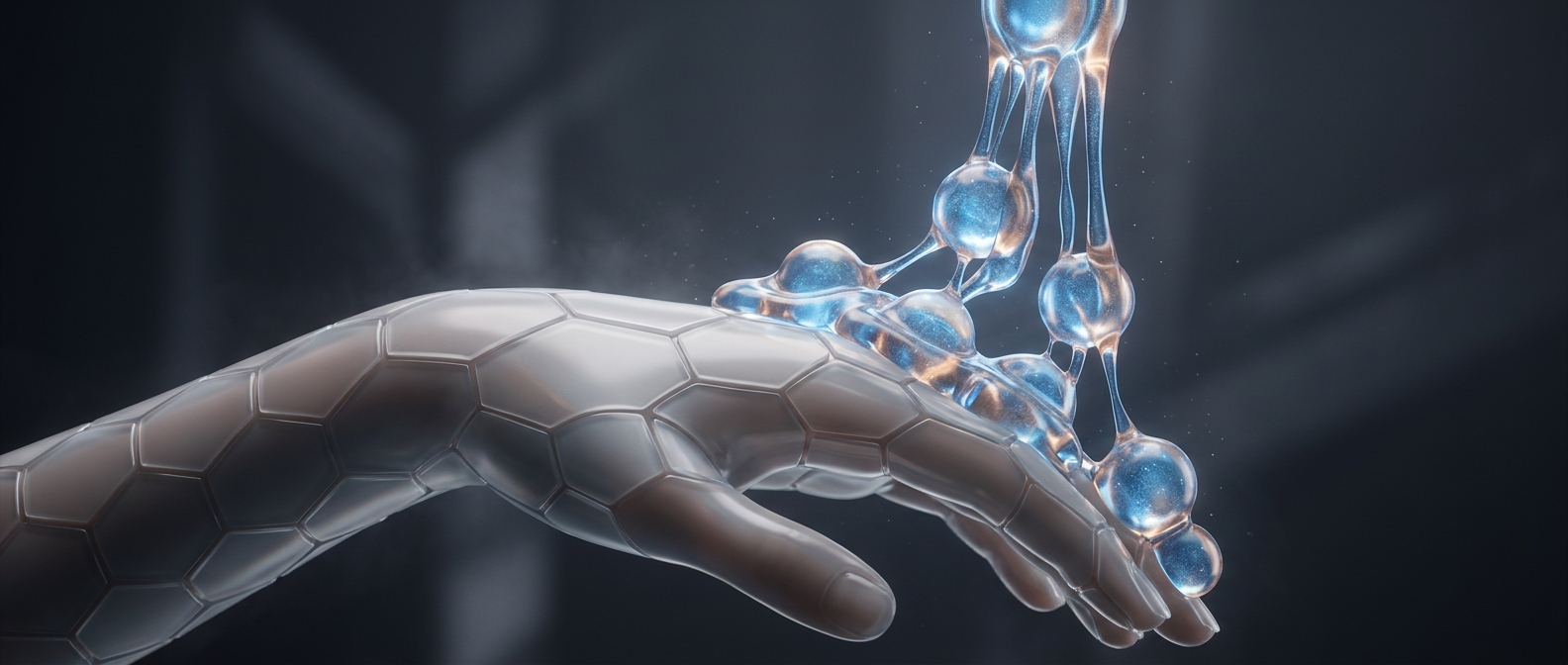
Why collagen in a cream stays near the surface
Skin is built in layers, and its outermost layer is designed to keep the outside world out. Its tightly packed cells and oily materials form a barrier that slows water loss and blocks many substances from passing into the living tissue below.
Collagen is a large structural protein. A collagen molecule in a cream is too bulky to slip through that barrier and reach the deeper skin layer where the body’s collagen framework sits. Spreading it on the skin therefore does not directly replace collagen that has been lost beneath the surface.
What the cream can do instead
The collagen remains largely on the surface, where it can help form a thin film. That coating may temporarily make skin feel smoother or reduce the sense of dryness by limiting water loss. The effect is on the surface, though—not a rebuilding of the deeper support structure—and it fades as the film is washed or worn away.
That distinction is about delivery, not whether collagen is useful to skin. The same molecule can have different effects depending on where it can reach. A collagen cream can coat the skin; it cannot carry intact collagen through the outer barrier to replenish deeper layers.