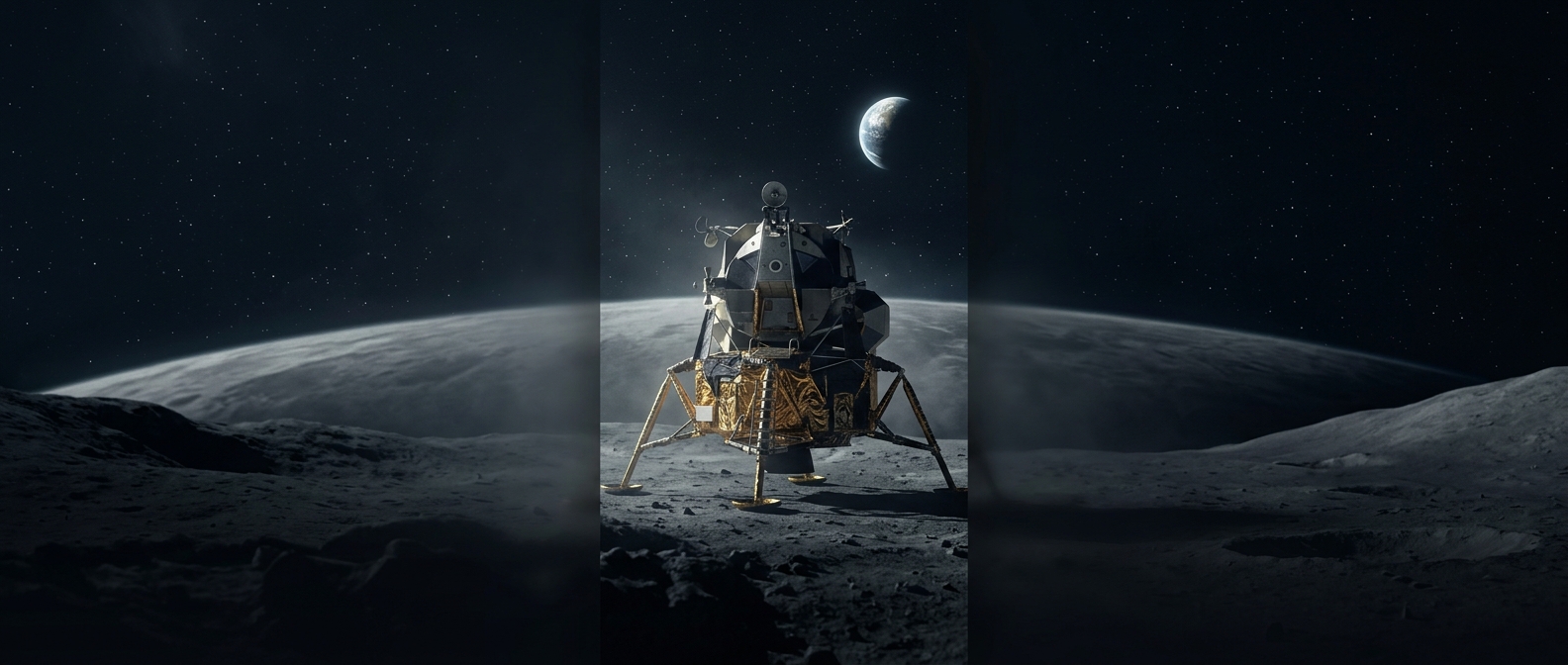
Why the Moon lander split in two
The Apollo Lunar Module was built as a two-stage vehicle because landing on the Moon and getting back to orbit were different jobs. Its descent stage carried the landing engine, propellant, legs, and equipment needed to reach the surface. Once the astronauts were ready to leave, the smaller ascent stage used its own engine to lift them back into lunar orbit.
The stages separated at liftoff: the ascent stage rose from the surface, while the descent stage stayed put. It had served as both landing gear and launch platform, so carrying it onward would have added weight without helping the crew return.
Why leaving hardware saved so much effort
In spaceflight, extra mass has a cascading cost. A rocket needs propellant to accelerate its payload, but that propellant is mass too; carrying unused machinery therefore means carrying fuel to move the machinery and, in turn, fuel to move that fuel. The penalty matters at each demanding leg of a journey.
The ascent stage only had to reach lunar orbit, where it could meet the orbiting Apollo spacecraft. The command module—not the lander—was designed to carry the crew back through Earth’s atmosphere. Splitting the vehicle meant the astronauts did not have to haul landing legs, an empty descent engine, and other surface hardware onto the return trip.
The result was a stark but practical handoff: the descent stage remained on the Moon, and the compact ascent stage carried the crew away. The hardware left behind was not merely discarded weight; it was the part of the vehicle whose work was finished.