How a puff becomes a turn
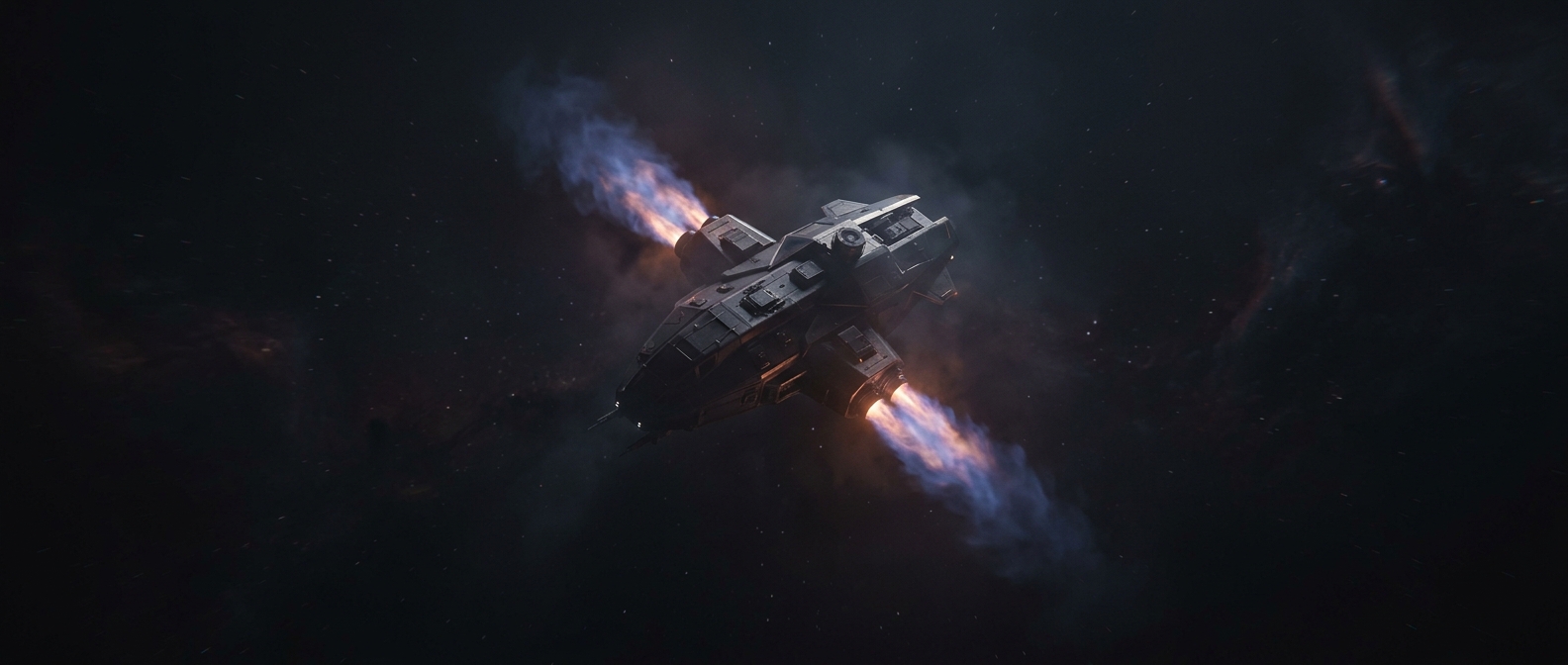
A thruster turns a spacecraft by applying force away from its center of mass—the balance point around which the vehicle rotates. That offset force creates torque, the rotational equivalent of a push. A brief firing can change the spacecraft’s spin or tip its nose without producing much change in its path.
For cleaner rotation, engineers can fire thrusters arranged so their pushes cancel as a net force but still create torque. Imagine two equal pushes in opposite directions, applied at different sides of the craft: the spacecraft turns, while the pair largely avoids shoving it sideways. Thrusters aimed along different axes let the vehicle control its orientation in three dimensions.
Why precision matters
A spacecraft has no surrounding air to push against, so it cannot steer with wings or a rudder. Its thrusters supply the external force needed to change its motion. Short firings are useful for small corrections; longer or repeated firings produce larger changes. The vehicle’s control system uses orientation measurements to decide which thruster to pulse and for how long.
Each correction also uses propellant, and the spacecraft carries only a limited supply. That makes careful aiming valuable: the goal is to rotate the vehicle enough to point an antenna, camera, or engine where it needs to go without spending fuel correcting an avoidable overshoot.