Why the lunar rover used metal mesh tires
A conventional tire works because its pressurized air supports the vehicle and lets the rubber deform around bumps. But air-filled tires bring a weakness: a puncture can let the air escape, and the Moon offered no roadside repair shop. The Apollo lunar rover therefore used a wheel that could flex without relying on an airtight chamber.
A springy wheel, not a miniature tank tread
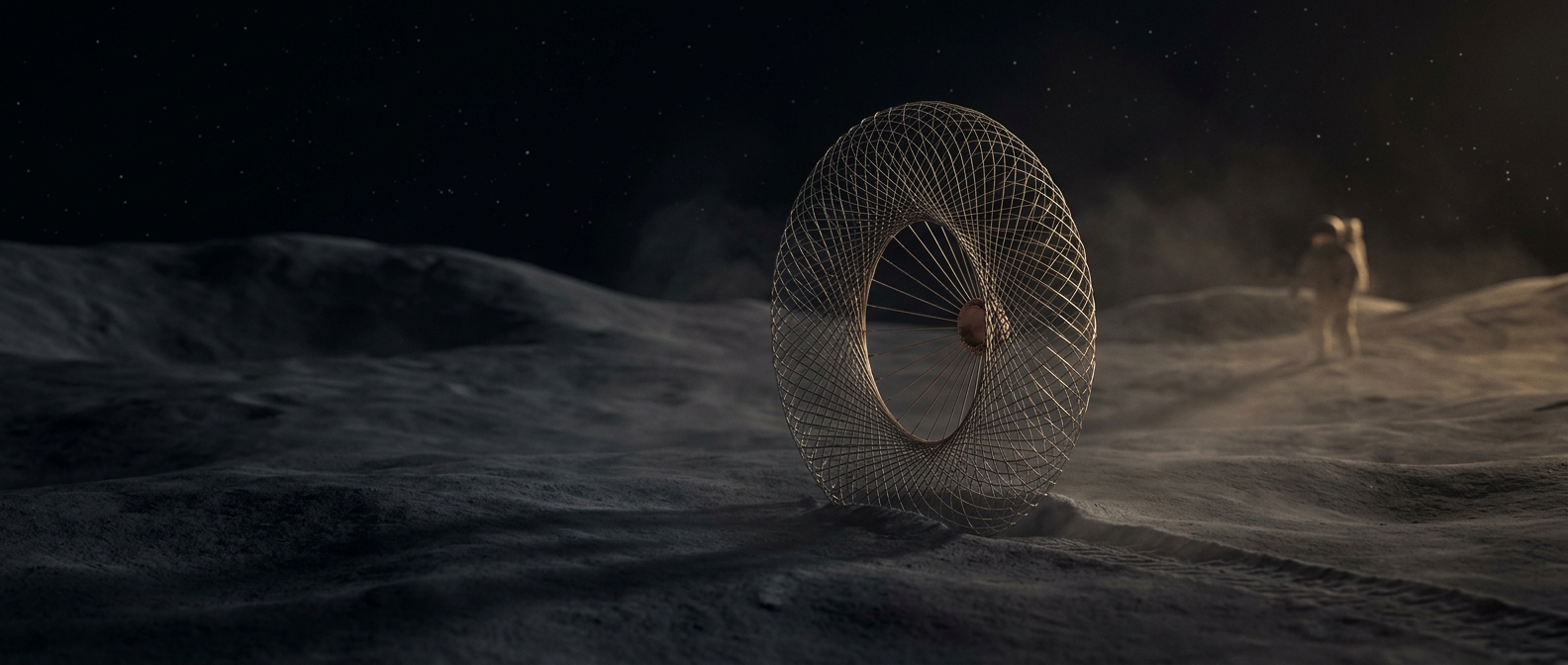
Each wheel was built around a metal mesh woven from fine wire. As the rover rolled over uneven ground, the mesh could bend locally: some parts pressed inward while nearby strands shifted and sprang back. That gave the wheel a measure of compliance—the ability to yield over rocks rather than transmit every bump rigidly to the vehicle.
The open weave also kept the wheel relatively light, an important advantage when every kilogram sent from Earth mattered. Its metal construction avoided the ordinary tire’s vulnerability to punctures and loss of inflation. The design did not make the rover immune to damage, but it removed one failure mode that would have been especially consequential so far from help.
The compromise built into the wheel
Mesh could not behave exactly like a rubber tire. It had to be engineered to support the rover’s load, grip loose lunar soil, and flex repeatedly without collapsing or breaking. The wire pattern and wheel structure therefore had to balance softness over rough terrain with enough strength to carry the vehicle and astronauts.
That tradeoff is the memorable part: the Apollo rover’s tire was not made “flat-proof” by making it solid and stiff. It used a resilient, open structure so the whole wheel could give when the ground pushed back—without air inside to lose.