Why a round hull turns so easily
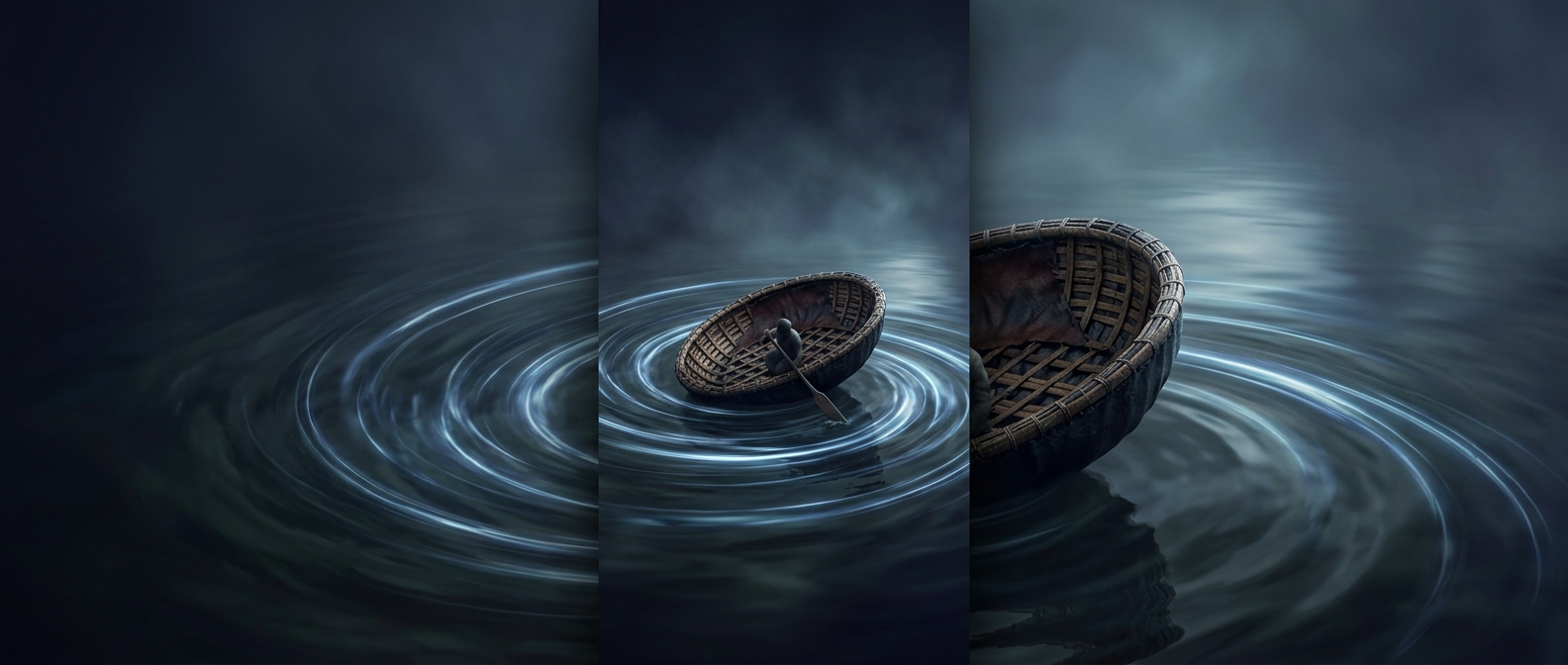
A paddle stroke does more than push a boat forward: it also applies force to one side. If that force acts away from the boat’s centerline, it creates a turning force, or torque. In a long boat, the hull’s length helps it resist swiveling. A nearly round hull has much less length in the water to steady its direction, so an uneven stroke can yaw it—turn its nose sideways—rather than carry it straight ahead.
The missing underwater guide
Many narrow boats have a keel, skeg, or other feature that extends below the hull and helps keep the boat tracking straight. A smooth, round bottom offers less of that directional resistance. Water can flow around it as the boat rotates, so the hull may pivot readily instead of holding a line.
That makes the location and timing of each stroke especially noticeable. A harder stroke on one side, or repeated strokes on just one side, pushes the boat forward while also turning it. The more the strokes differ, the more the turning effect accumulates.
How to keep moving toward the destination
Alternate sides and keep the strokes reasonably similar in strength and position. If the boat starts turning, a controlled stroke on the opposite side can correct its heading; frantic, unequal paddling may simply add more spin. In a round boat, steering is less about overpowering the water than about balancing the small turning forces each stroke creates.