Why a Basket Shape Can Float
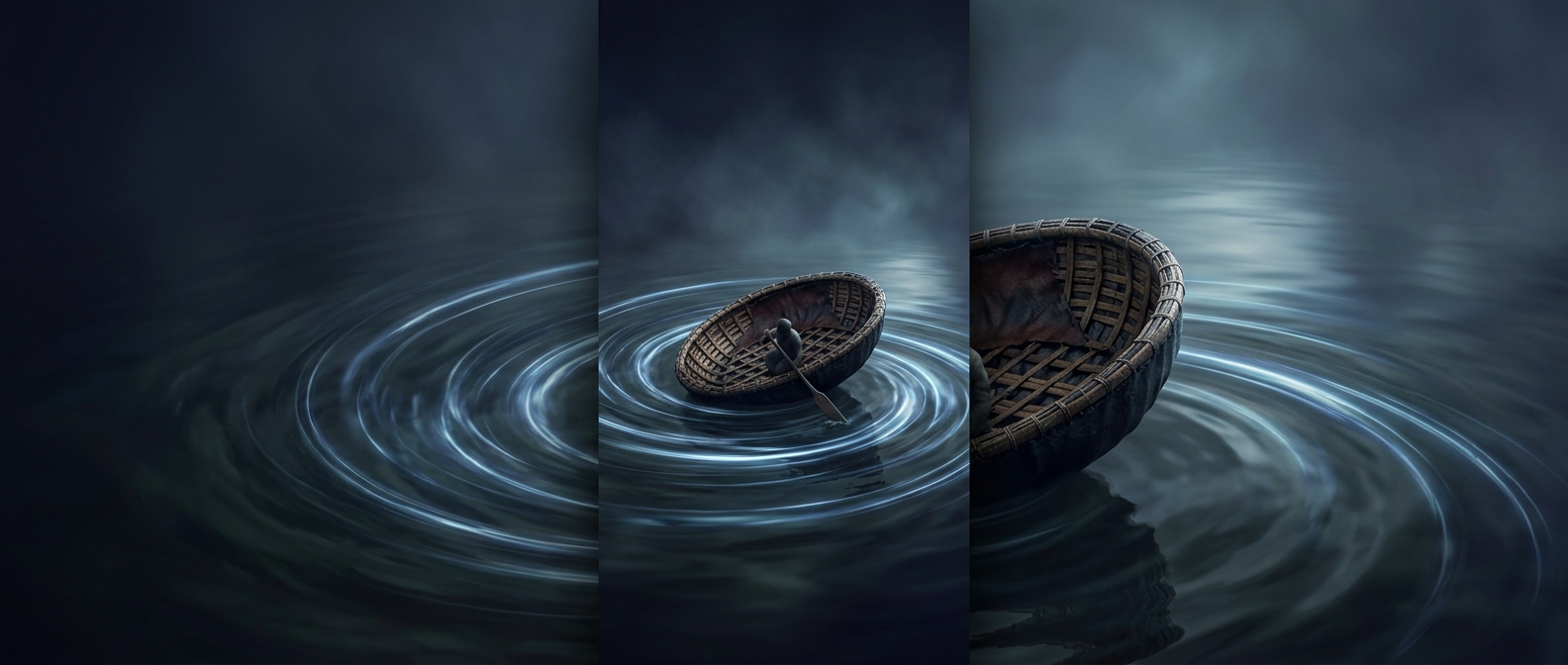
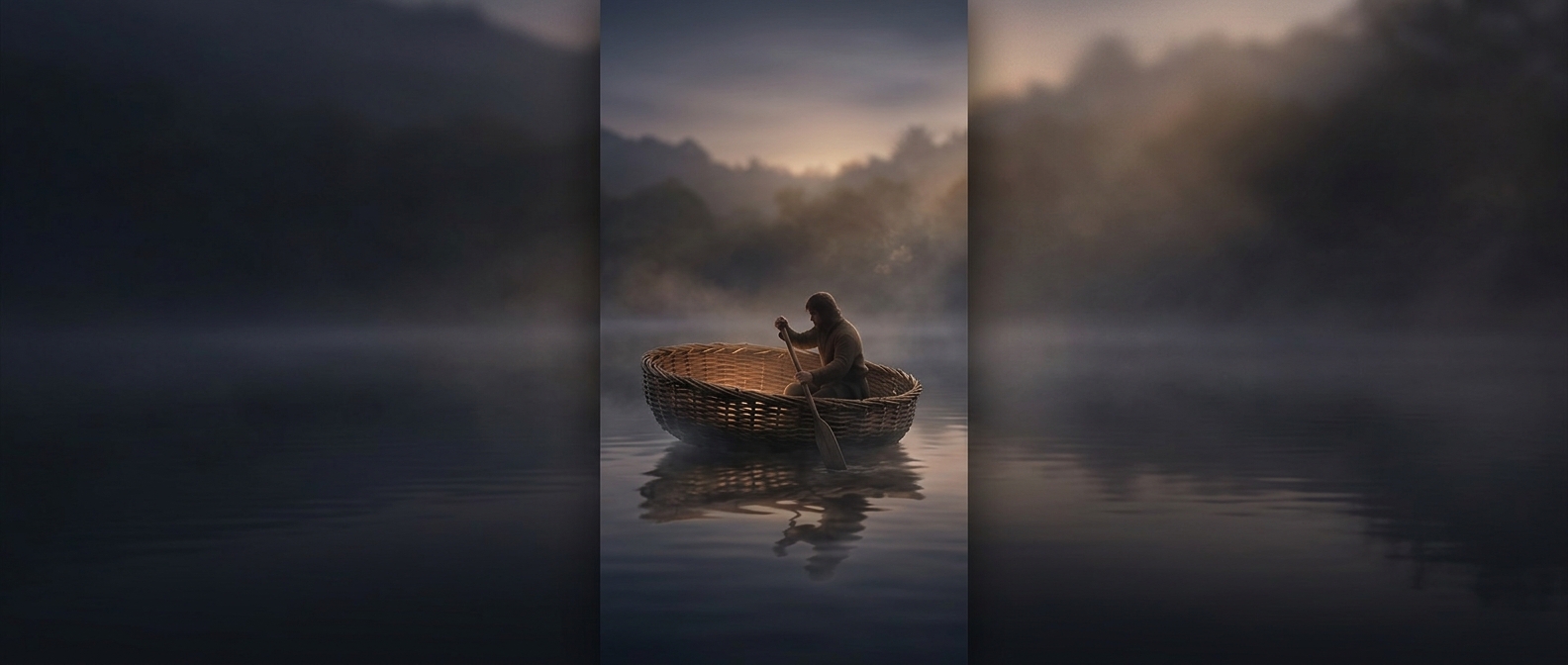
A coracle is built around a light framework of interwoven branches. The weave forms a shallow bowl, and a waterproof covering seals it so water cannot seep through the gaps. The covering keeps the hull watertight; the broad, rounded shape helps it displace enough water to support the boat and its load.
That shape also keeps the sides low and the hull shallow. On calm rivers, the boat can move through relatively little water, while its light construction makes it practical to lift out and carry ashore. It is not a design for rough conditions: a small, shallow craft has little protection from waves or strong currents.
Lightness Is the Design Tradeoff
A rigid, heavy hull might take more effort to move and haul over a riverbank. A woven frame instead uses many slender branches to make a broad form without much material. The waterproof skin does the job the weave cannot: it stops the river from passing through the boat.
The result looks like a floating basket because it uses the basket’s basic structural trick—interlaced strips shaped into a container—but adds a sealed outer layer and a form suited to water. The same lightness that makes a coracle easy to carry also limits where it is useful: its best setting is a sheltered stretch of river, not open, choppy water.