Why an Alternator Makes AC First
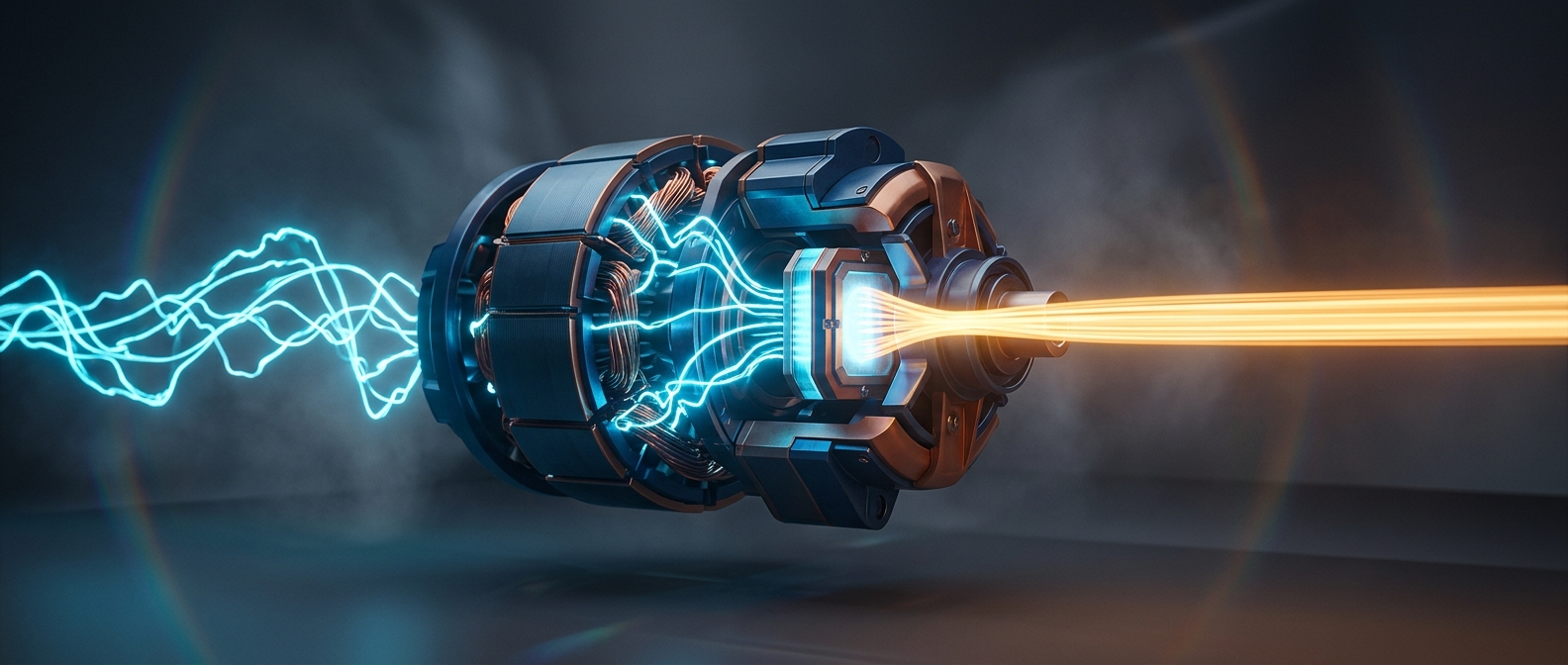
An alternator turns engine rotation into electricity using a changing magnetic field. The engine spins a rotor inside stationary wire coils; as the magnetic field sweeps past those coils, the voltage it induces repeatedly changes direction. That back-and-forth output is alternating current (AC). Most automotive alternators produce three overlapping phases of AC, which makes the output steadier than a single coil’s would be.
Diodes Turn the Waves One Way
A vehicle’s electrical system is designed to run on direct current (DC), so the alternator’s output passes through a rectifier: an assembly of solid-state diodes. A diode acts like a one-way gate for electricity. Arranged in a bridge, the diodes route both halves of each AC wave in the same direction, producing pulsating DC rather than current that reverses direction.
That output is not perfectly flat. The battery helps absorb the remaining fluctuations, while the alternator’s voltage regulator adjusts the rotor’s magnetic field to keep charging voltage within a useful range as engine speed and electrical demand change. The result is smooth enough for the vehicle’s system—not an absolutely ripple-free supply.
Why Not Generate DC Directly?
In a conventional automotive alternator, generating AC in stationary coils and rectifying it with diodes is a practical arrangement: the high-current output can be taken from fixed connections instead of through brushes on a spinning electrical winding. The same rotating motion that makes the alternator useful therefore creates the need for rectification. Inside the unit, the battery is not merely being fed raw alternating power; it receives one-directional charging current whose small fluctuations are buffered by the electrical system.