The Water Temple’s maze has a safety net
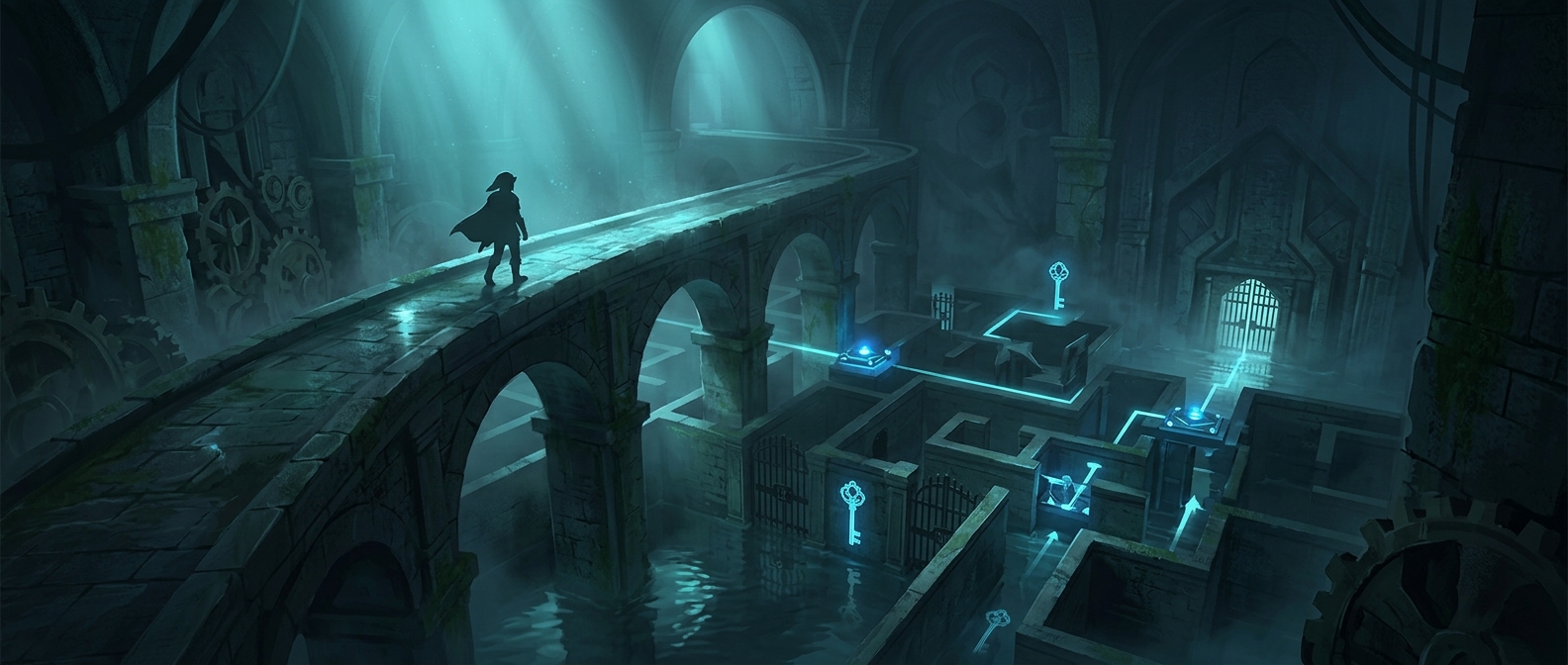
The Water Temple can make its route hard to read, but confusion is not the same as a dead end. Its small keys are part of a limited progression system: each opens a locked door, and the dungeon’s layout determines which doors a player can reach as they explore.
That distinction matters in a maze with branching corridors. If a key could be spent on any visible lock, a player might choose a side route and leave the only path forward sealed. Instead, the dungeon’s key placements and door arrangement are built to keep the required route reachable. The game can make the next step obscure without making it permanently inaccessible.
Water changes the map, not the save
The temple adds another layer by letting Link raise or lower the water. This changes which passages and platforms he can use, so a door that seems out of reach may become accessible after the water level changes. A player can mistake a state change or a missed passage for a key problem, then retrace the dungeon and try another route.
That means the temple’s difficulty comes from coordinating several things—keys, doors, and water levels—not from a single irreversible choice. The player may need to backtrack, but the dungeon is designed so that backtracking can recover the route rather than expose a permanently broken save.
The frustration is navigational, not catastrophic: a key can complicate the puzzle, but it cannot permanently spend the player’s way out of the dungeon.