Guitar Hero made rock feel playable before it made it feel realistic
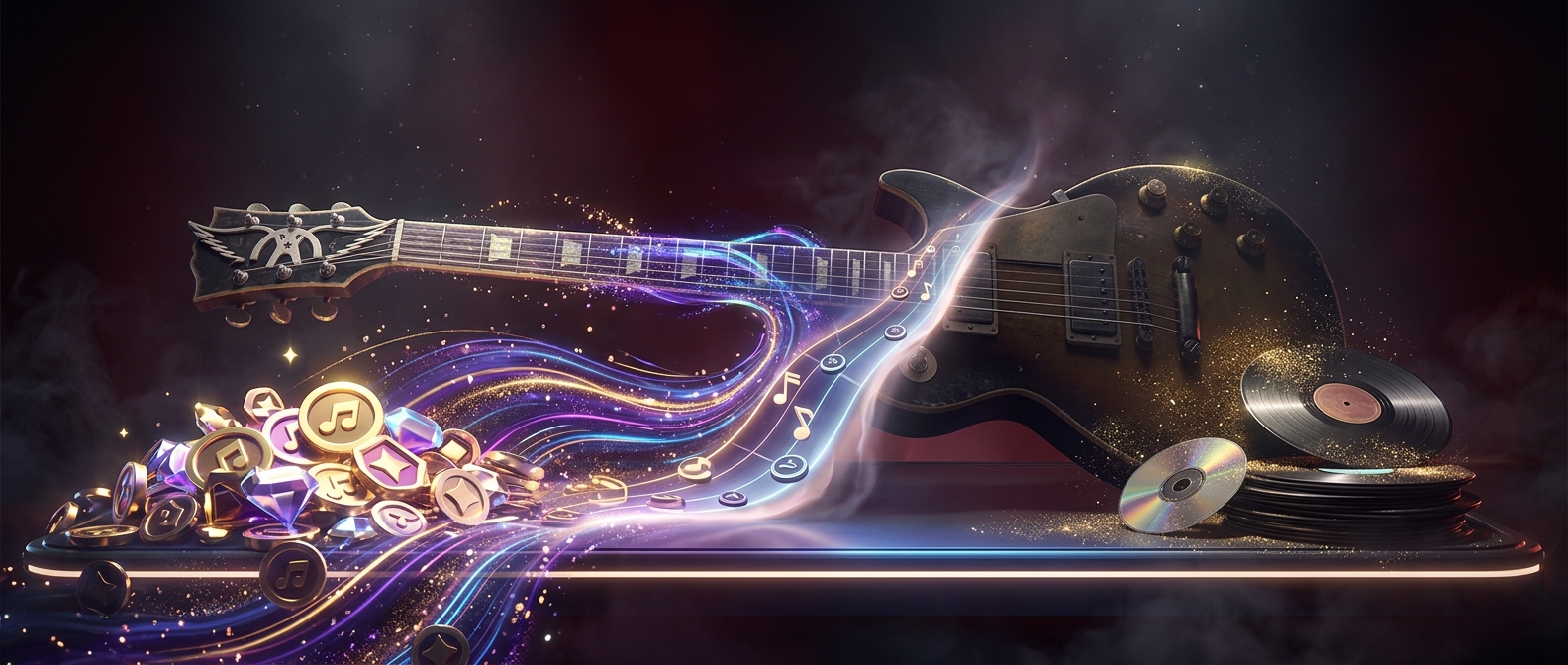
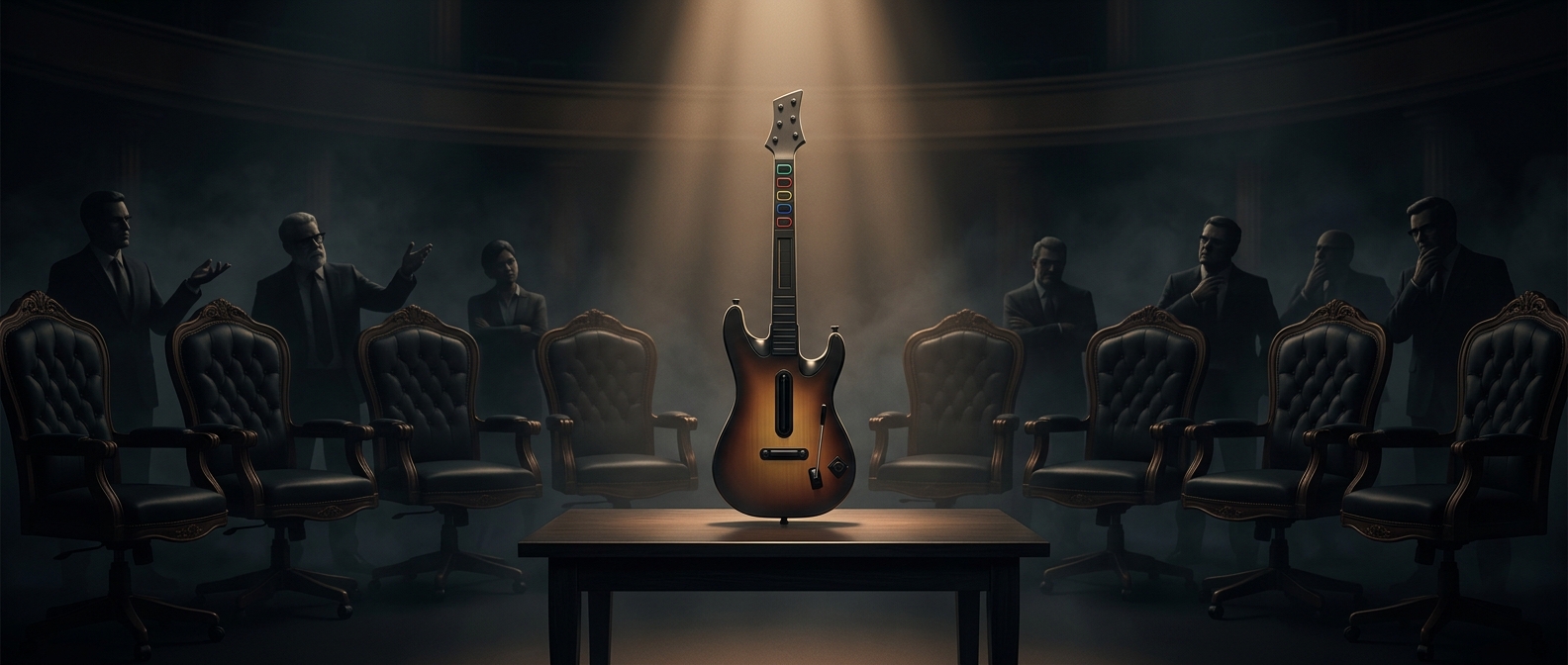
The plastic guitar was not a failed attempt to teach musicianship. It was the game’s key design choice: a familiar instrument reduced to a few colored fret buttons and a strum bar. Players matched those inputs to notes moving down the screen, turning a song into a sequence they could read, anticipate, and perform.
That abstraction changed the challenge. A beginner did not need to know chords, tune strings, or coordinate all ten fingers. The game could start with simple patterns, then make the same basic controls demanding through faster notes and trickier combinations. The plastic guitar looked like a guitar, but its job was to make timing and pattern recognition immediately legible.
The controller made performance part of the game
A standard gamepad could register button presses, but it would not make a player feel as though they were strumming a song. The guitar-shaped controller connected the action on screen to a physical gesture: press a fret, sweep the strum bar, and hear the note land. The instrument was a prop as much as a controller, helping turn a score-chasing task into a miniature stage performance.
That distinction explains why “learn a real instrument instead” missed the appeal. Guitar Hero offered a different reward: the sensation of keeping up with a band and nailing a difficult passage without years of practice. Its simplified controls made that feeling available to people who might never pick up a real guitar.
The idea’s commercial result—$2 billion, according to the fact reported here—shows how valuable that particular compromise became. The game did not replace learning music; it built a new kind of musical play around the gap between pressing buttons and performing a song.