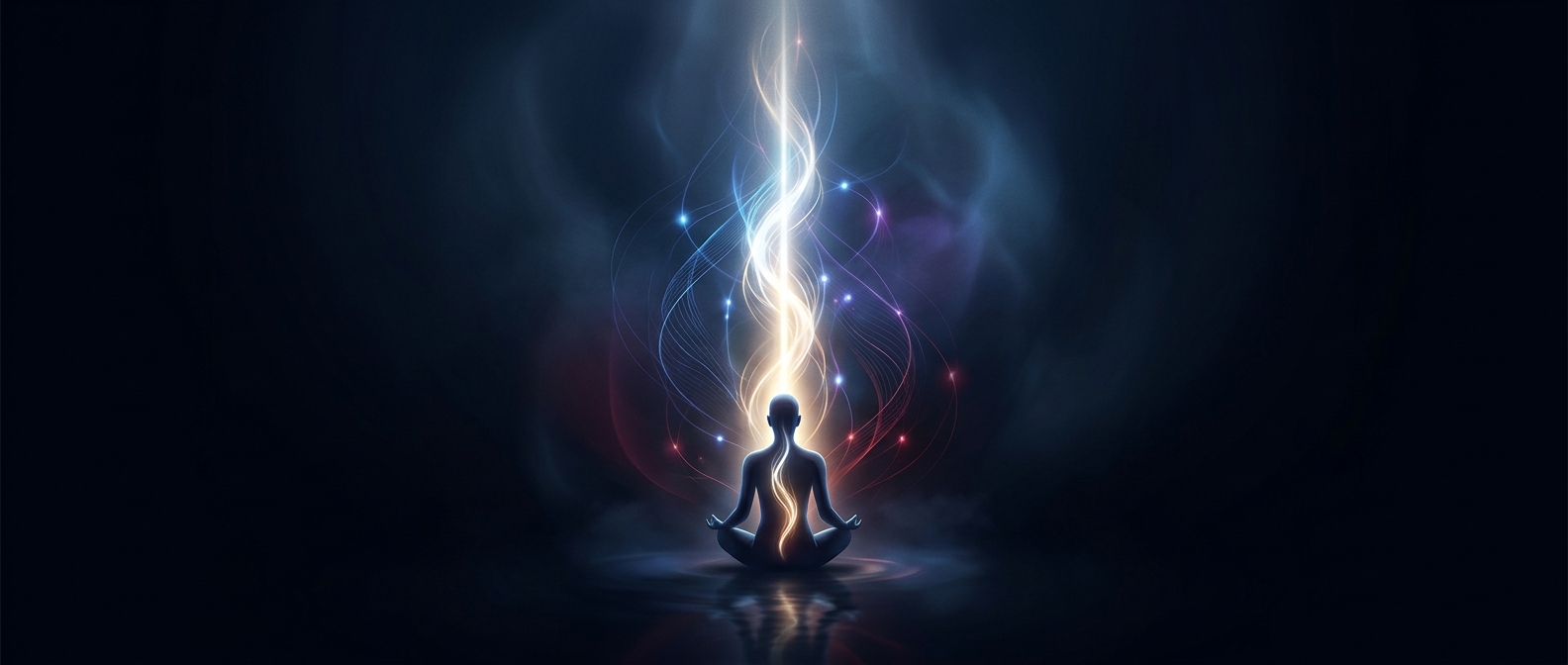
Ida’s place in the subtle-body map
In yogic and tantric traditions, Ida is one of the subtle channels used to describe how life energy moves through an imagined inner body. It is commonly paired with Pingala, a channel associated with more active, warming energy. These channels are not physical tubes or nerves; they belong to a spiritual model for understanding inner experience and practice.
A counterweight, not a switch
Ida’s cooling quality suggests quiet, inward attention: the kind of mental stance associated with reflection rather than outward effort. In the paired system, Pingala represents a contrasting, more active mode. Balance does not mean eliminating one side. The image is of complementary tendencies that can be brought into proportion, like rest and exertion in ordinary life.
Some yoga traditions link Ida with the left side of the body and with the breath flowing through the left nostril. Those associations help practitioners organize attention during breathing or meditation exercises; they are part of the tradition’s symbolic map, not a claim that a measurable energy channel runs through the body.
Why the image is useful
The channel metaphor gives practitioners a compact way to notice whether they feel restless, dull, or settled and to frame a practice around that experience. Ida’s role as a counterweight makes “balance” more than simply being calm: it means having room for reflection without treating active energy as a problem. The practical implication is a model of self-regulation built around shifting emphasis, not suppressing one side.