A river monster built from familiar dangers
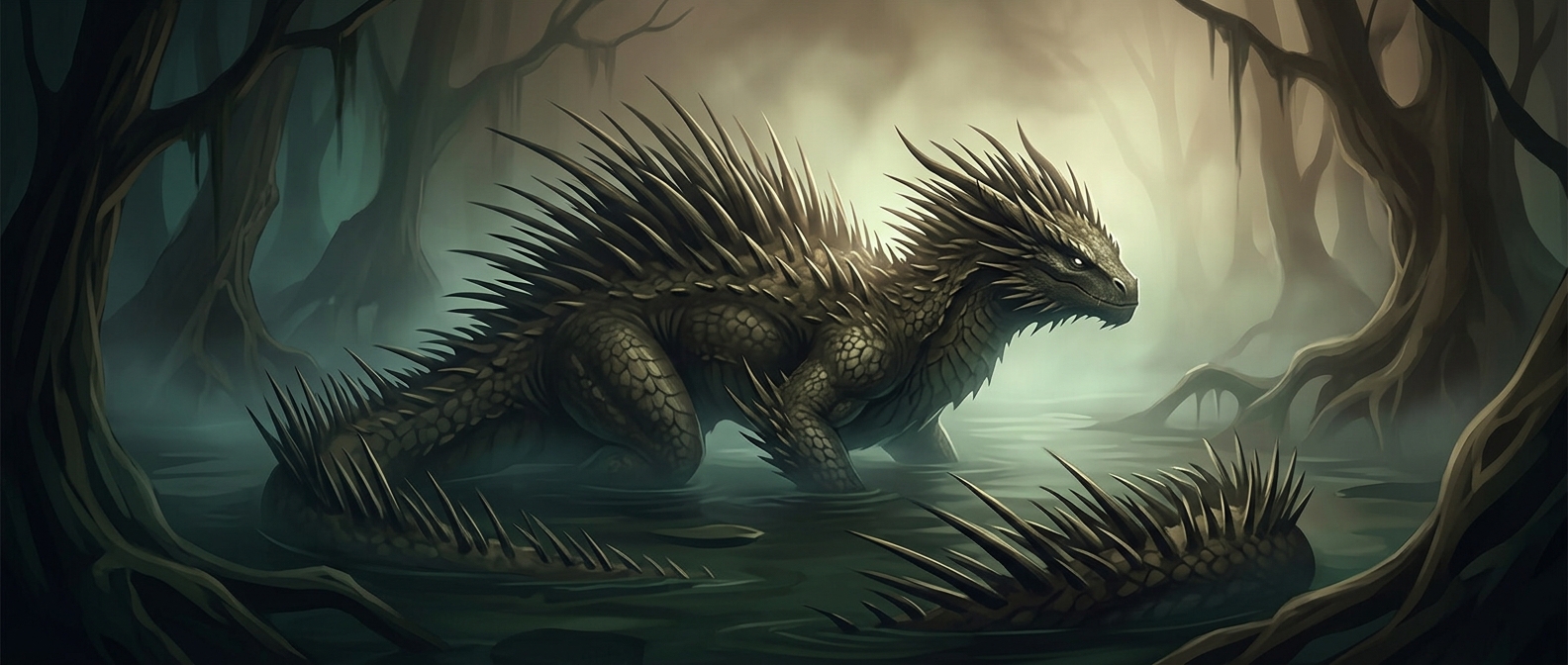
The Peluda, or “Shaggy Beast,” belongs to French folklore: a creature imagined as a threat from the river and its banks. Its description combines recognizable animal features—a turtle-like shell and a covering of sharp quills—into something no ordinary animal could be. The quills were said to fly at people, turning the beast’s coat into a weapon as well as armor.
That combination makes the monster feel dangerous at close range and from a distance. A hard shell suggests it cannot easily be harmed, while the quills make approaching it risky. Its reported attacks on livestock extend the danger beyond a dramatic encounter: the creature threatens the animals people depend on, as well as villagers themselves.
What the legend makes visible
A river monster gives a shape to a landscape’s hazards. Rivers can be difficult to cross, and their banks can hide what is under the water or in the reeds. In a legend, those uncertainties become a creature with a body, habits, and a name. The Peluda’s bizarre armor makes that imagined danger memorable: it is not simply lurking in the water; it can strike back.
The story is best understood as folklore, not a report of a real animal. Its lasting force lies in how it fuses familiar threats—an unpredictable river, vulnerable livestock, and a creature that seems impossible to approach—into one vivid image. The detail most likely to stick is also the legend’s sharpest warning: even the monster’s covering could attack you.