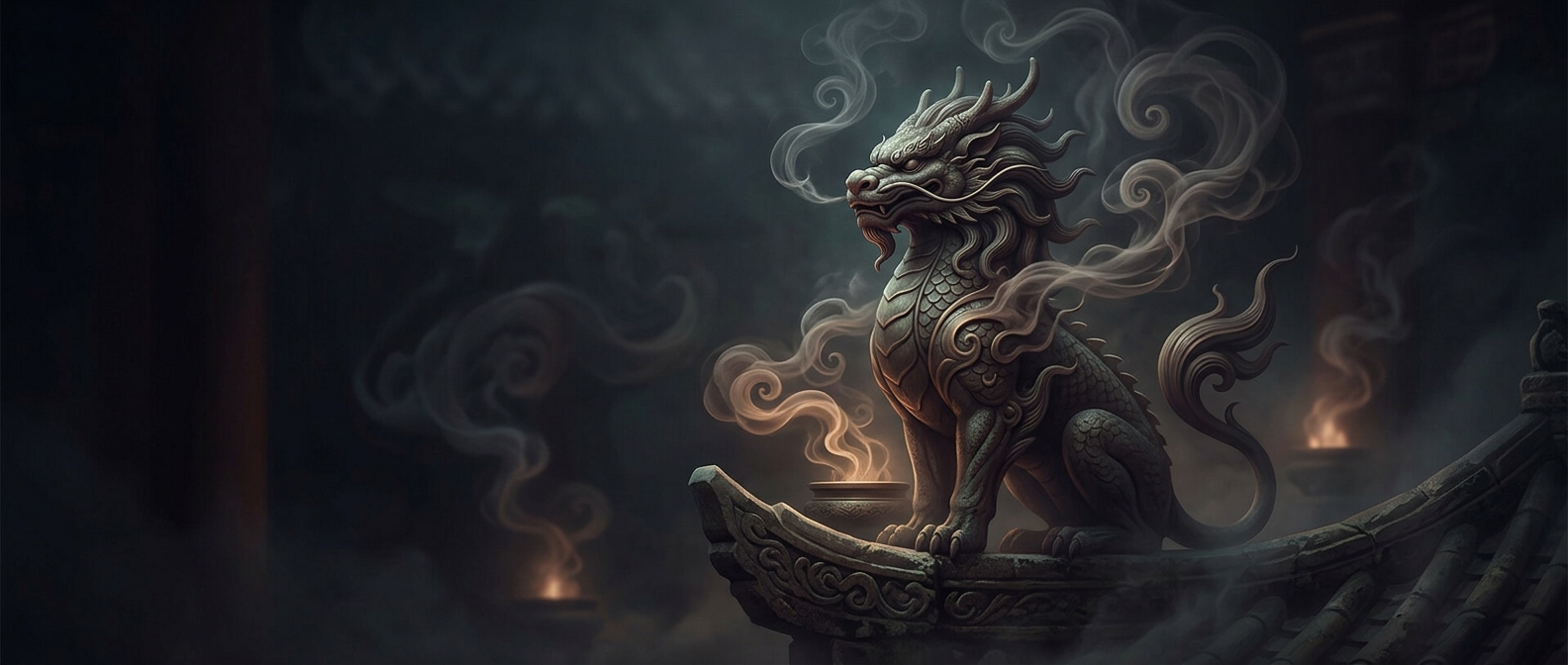
Why a Dragon Was Carved onto a Bell
In Chinese tradition, Pulao is a dragon-like creature famed for its powerful cry. Stories describe him as especially afraid of whales: when one attacks, he shrieks. That unlikely pairing—fearsome sea creature and frightened dragon—gave artists a memorable way to explain the voice of a bell.
Pulao’s likeness was carved on the crowns or handles of large bronze bells. In the legend, placing the creature there linked the bell’s great voice to his own. The carving was not merely decoration; it made the bell’s sound part of a story about a creature whose defining trait was to cry out.
Turning a Legend into Sound
The whale matters because it supplies the imagined cause of Pulao’s shriek. The bell’s deep, carrying ring could be understood as that cry made audible. A carved figure therefore connected an everyday act—striking a bell—to a vivid mythical scene.
This is a traditional explanation, not a claim about how bronze produces sound. The practical cause is vibration: when struck, the bell’s metal moves and sends sound waves through the air. The legend adds a cultural meaning to that physical process, so a bell could be heard not only as an instrument but as Pulao’s alarmed voice.