Heat breaks plastic into smaller molecules
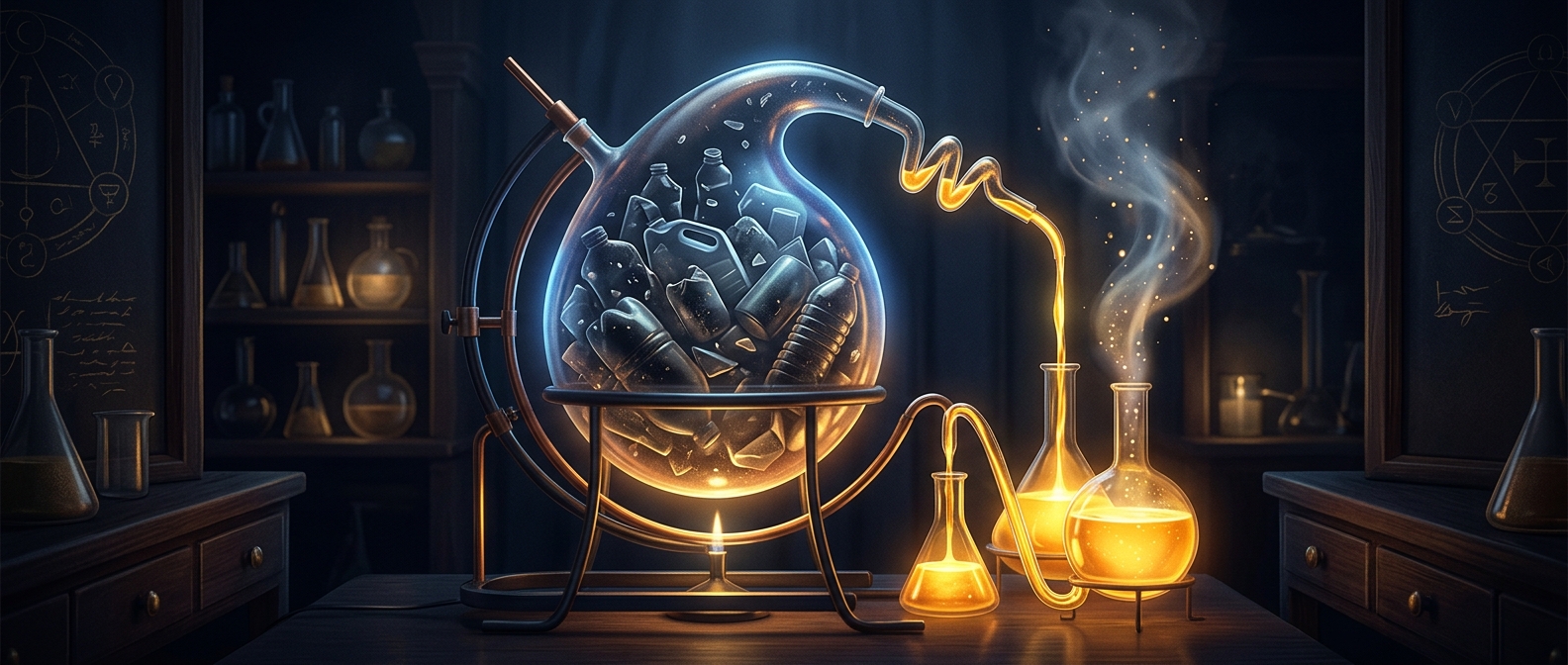
Plastic is made of polymers: long chains of carbon-based molecules built to be durable. In a process called pyrolysis, plastic is heated in a chamber with little or no oxygen. Without oxygen, it does not simply catch fire. Instead, heat breaks some of those long chains into shorter molecules, producing a mixture that can include gases, liquid oil, and waxy material.
The result is not a finished, uniform fuel. It is a chemically varied feedstock whose composition depends on the kinds of plastic in the waste and the conditions inside the reactor. Some plastics also contain additives or contaminants that complicate processing.
Refining turns a mixture into usable products
The liquid and gas can be cooled, separated, and treated. Refining sorts compounds by properties such as boiling point and removes unwanted substances, much as conventional refineries process crude oil. Depending on the feedstock and treatment, the output may be directed toward fuels or used as a chemical raw material.
That distinction matters: turning plastic into an oil-like mixture is only one step. The material must meet specifications for its intended use, and the process needs energy to heat the reactor and handle the products. Collection and sorting also affect whether a particular batch is practical to process.
The carbon still has a destination
Pyrolysis changes the form of plastic’s carbon; it does not erase it. If the resulting fuel is burned, that carbon combines with oxygen and leaves as carbon dioxide. The approach can recover value from some waste, but it is not a way to make fossil carbon emissions vanish.
The key question is therefore what happens to the output: a plastic molecule can leave the waste stream as a fuel, but burning it sends its carbon into the air.