Why a Spin Keeps Registering After You Stop
Inside each inner ear are three curved, fluid-filled canals arranged to detect rotation in different directions. When the head turns, the canal walls move with it, but the fluid inside lags briefly because of inertia. That delay bends tiny sensory hairs, which send the brain a signal about how quickly and in which direction the head is turning.
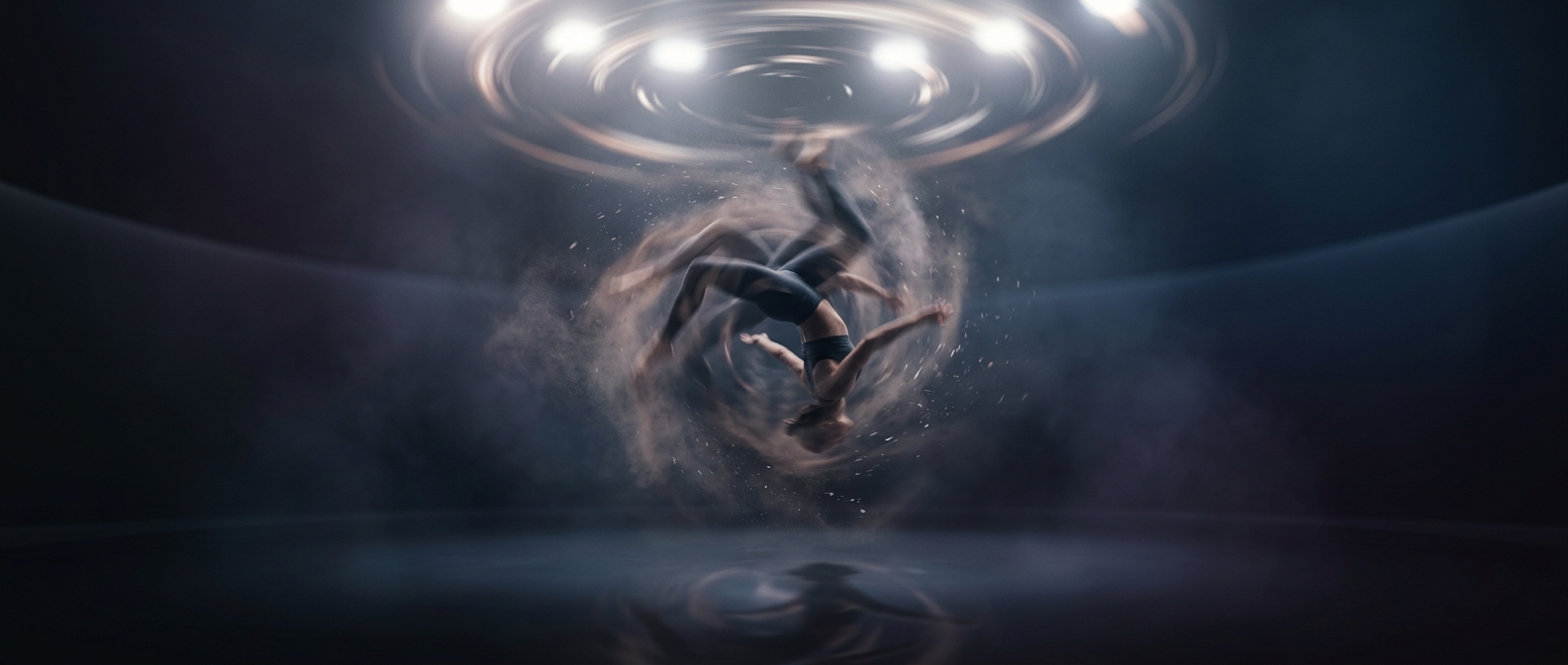
During repeated somersaults, the head keeps changing direction while the fluid and sensory hairs take time to catch up. The result is not simply a report that you are moving: it can be a report that no longer matches the head’s current position. When you stop, the fluid may continue moving for a short time, making the brain register rotation even though the room—and your body—are still.
From Conflicting Signals to Nausea
The brain combines inner-ear signals with information from the eyes and from sensors in the muscles and joints. If your eyes see a stationary floor while the inner ear signals rotation, those accounts disagree. Repeated turns can also make the disagreement shift direction as you tumble and recover.
That mismatch can disrupt the brain’s coordination of balance and eye movements, producing a lingering sense that the surroundings are moving or that your body is tilting. The same sensory conflict can activate bodily responses associated with nausea, including sweating and a queasy stomach. The disorienting aftereffect is partly a timing problem: the inner ear’s motion signal does not stop precisely when the movement does.