Why a Laminator Can Harm a Parchment Map
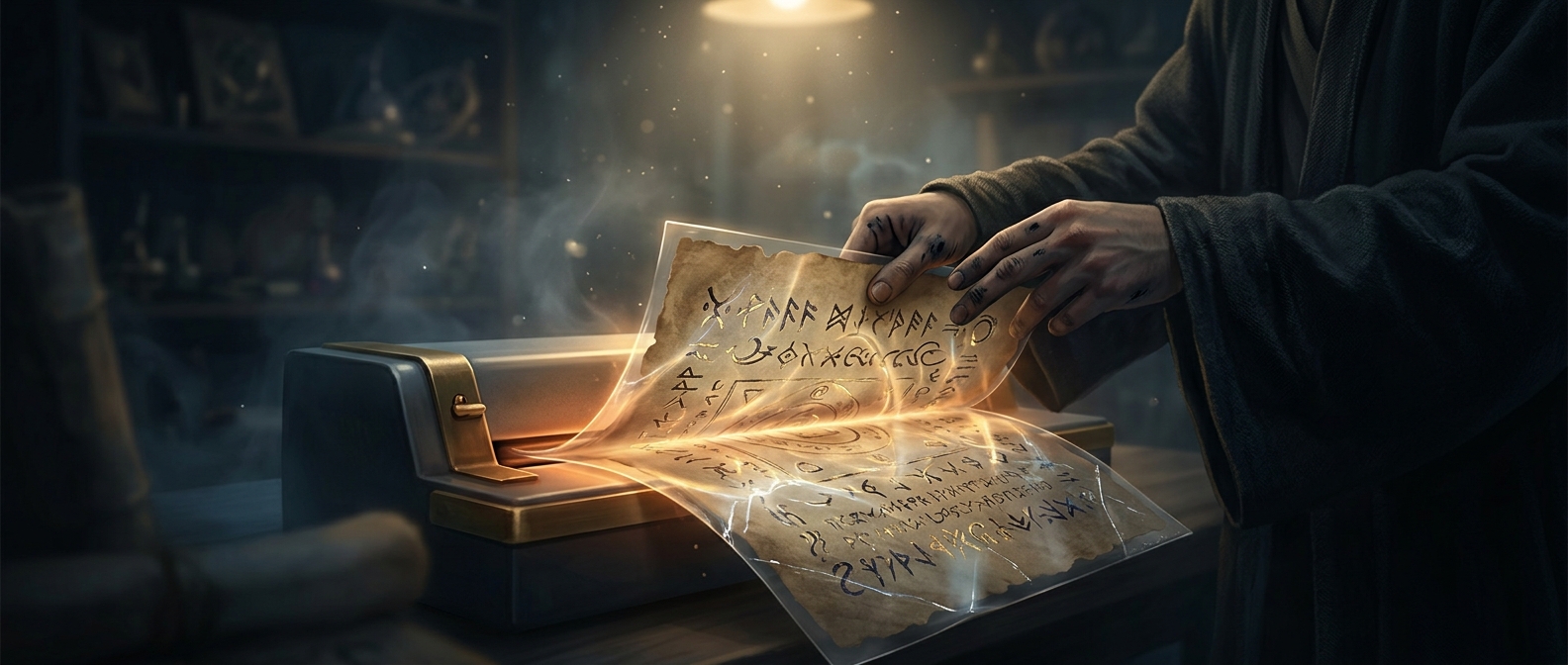
A laminator protects paper by heating plastic film until its adhesive softens, then pressing the layers together with rollers. That combination of heat and pressure is designed for ordinary, relatively flat sheets—not every material that looks like paper.
Parchment is animal skin prepared for writing, so it responds differently from paper made of plant fibers. Heat and changes in moisture can make it contract, buckle, or become brittle. If the sheet is thick or uneven, the rollers may press it inconsistently, leaving wrinkles or trapping air rather than producing a smooth seal.
Ink and Surface Layers Add Another Risk
A map’s dark, heavily applied ink may contain binders or other materials that react poorly to heat. Depending on how the map was made, the ink could soften, smear, stick to the plastic, or change appearance. The parchment may also have coatings or surface treatments that a laminator was never designed to handle.
In that sense, “melt” can describe damage to a surface layer or ink—not necessarily the parchment turning into liquid. The precise risk depends on the map’s materials and condition, which may be difficult to identify by sight alone.
Protection Can Become Permanent Damage
Once the film is sealed around an object, removing it can be difficult and may pull away ink or surface material. A laminator can therefore turn a reversible handling problem into lasting damage: a warped map or altered writing sealed inside plastic. For a fragile or historically significant piece, a protective sleeve or advice from a paper conservator is safer than feeding it through heated rollers.