Why a Train’s Platform Can Change at the Last Minute
A platform is not always a fixed appointment between a train and a station. Rail staff must fit arriving and departing trains into a limited set of tracks, and a delay or disruption can make the original assignment impractical. Reassigning a train may help keep the station’s tracks moving, but it can also redirect passengers who have already gathered in one place.
The change may become clear only when staff have enough information to make a new assignment. That leaves a gap between the operational decision and the moment passengers can act on it—a gap that feels especially tight when the train is due to leave soon.
The Distance Between “Changed” and “Caught”
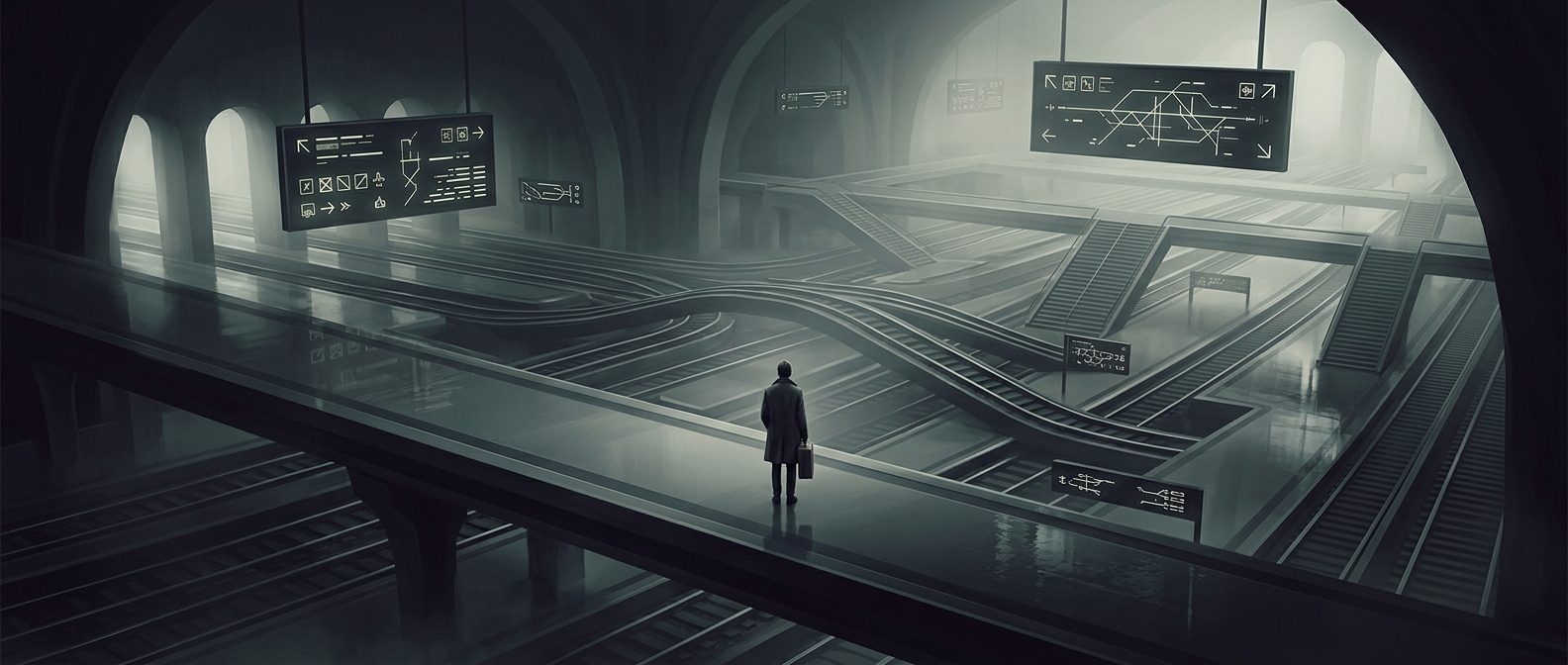
A platform number on a board is easy to read; reaching that platform can be the hard part. In a large terminal, the route may involve a long concourse, stairs, an underpass, or a lift. A traveler with luggage, a child, or limited mobility cannot necessarily make the dash suggested by the departure time. And when many people move at once, narrow passages and stairways can slow the crowd further.
That is why a platform change can create a sudden rush without changing the train’s scheduled departure: the available time for passengers to reposition has shrunk. Checking departure boards again while waiting, rather than treating the first platform assignment as final, can matter most when a station is busy or a train is delayed. A few minutes on the board may translate into a much longer walk across the terminal.