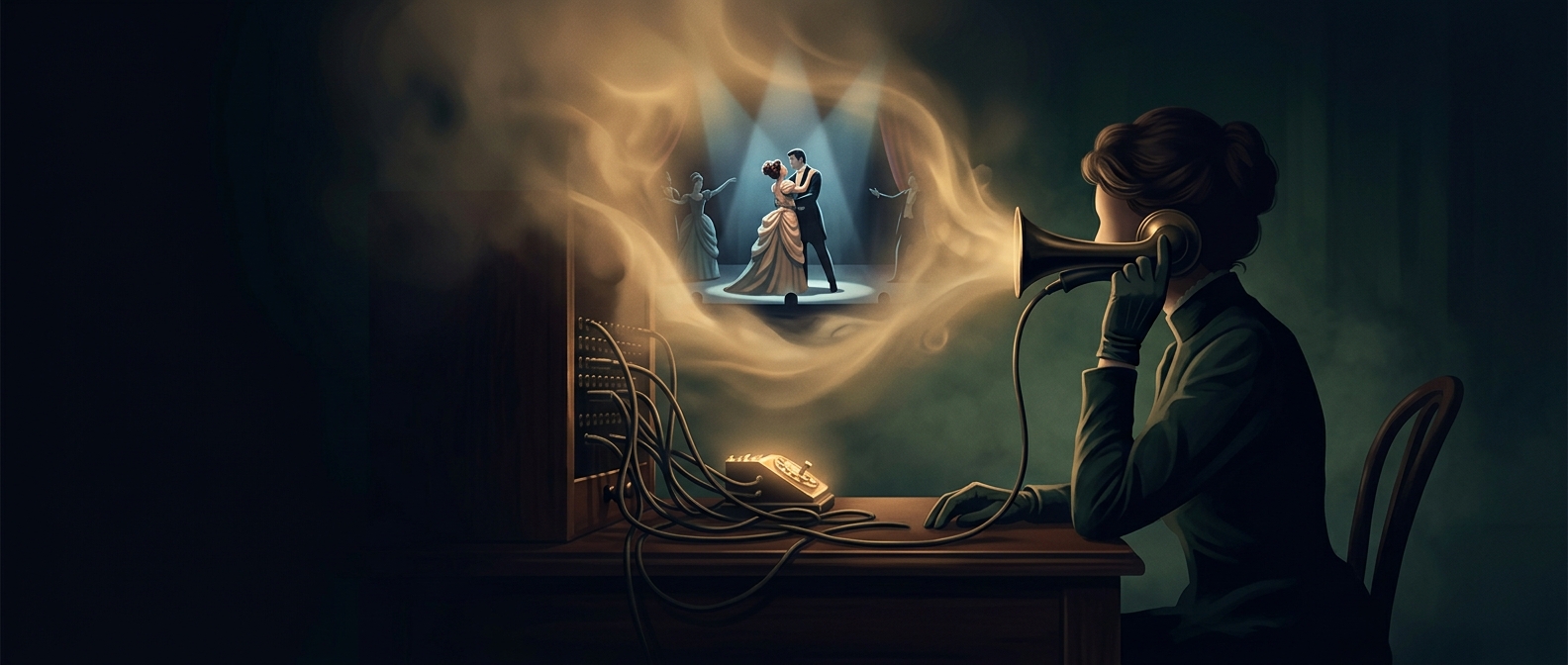
How a theater became a telephone connection
A live performance could reach a subscriber’s home because the telephone network was already built to do something similar: carry sound from one place to another over wires. At a participating theater, microphones picked up the stage, and dedicated telephone lines carried that audio to an exchange. From there, an operator connected a subscriber to the venue, much as a switchboard operator connected one caller to another.
The system turned a night at the theater into a listening service, not a recording. Subscribers heard whatever was happening at that moment—music, voices, and the changing balance of sounds picked up by the microphones. There was no pause button or replay; the performance moved on whether a listener was ready or not.
A different kind of evening out
The listening equipment had a separate earpiece for each ear, letting the subscriber hear the feed without holding a telephone receiver to one ear. But the experience was still shaped by the limits of early telephony. The microphones and wires had to capture and transmit sound clearly enough for voices and music to be followed, rather than reproduce the full acoustic space of a theater.
That tradeoff mattered. A listener at home gained access to performances without traveling to the venue, but lost the room’s shared atmosphere: the audience around them, the sight of the stage, and the sensation of sound filling a hall. The Electrophone’s remarkable trick was not to make theater identical at a distance. It was to make a live performance available through the household telephone, one connection at a time.