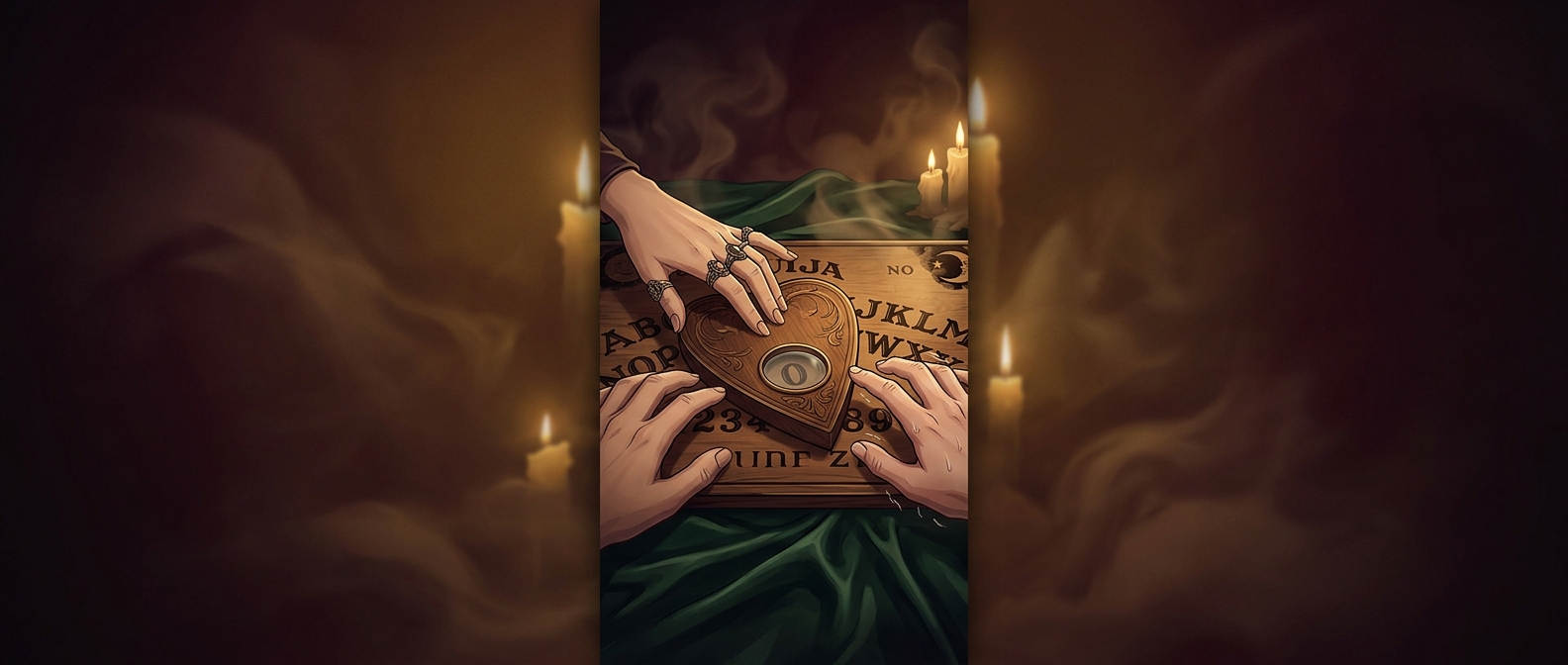
How a planchette moves without anyone noticing
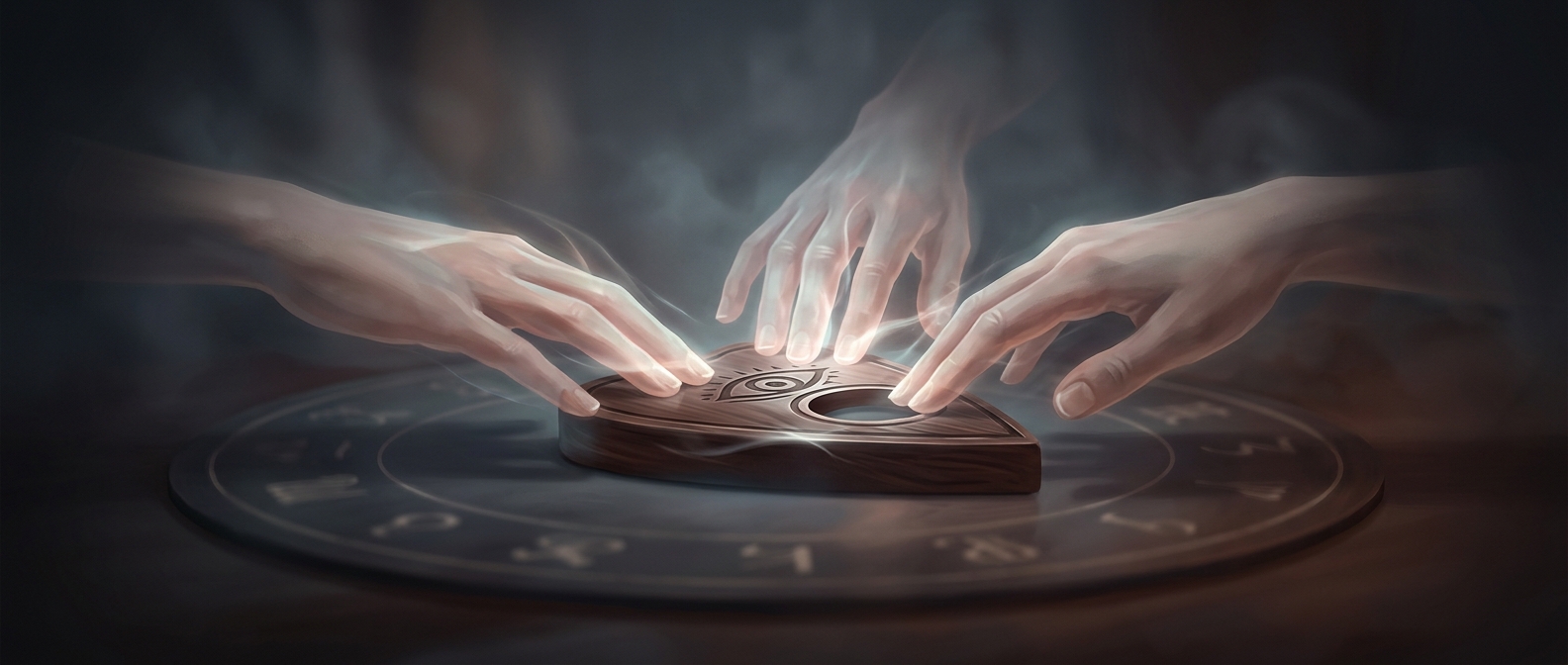
A planchette—the small pointer that slides across a spirit board—does not need a deliberate shove to travel. Hands resting on it are never perfectly still. Fingers and wrists make tiny movements as muscles continually adjust posture and pressure. When several people touch the same planchette, their small motions can combine and steer it across the board.
The ideomotor effect, in plain terms
The ideomotor effect is movement produced by an idea or expectation without a person consciously deciding to move. Expecting the pointer to reach a particular letter can subtly influence the muscles involved. The resulting motion feels as though it happened on its own because the movements are too slight to notice while they are being made.
That feeling is not necessarily pretense. People can sincerely believe they are holding still, even as their hands make the small adjustments that guide the pointer. Because the planchette moves beneath several participants’ fingertips, no one may feel responsible for its direction; each person’s contribution is also hard to separate from everyone else’s.
Why the movement can seem like a message
Once the pointer starts moving, people look for meaning in its path. A letter reached by chance or subtle steering can shape what participants expect next, and that expectation can influence their hands again. The motion and the interpretation can therefore reinforce each other, making a sequence of letters seem intentional without requiring anyone to consciously spell it out.
The striking part is not that the participants are secretly pushing the planchette on purpose. It is that ordinary, unnoticed muscle activity can produce a movement that feels external—and, when several people share the pointer, can make its authorship seem impossible to locate.