Why CRT Monitors Needed So Much Glass
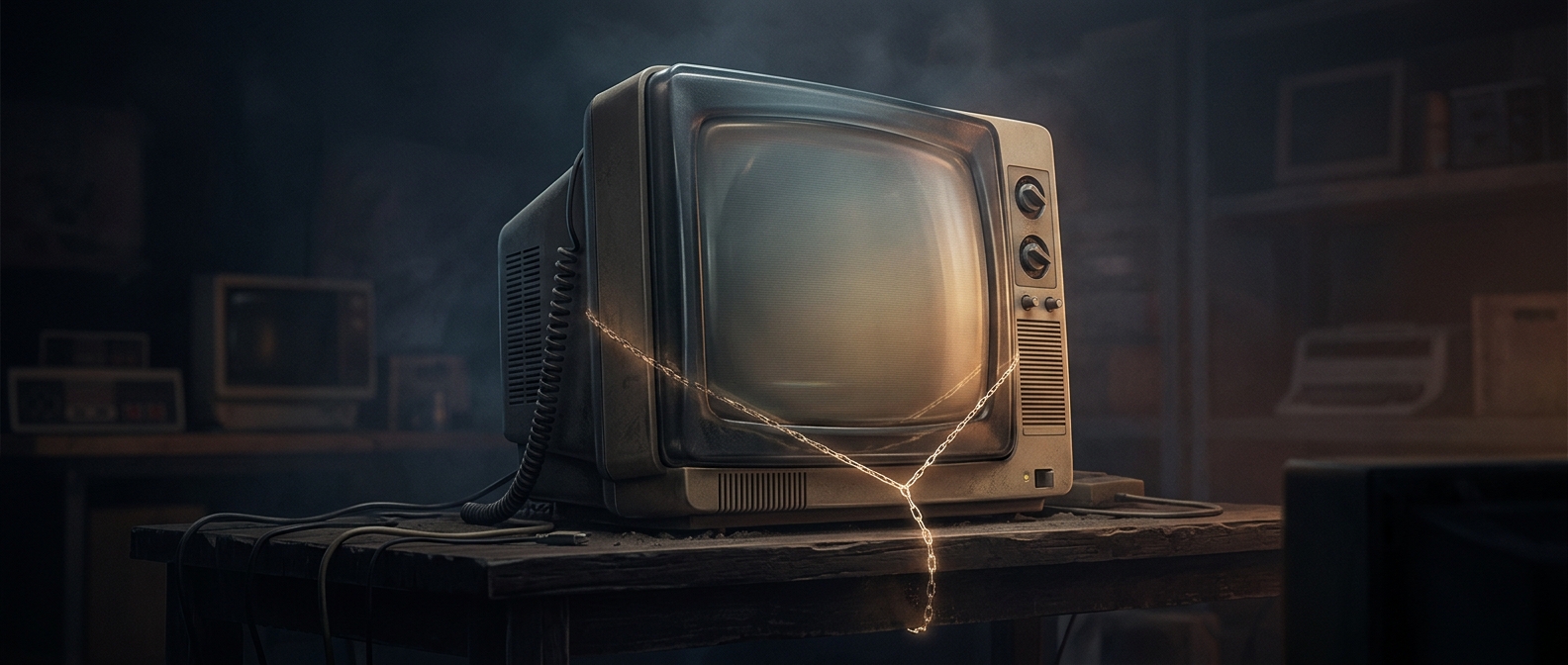
A cathode-ray tube, or CRT, made pictures by steering electrons across a phosphor-coated screen. The tube’s interior had to be nearly empty of air so the electron beam could travel without colliding with gas molecules. That vacuum created the monitor’s hidden structural challenge: the air outside was pressing inward on the glass.
Glass Built to Resist the Air
The pressure difference was substantial. At sea level, the atmosphere pushes on every surface, while the evacuated space inside the tube provides almost no counterpressure. The glass therefore acted like a shell holding back that load. Its broad front panel and narrowing, funnel-shaped rear had to be thick and carefully formed to keep the tube from imploding.
The screen was especially demanding: it had to be wide enough to display an image but strong enough to resist pressure across a large area. The funnel connected that panel to the smaller neck containing the electron gun. This sturdy glass was not merely a protective casing around delicate electronics; it was part of the vacuum vessel itself.
Why That Made the Whole Monitor Heavy
The tube’s glass was thick, and the display needed a large, rigid frame to support it. A CRT also extended deep behind the screen, so the cabinet had to accommodate the tube’s bulky shape. Together, those requirements made older monitors difficult to lift and awkward to place on a desk.
Flat-panel displays do not need a large evacuated tube to form an image. Replacing the CRT therefore removed not just the heavy glass, but the structural burden that had dictated the monitor’s depth and much of its weight.