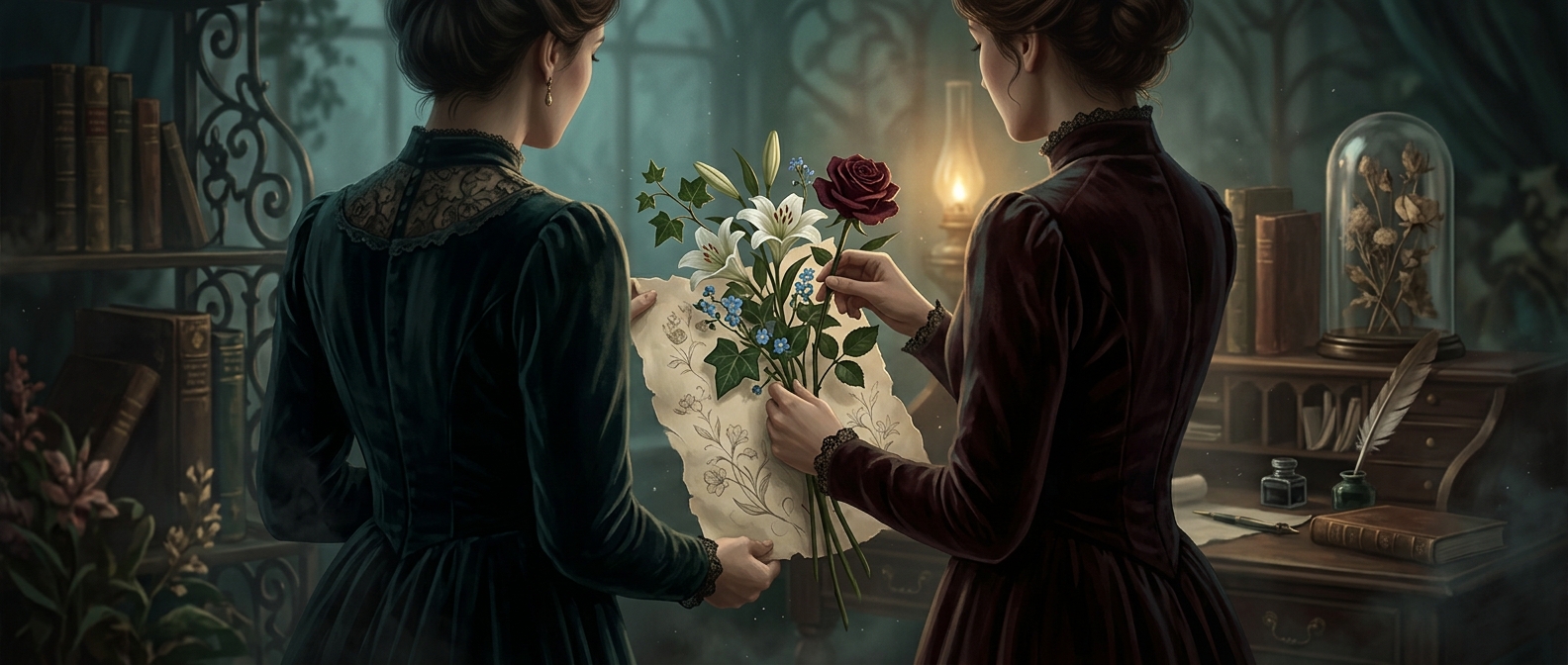
When a bouquet had to speak
In Victorian courtship, a gift of flowers could carry a message that would have been difficult to say aloud. Rules of propriety put limits on direct expressions of romantic interest, especially in public or between people who were not close. A bouquet offered a socially acceptable way to communicate while keeping the exchange indirect.
The meaning depended on the flower chosen. A yellow carnation could signal rejection: the recipient could answer a suitor without having to deliver a blunt refusal face to face. For the sender, the reply was still legible—if he knew the floral code.
A code with room for ambiguity
This practice belonged to the broader Victorian “language of flowers,” in which particular blooms were associated with particular sentiments. Flowers were familiar objects, but their meanings were not self-evident; people had to learn the conventions through guides and social knowledge. That made a bouquet less like a universal dictionary than a message whose force depended on shared understanding.
The indirectness had practical value. A recipient could reject an advance without a public confrontation, while the gesture preserved the outward decorum expected of courtship. But the code also left room for misunderstanding: a flower’s significance could vary by convention, and a sender who missed the intended meaning might mistake a refusal for something else.
A yellow carnation could therefore do more than decorate a room. In the right exchange, it turned a socially difficult answer into a small, readable object.