Why a saint’s skull is displayed in a church
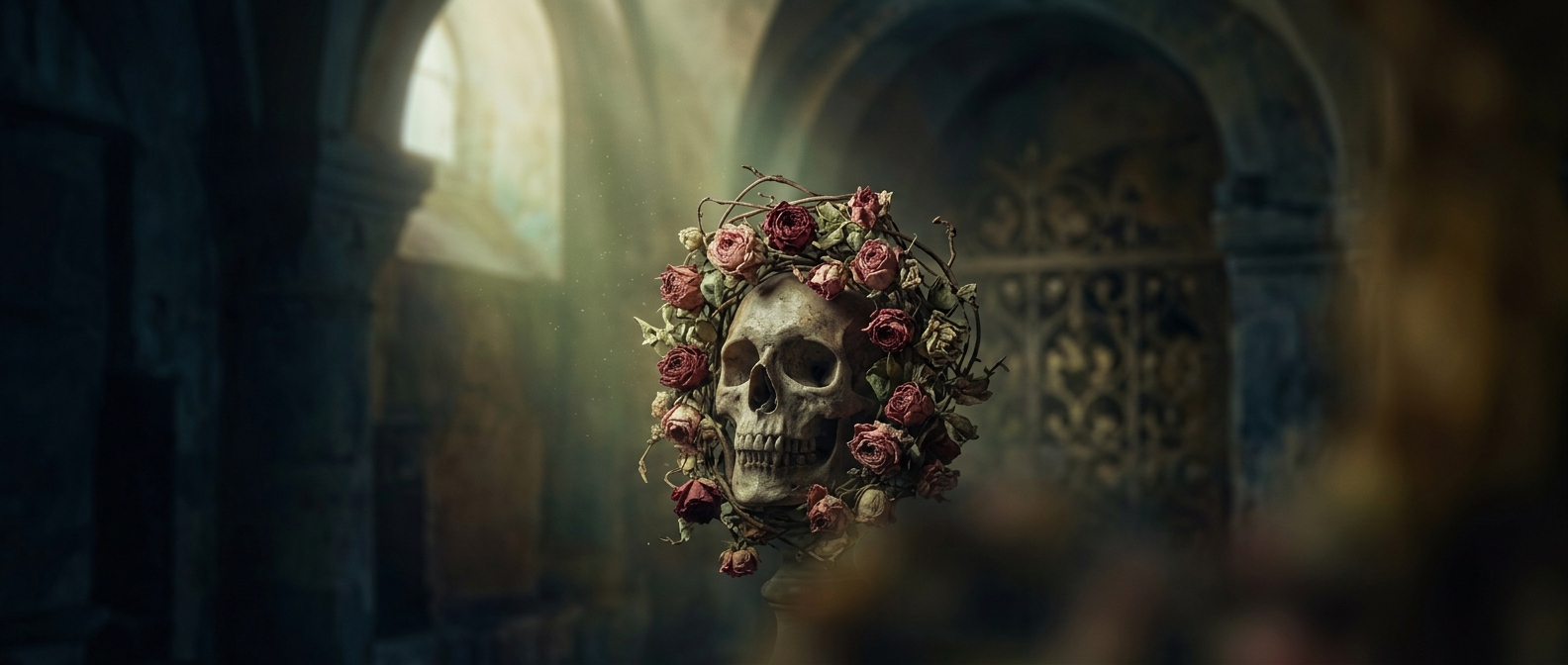
The flower-crowned skull is kept as a relic: a physical object believed to be connected to a saint and honored by worshippers. In Christian practice, relics could make a distant holy figure feel present in a particular church. A decorated case gave the remains a place of visibility and reverence rather than treating them as ordinary burial remains.
The skull is attributed to St. Valentine, but that attribution is a matter of religious tradition, not something the display itself can establish. The name “Valentine” was associated with more than one early Christian martyr, and records about the saints are limited. Relics linked to saints could also be divided and kept in different places, so an attribution does not necessarily mean a church possesses an entire body.
Flowers beside the remains
The flowers soften the starkness of the skull and make the display legible as an act of devotion: the saint is honored, not presented as a curiosity. That contrast is especially striking because Valentine is now best known as the patron saint associated with romance. The skull’s presence reflects the older religious practice of venerating a martyr’s remains; it does not, by itself, explain how Valentine became tied to romantic love.
The result is a small collision of meanings: a human relic, carefully adorned, in a church—and a saint whose name later came to stand for courtship.