How a Horn Could Become a Griffin’s Claw
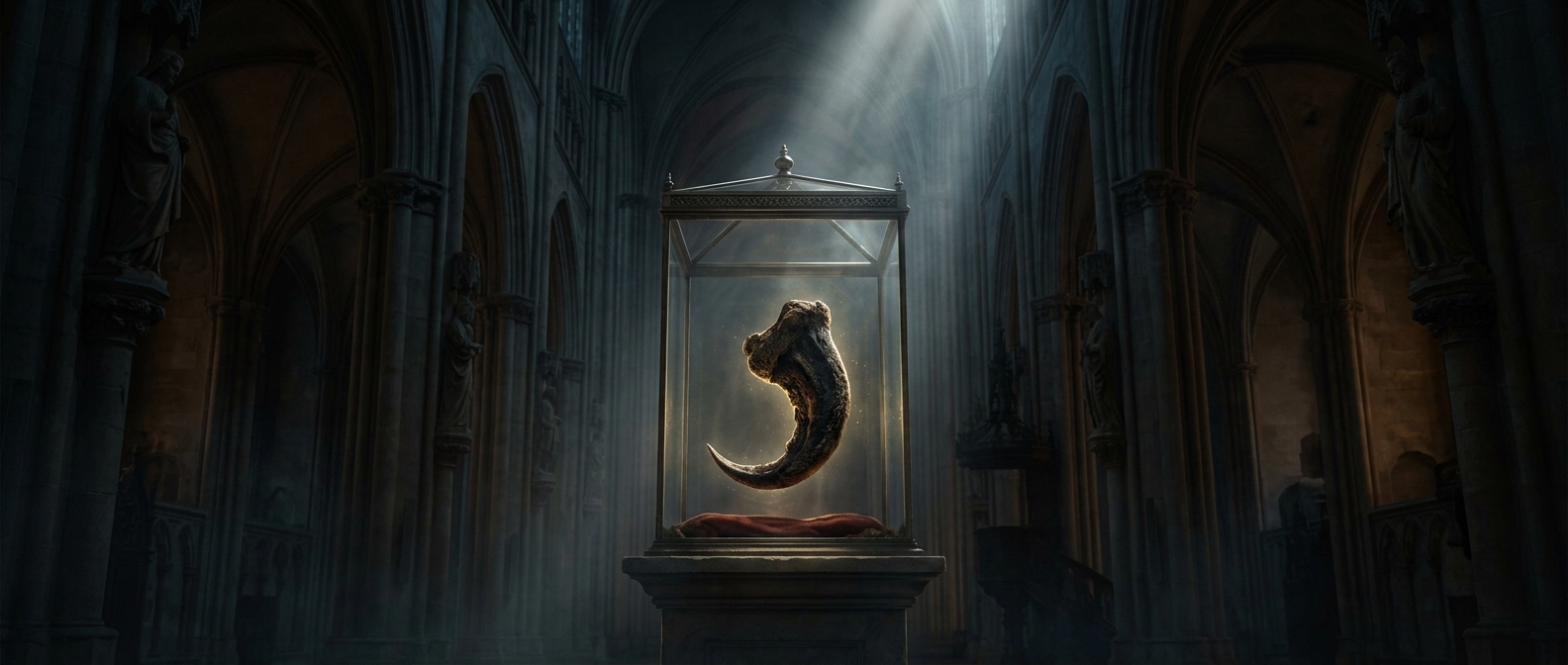
A curved, polished horn can look less like part of an animal than like an oversized claw—especially when its original animal is unfamiliar and the object is seen outside its natural setting. In some cathedral collections, objects presented as griffin claws were antelope horns. The change in identification replaced a legendary creature with a real animal, but it did not make the objects themselves any less unusual.
A griffin was a mythical hybrid, commonly imagined with a lion’s body and an eagle’s head. Objects attributed to such creatures belonged to a world in which natural history and inherited stories could overlap: an unfamiliar specimen might be understood through a familiar legend. A striking shape could support the attribution, even when no one could observe the creature itself.
What Examination Changed
Modern examination made it possible to compare the relics’ physical features with those of known animals. Once the material and form were recognized as antelope horn, the “claw” interpretation no longer fit. The object’s appearance had encouraged one reading; closer identification supplied another.
That distinction matters because a relic’s importance could come from the story attached to it as well as from its material. Reidentifying a supposed griffin claw changes what the object tells us: not that a mythical beast left a trace, but that people preserved and interpreted a remarkable natural object through the beliefs available to them. The horn stayed the same; its place in the story changed.